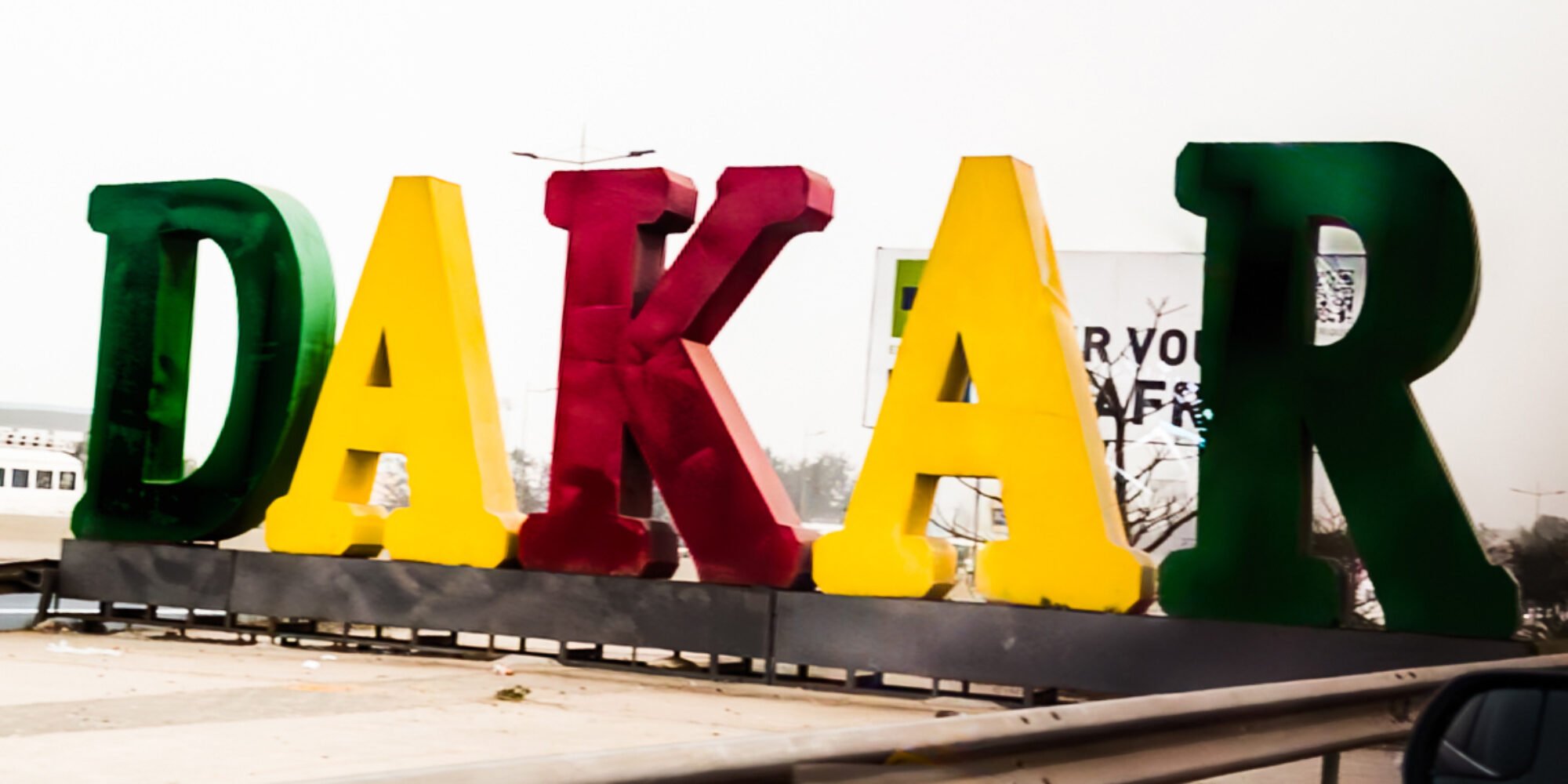
Two Weekends in Dakar, Senegal
Anyone who has traveled in African cities to hear music knows that shows start late. In the case of Dakar, 11pm is relatively early. Acts often don’t go on until after midnight, and as you’ll see in this report, even much later. (For those lucky few traveling with us to Dakar in 2027, fear not. We are making arrangements to schedule earlier shows.)
We left off our first Dakar dispatch on a Thursday night at Just For You with Zale Seck. This report details our busy schedule on the following weekend, and, after our excursion to Casamance, our final weekend in Senegal’s city that never sleeps.
First weekend: February 6-7
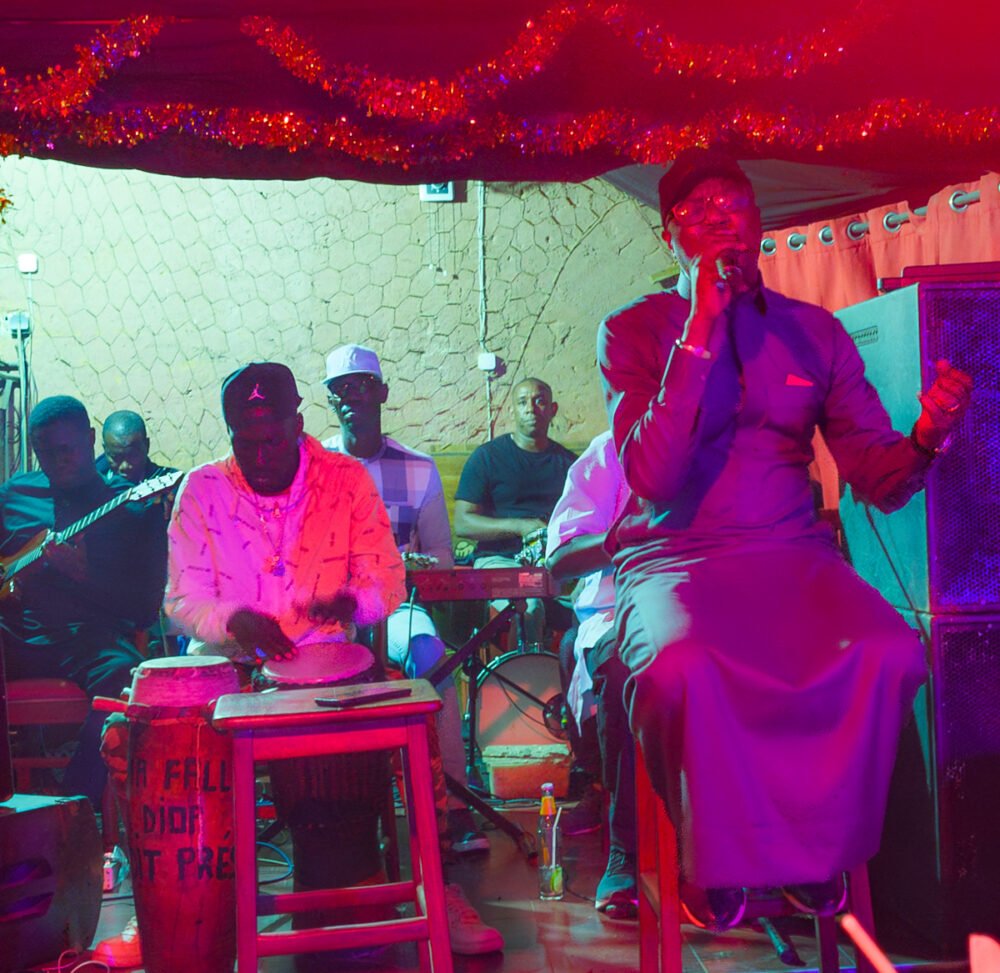
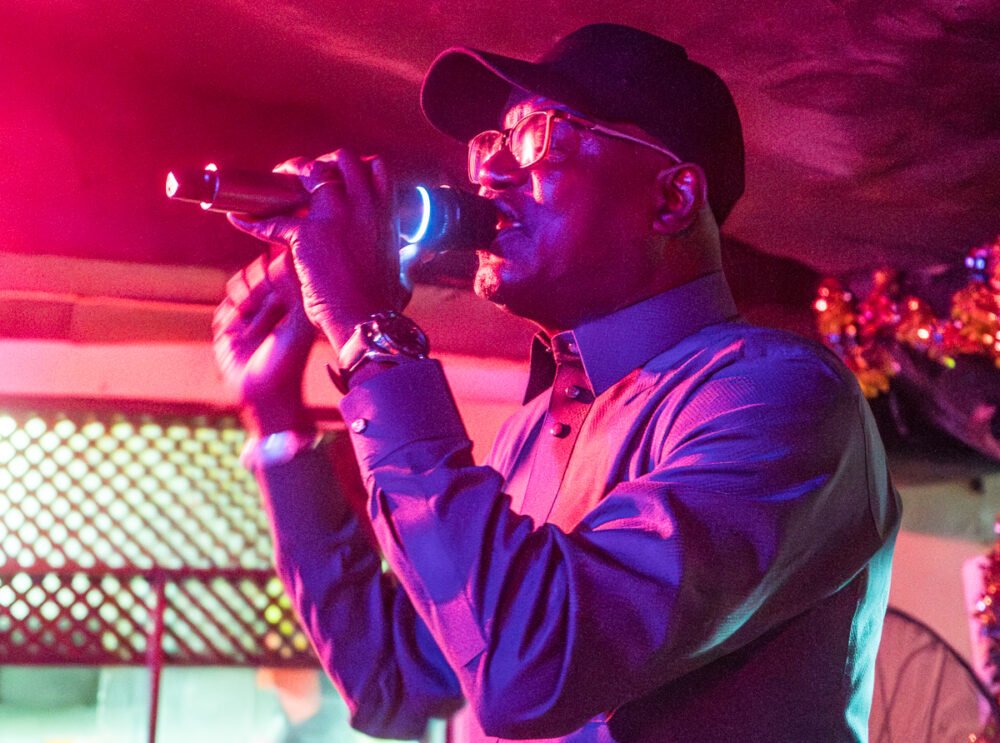
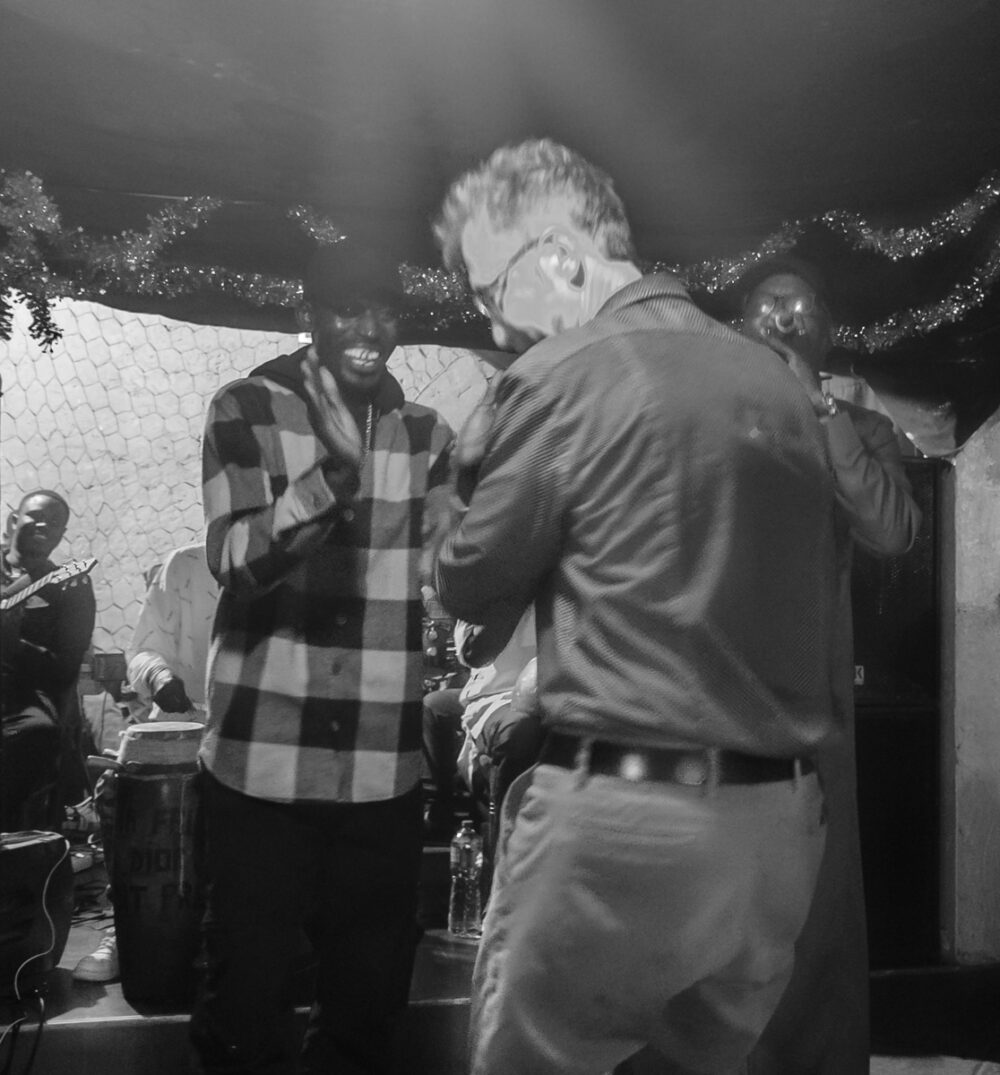
On Friday, February 6, after a delightful seafood dinner at Chez Mamy in Almadies—the closest point in Africa to the United States, by the way—we went to a small club called Terra Nostra for a late show with Babacar Dieng and his band. Babacar hews to the rootsy side of mbalax music, including versions of traditional songs. In dim light and a long grey robe emphasizing his impressive stature, Dieng was up and down on a tall stool and sang with force and passion backed by a strong band with ripping percussion and a nimble-fingered guitarist, all of them well-lit in a kind of stall behind the singer. This was not what you’d call pro staging, but the vibe was terrific!
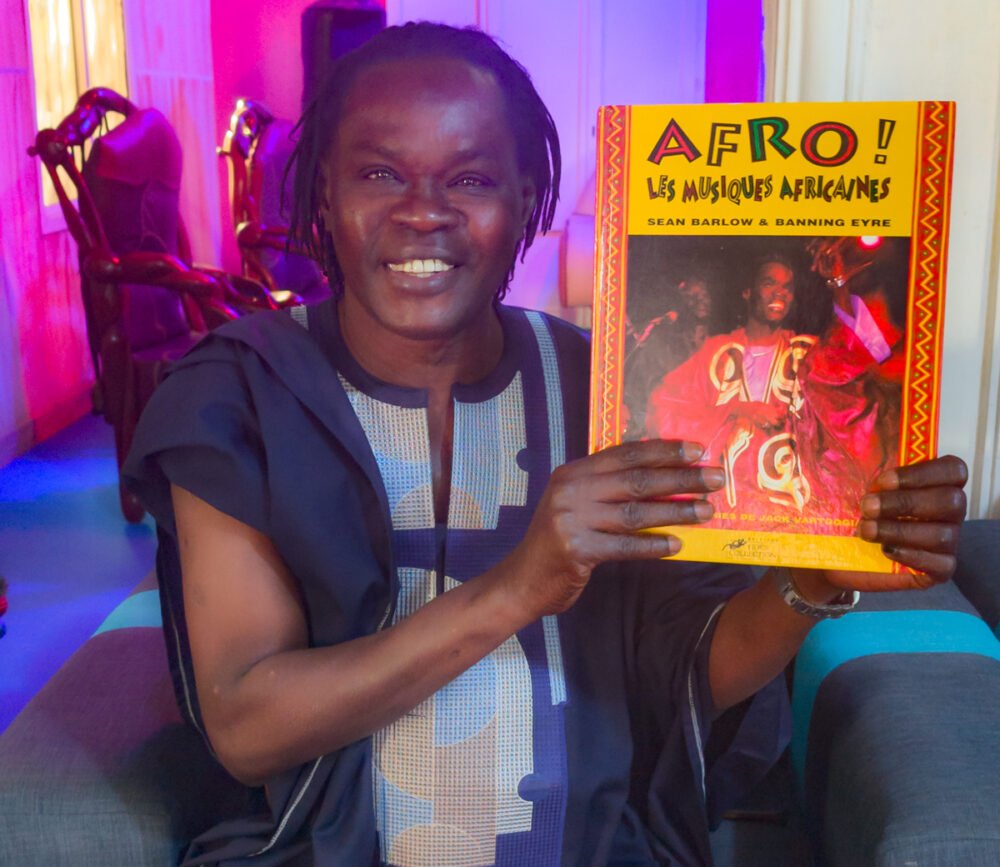
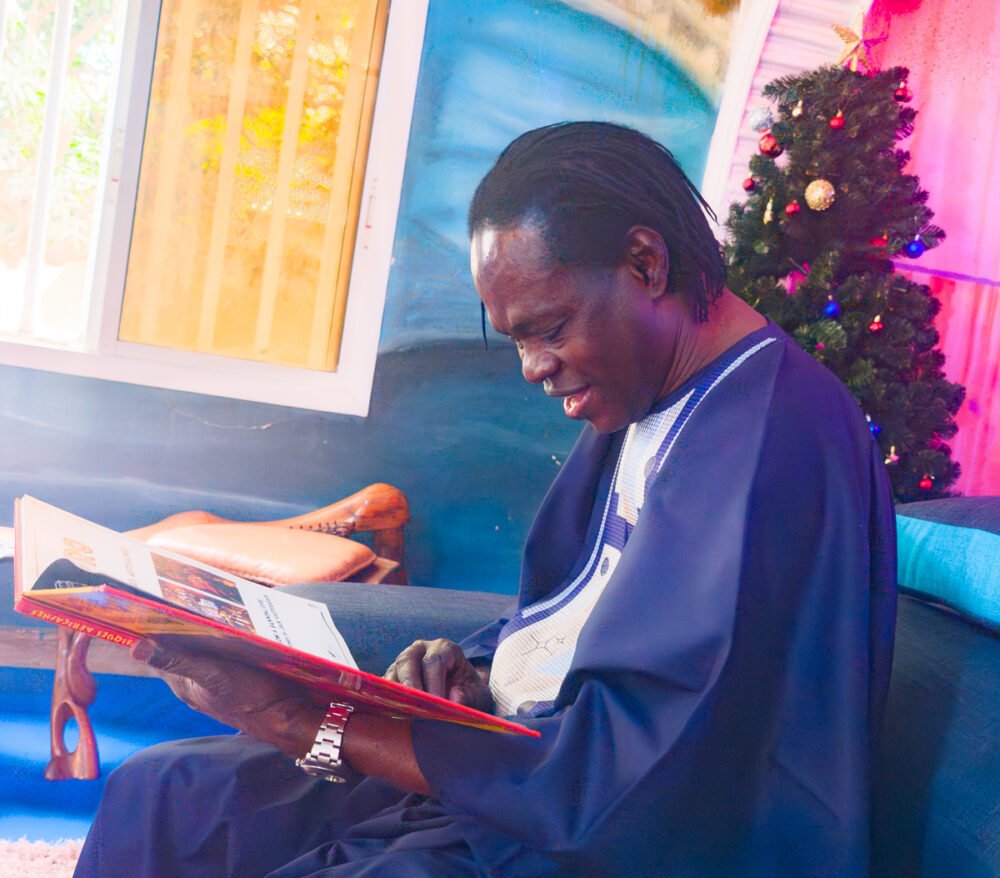
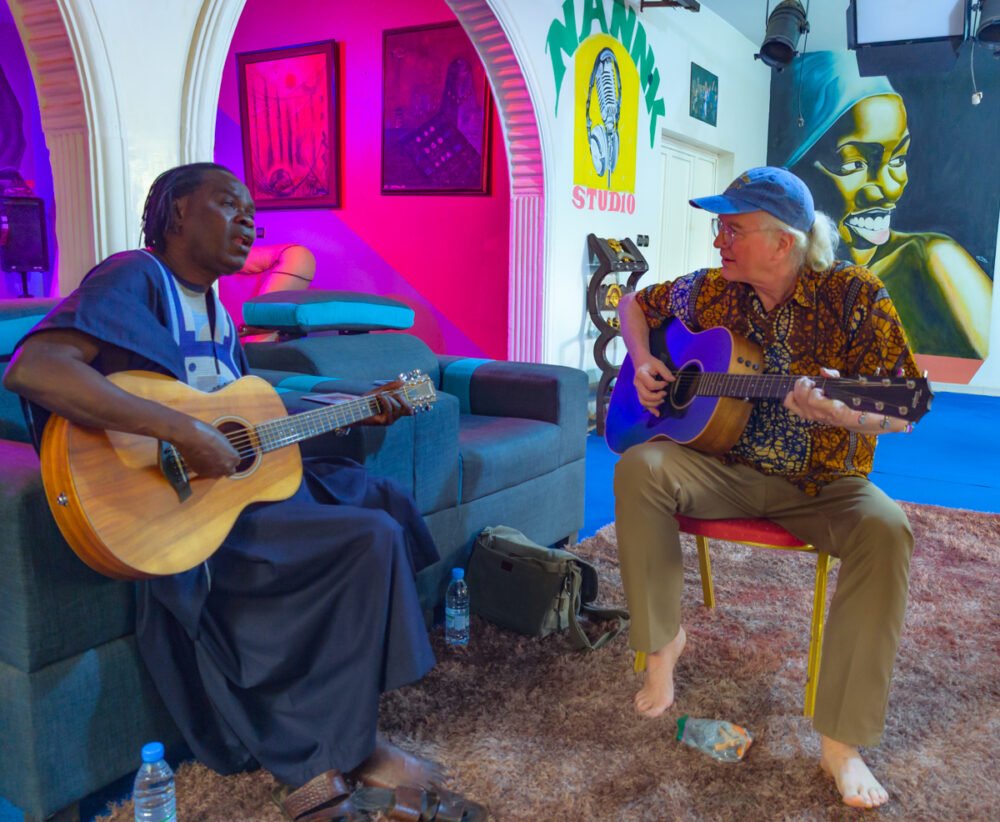
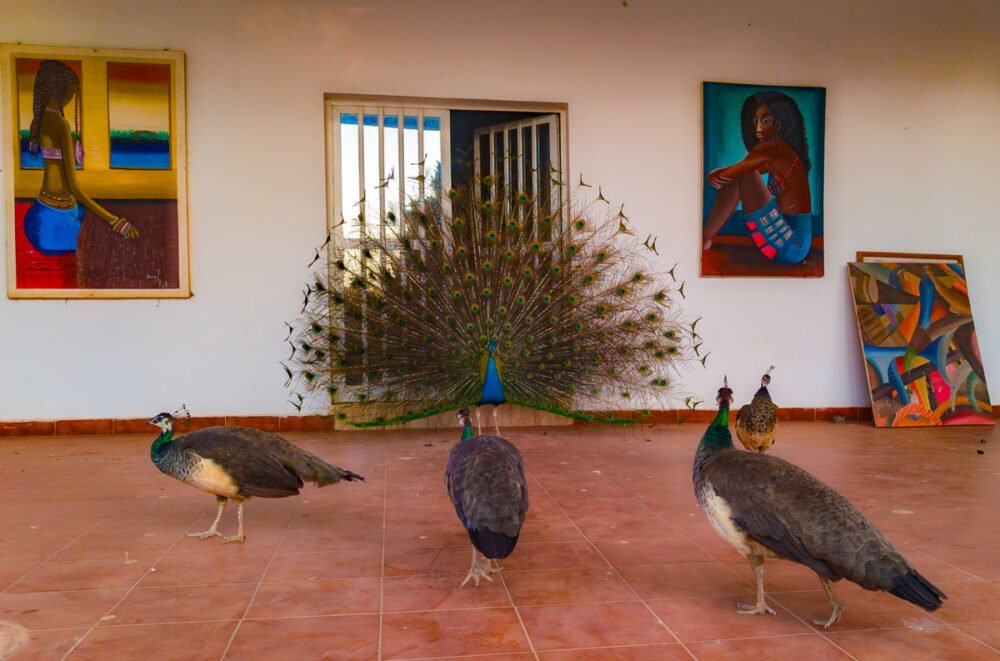
On Saturday, we traveled south of Dakar to the village of Mbounk Bambara to visit our old friend Baaba Maal. His peaceful compound, far from the hubbub of the city, but just ten minutes from the airport, includes a large performance space, a recording studio, and some 15 peacocks strolling around, occasionally unfurling their spectacular feathers. I asked Baaba if the birds had names, and he pointed to one and dubbed it “Sean Barlow.” We’ll see if the name sticks.
We chatted, recorded a brief interview, and presented Baaba with a French-language version of our 1995 Afropop book, with his image on the cover. (He already had the English one, but was delighted with the gift.) I even got to play a few songs with Baaba. My years playing Malian folklore provided us with easy common ground. Baaba encouraged us to attend his Blues du Fleuve festival up north in Podor, where he was born and raised. The festival happens early in December and features both local and international music in a gorgeous natural setting. Very tempting!
Americans might wonder why Baaba has not toured or released international albums in recent years. Well, don’t mistake that for inactivity. He performs regularly in Senegal, including a recent celebration of 40 years of his band Dande Lenol. And as far as releases, hop onto YouTube and check out his recent Souvenir series, starting with Souvenir 1. Not to mention his spectacular video collaboration with Nigerian star Flavour, Afroculture, the lead video in our February Top Videos collection.
Back in the city we managed to catch parts of four performances. Our man Souleymane Kane compiles a list of weekend shows each week. It typically includes some 50 musical events on both Friday and Saturday nights. It’s no easy task to do this as engagements can change at the last minute, and for some reason, venues can be reluctant to share information, perhaps fearing repercussions if a band cancels or fails to show. As we learned from many observers of the scene, Dakar is experiencing growing pains in its quest to become a welcoming musical destination for foreign visitors. The talent is certainly there, as are the venues, and the ambiance is consistently fantastic. The trick is knowing what’s happening, and of course, when it’s going to happen. Souleymane Kane is among those fighting the good fight to sort all this out, and we wish him and his allies well.
By the way, one noteworthy exception to the city's unpredictable schedules and late night shows is the Dakar Music Expo, an international festival that showcases music from all corners of Senegal and beyond, along with workshops, panels and conferences. The 2026 edition goes on from March 26-29. So as of this posting, it's not too late to book a flight and dive into the action.
But back to our Saturday night…
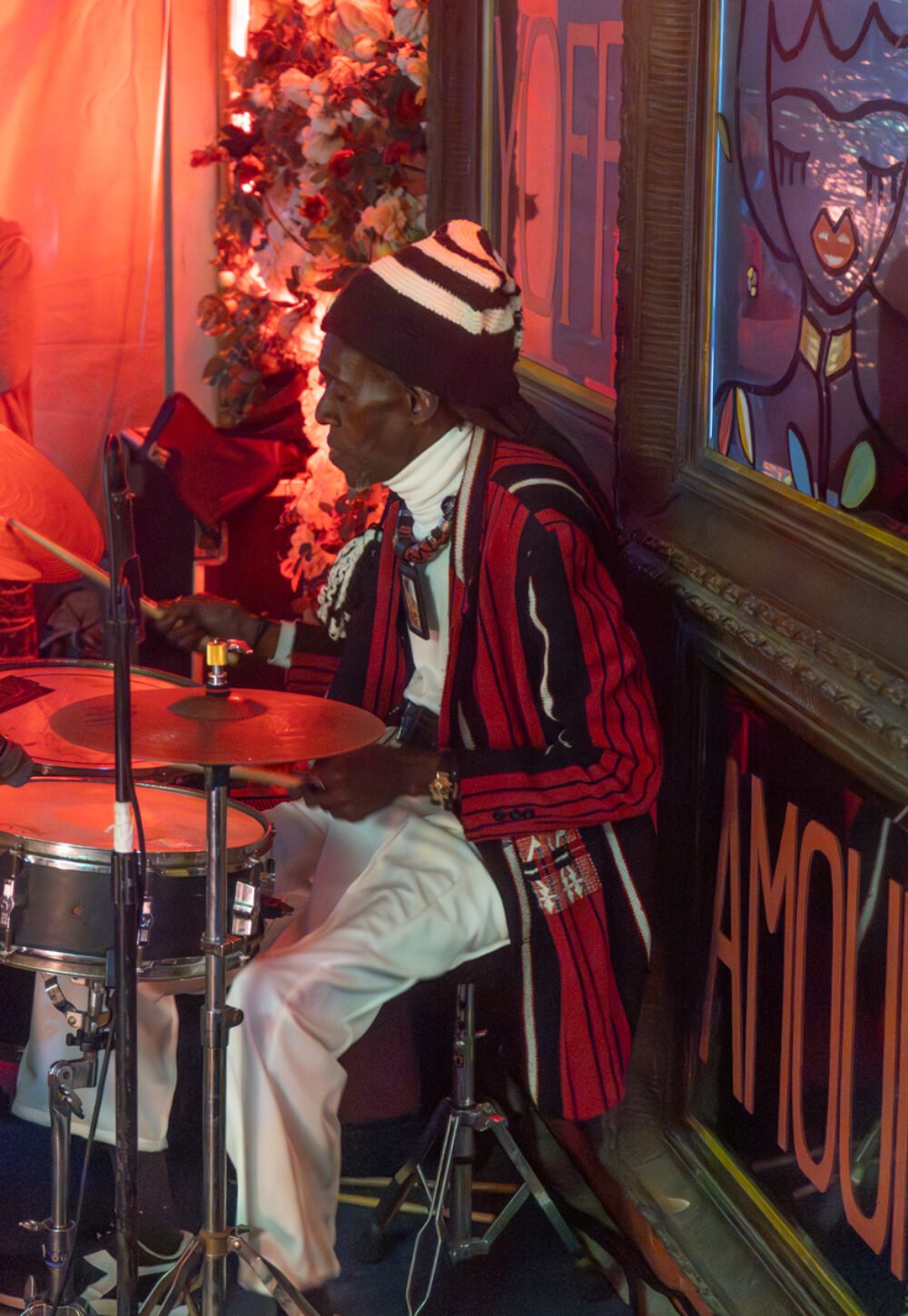
We started at Lala Beach, a pleasant seaside venue in Yoff with excellent food. This is a favorite performance spot for the great Cheikh Lô. We’ve seen Cheikh in the U.S., most recently at globalFEST in New York City in 2020. But this was truly special, the 50-years-in-music veteran leading his crack, six-piece local band, unbelievably tight and sweet as they rolled out his unique blend of Latin-tinged, pan-West African roots music. As is his habit, Cheikh began the set on trap drums, his first instrument, and his style is playful and distinctive. The show started before 11pm and we hated to leave, but we had a big plan for the night.
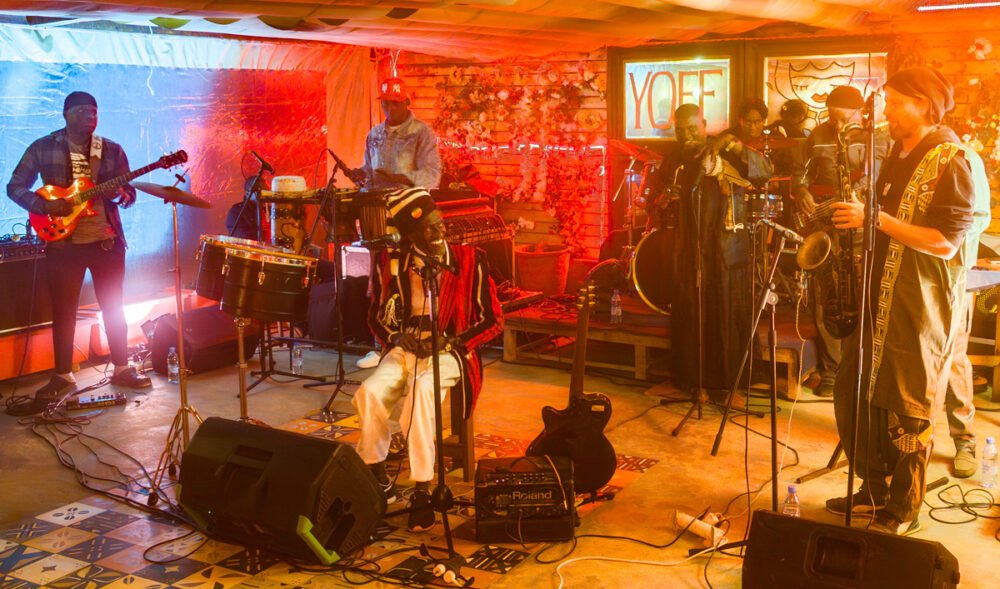
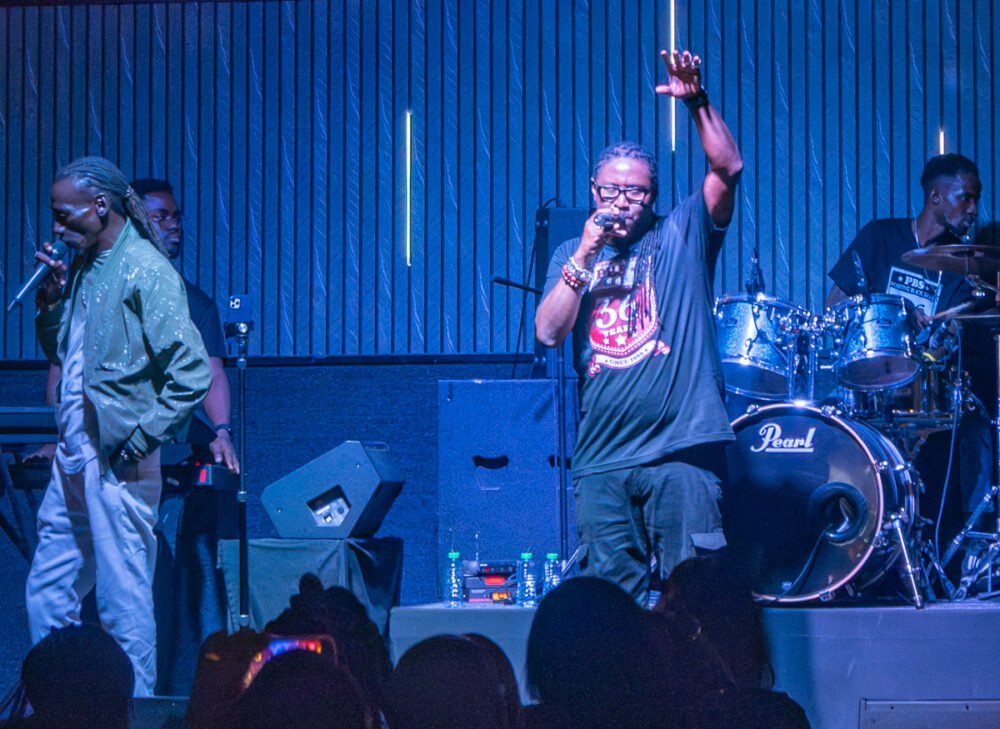
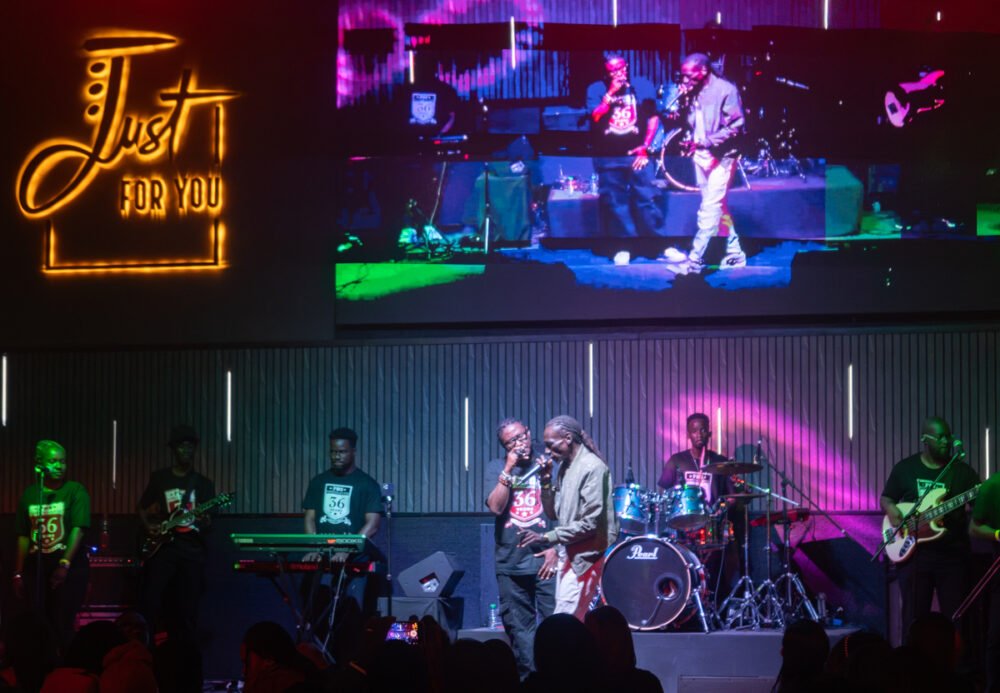
Then it was back to Just For You to catch Positive Black Soul, Senegal’s pioneering hip-hop crew. Baaba Maal introduced Didier Awadi and Duggy-Tee and company to the international scene on his 1994 album Firin’ in Fouta with the song “Swing Yela.” All these years later, PBS remain very popular as the crowd at this show well demonstrated.
Then it was across town to Cassa-Grill, a small dining venue just next to the larger Barra Mundi nightclub. Momo Dieng is the son of the late vocal star of Orchestra Baobab, Ndouga Dieng, and what we caught of his set, just the end, was electrifying, a highly melodious and musical take on mbalax.
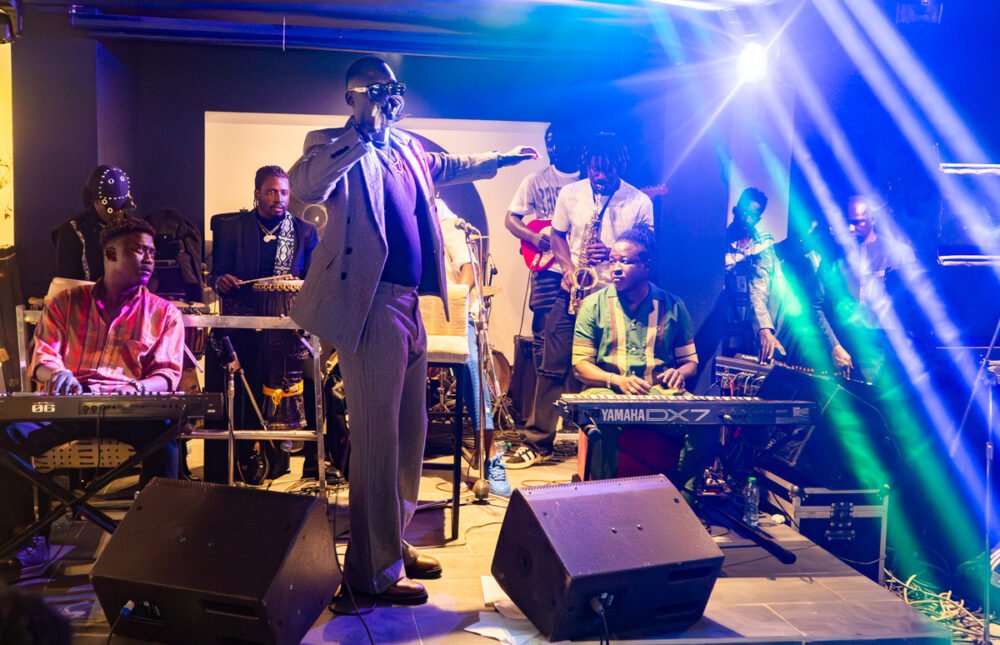
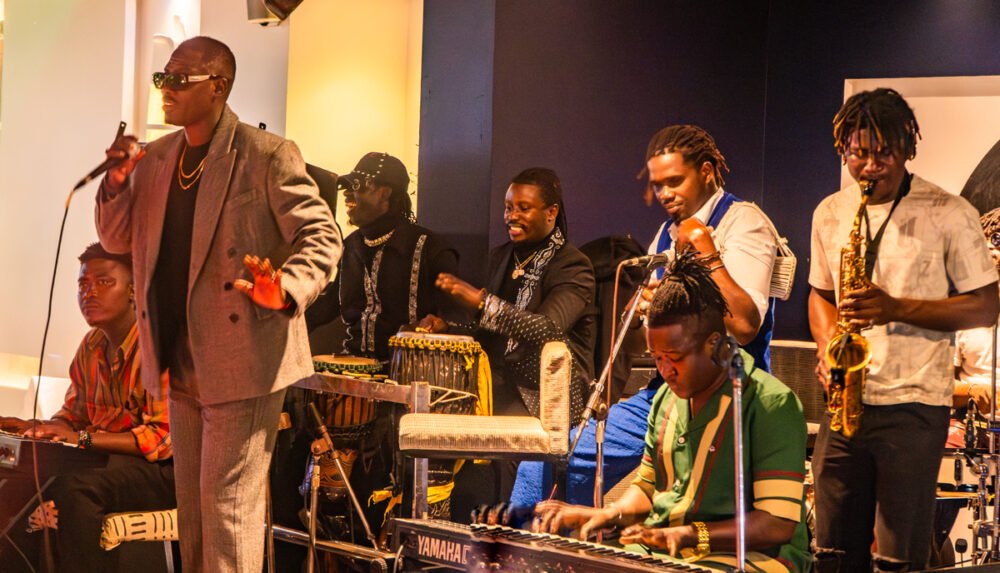
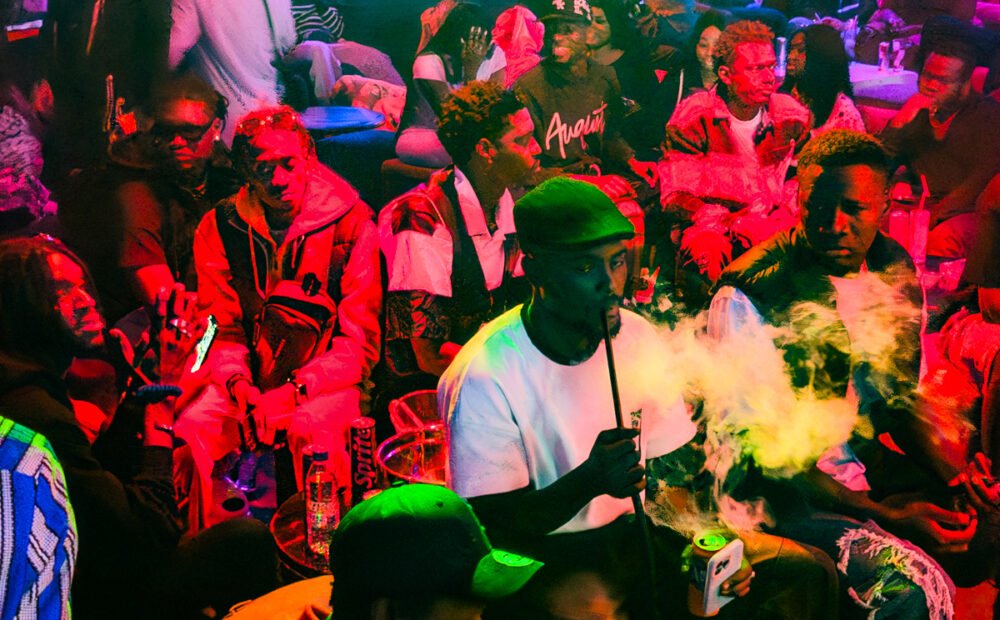
By now it was past 2AM, but we still had a wait next door at Barra Mundi to hear one of the most popular young mbalax stars on the scene, Sidy Diop. You’ve heard about late concerts, but Sidi’s crowd is in a category all their own. Folks started trickling in a little before 3AM. The bar opened a little later, though these folks were not drinking alcohol. Sweet hooka smoke seemed to be the consumable of choice. The band showed up, did a quick sound check, and started playing around 3:30, with a different singer. When Sidi took the stage a few songs later, things started to light up. This was hardcore mbalax, with a four-man percussion unit cracking out spine-tingling sabar rhythms. We didn’t last to the end, which must have come after sunrise. We left just as the griot-style cash-dashing was getting underway. We wondered who these folks are, and what their lives must be like to take in their entertainment before dawn on a Sunday morning. One of the mysteries of Dakar…
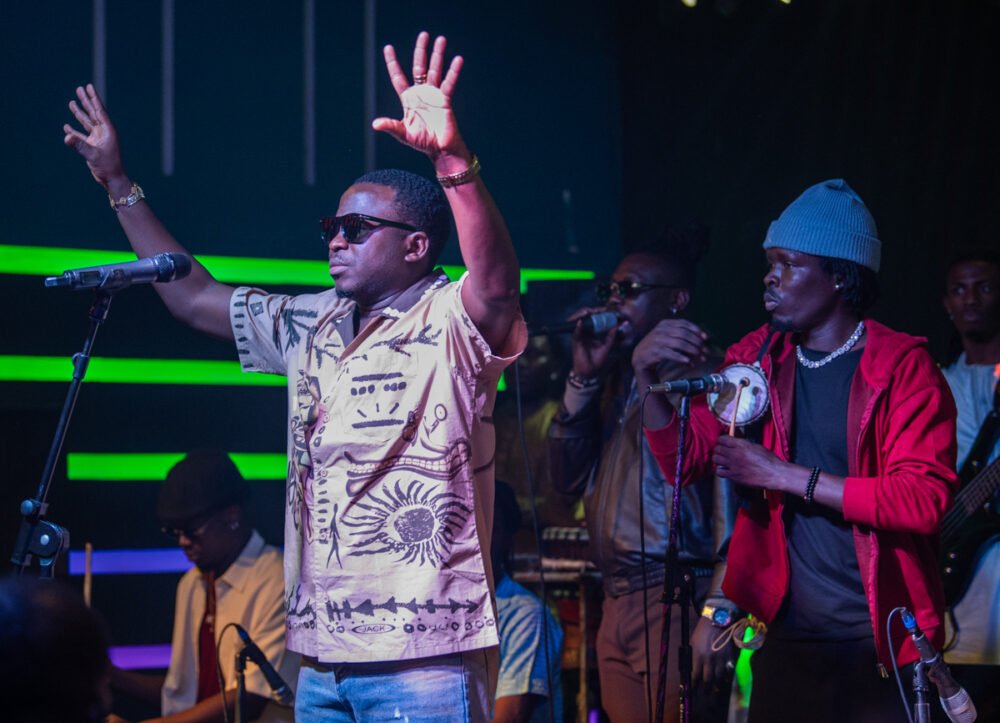
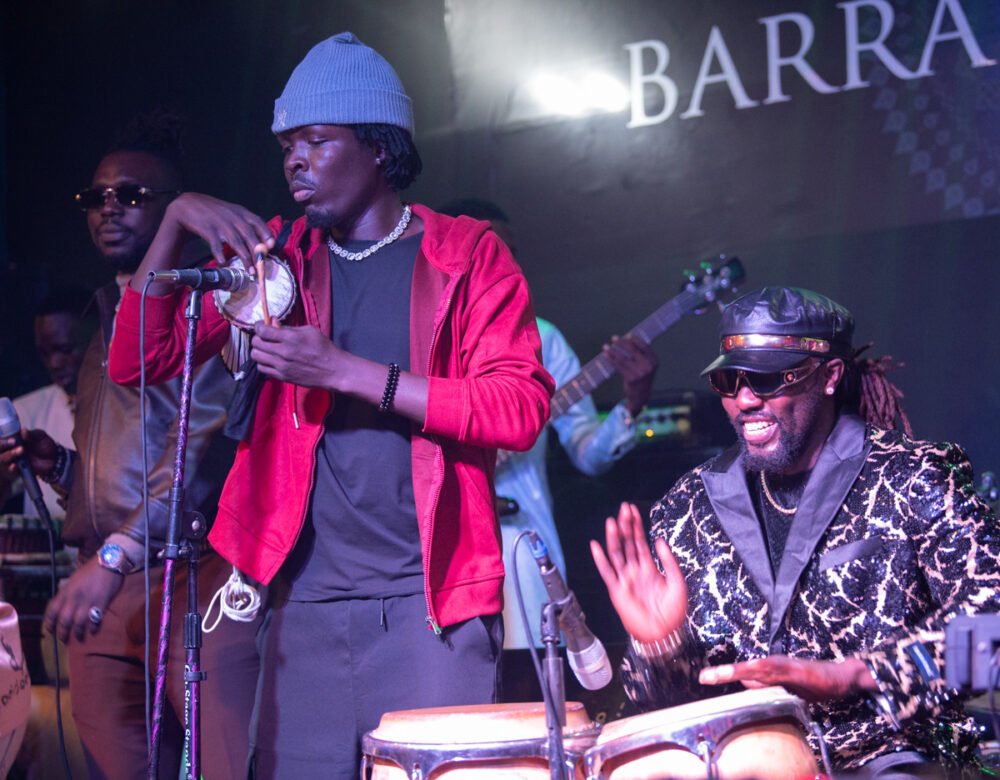
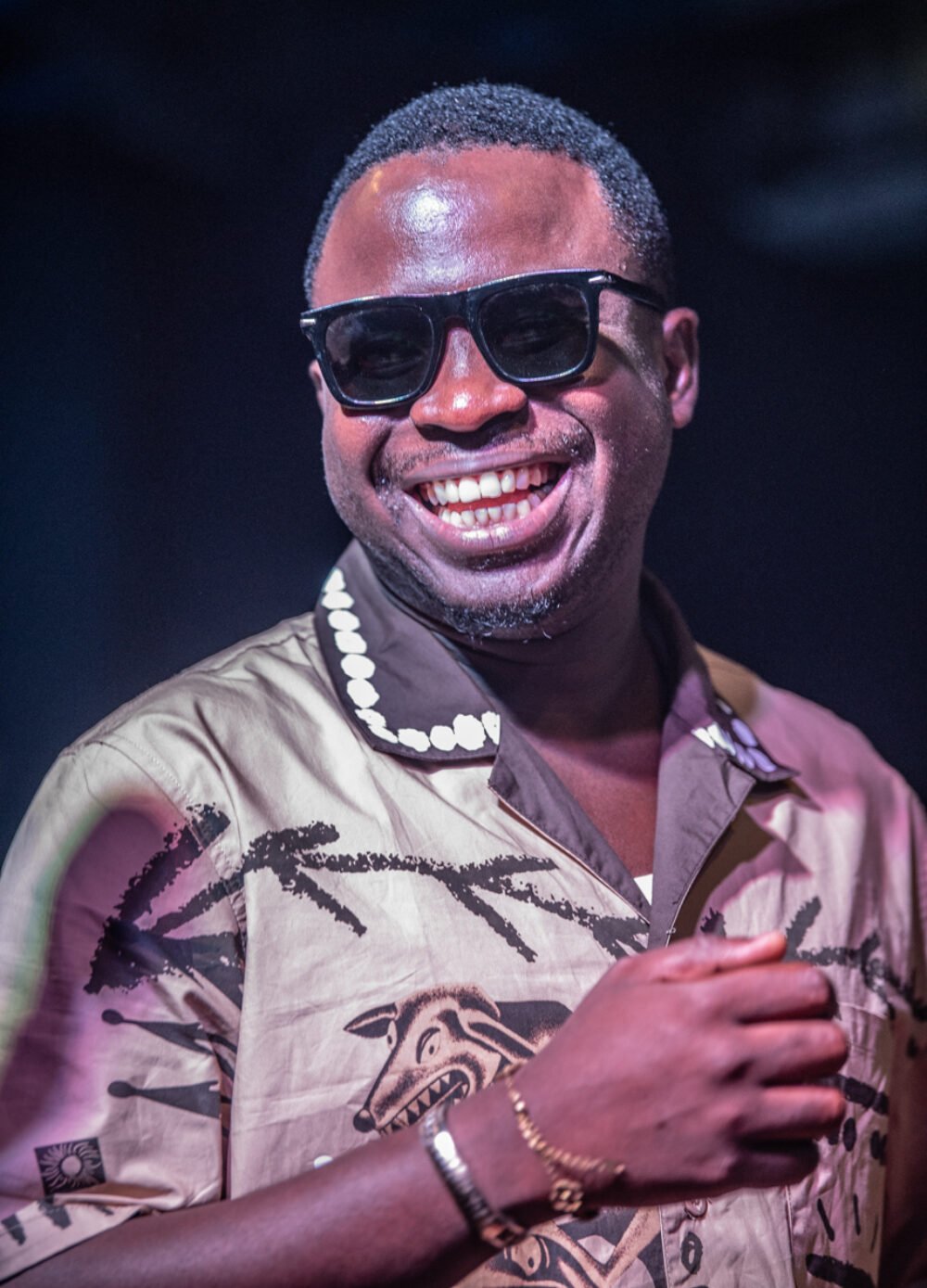
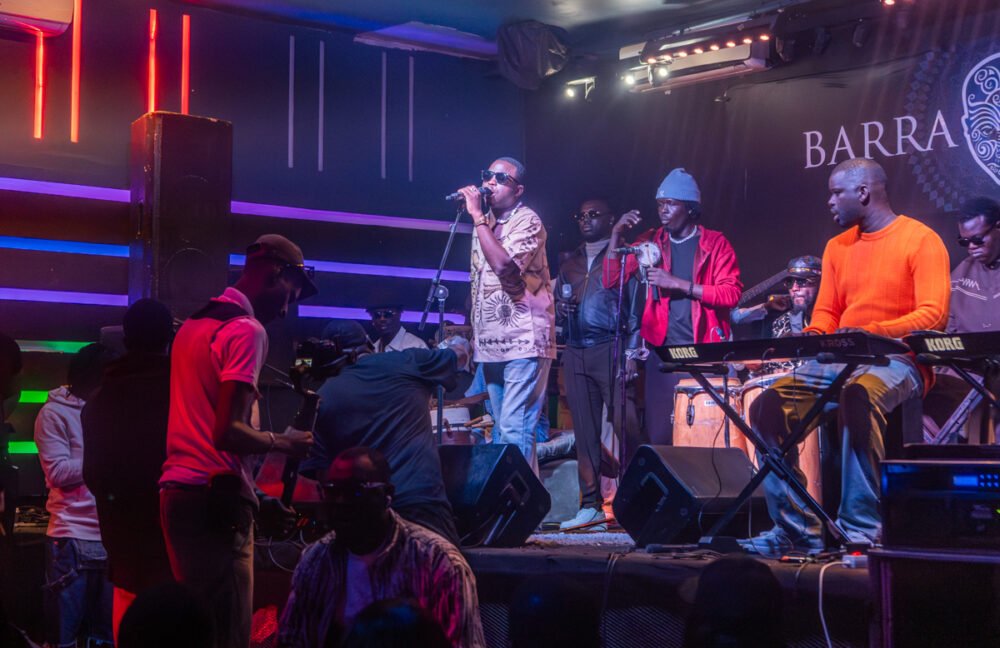
We didn’t sleep much before heading the airport to fly to Casamance, about which you can read here. That excursion into Senegal’s rural south was a world away from the hectic streets of Dakar, but five days later, we were back in the city, just in time for Friday night action.
Second Weekend: February 13-15
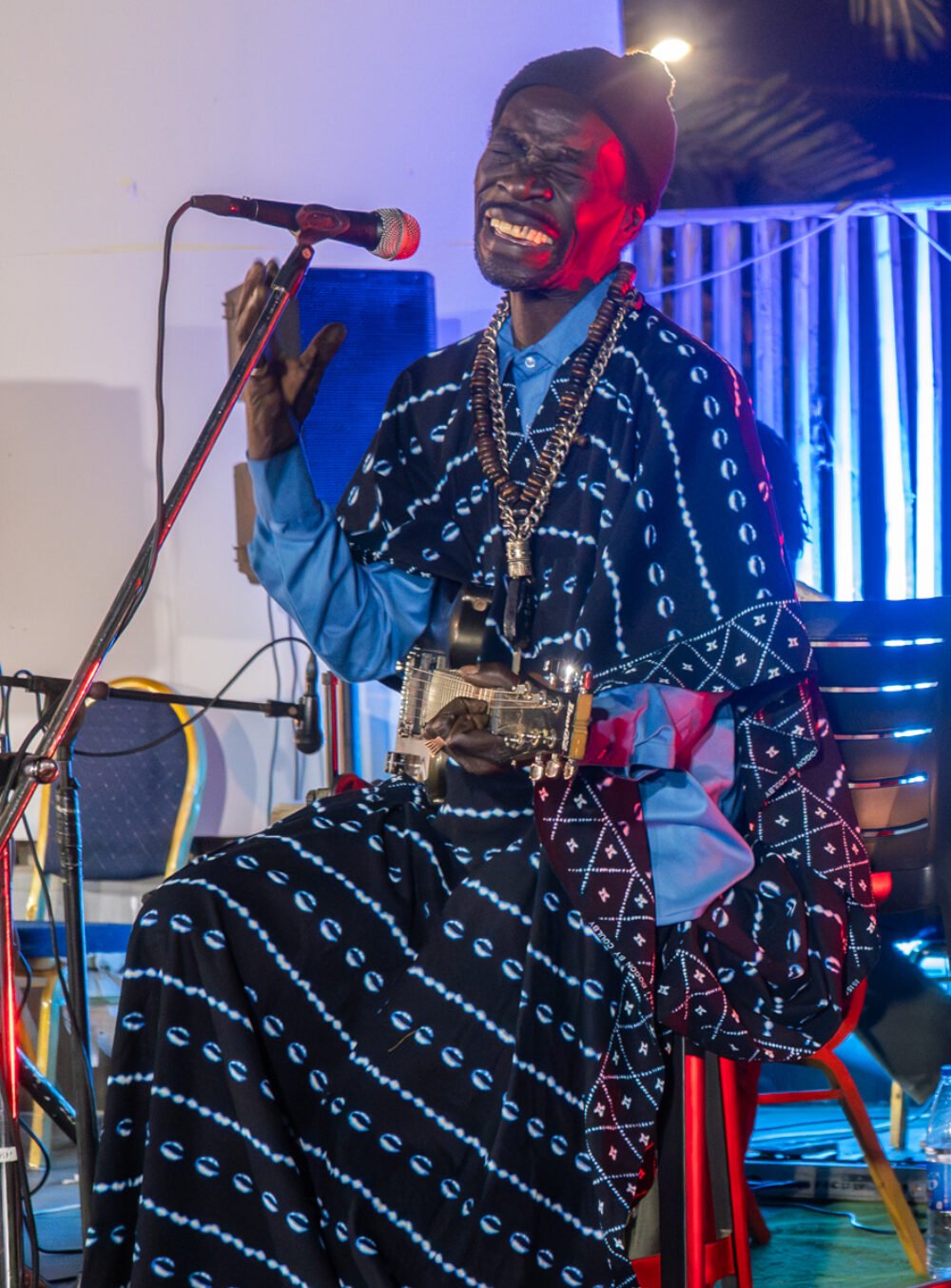
We caught a great set by Souleymane Faye at an outdoor nightspot called La Playa, along the Corniche, Dakar’s main seaside road. Faye has his own style. There’s mbalax in the mix, but he sings in French and English, and brings in other pop influences. With intros and lyrics in languages we could understand, we gathered that a lot of his songs deal with romantic entanglements, and not always happy ones. His set had more the feeling of a poet/troubadour with a great band—as always in this town—rather than a pop star. The fact that he performed seated with his guitar in his lap reinforced the impression.
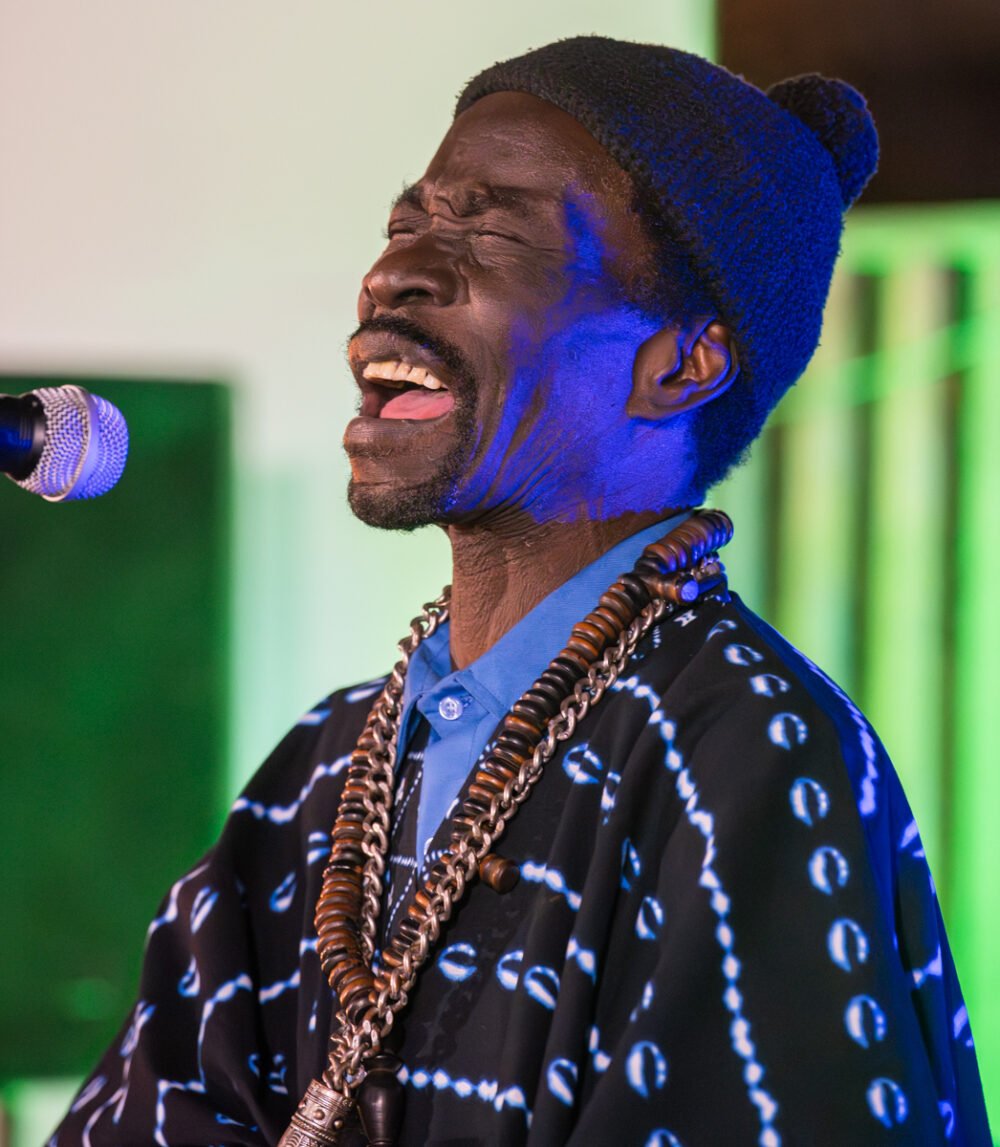
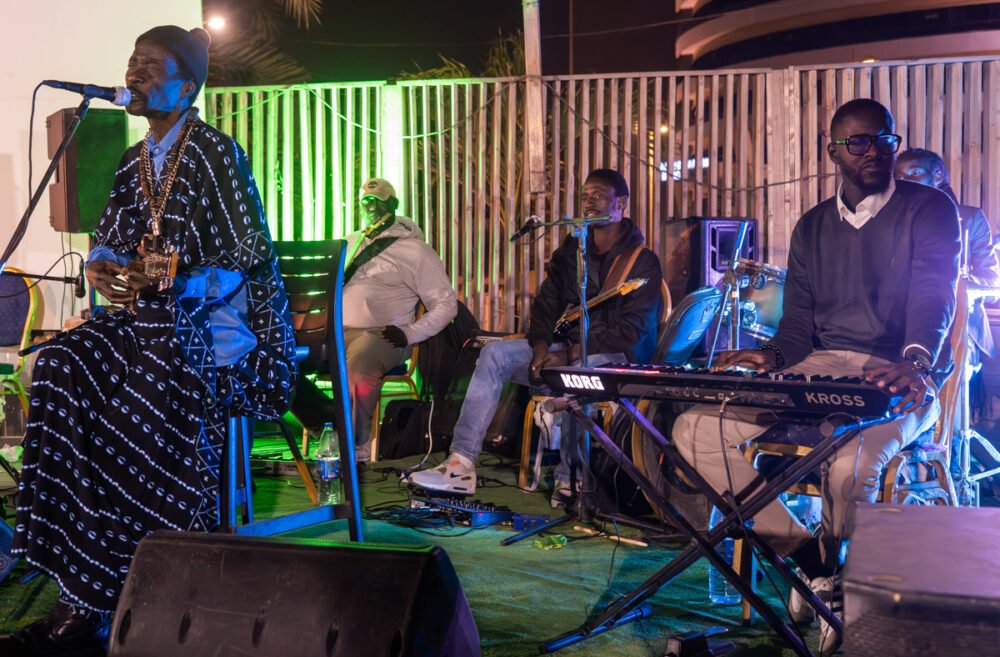
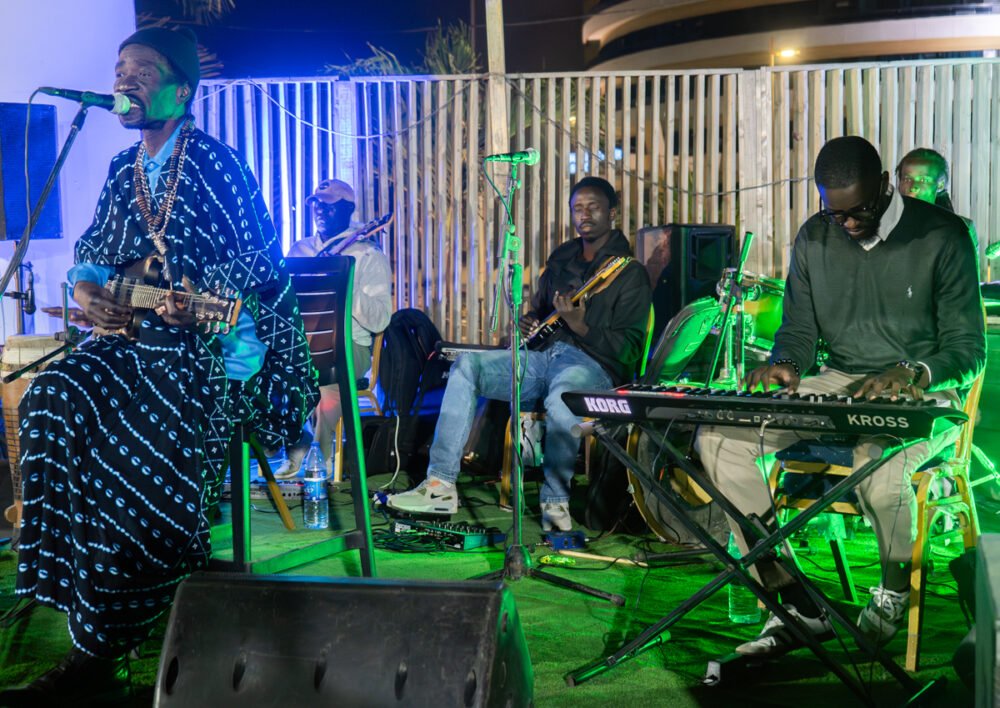
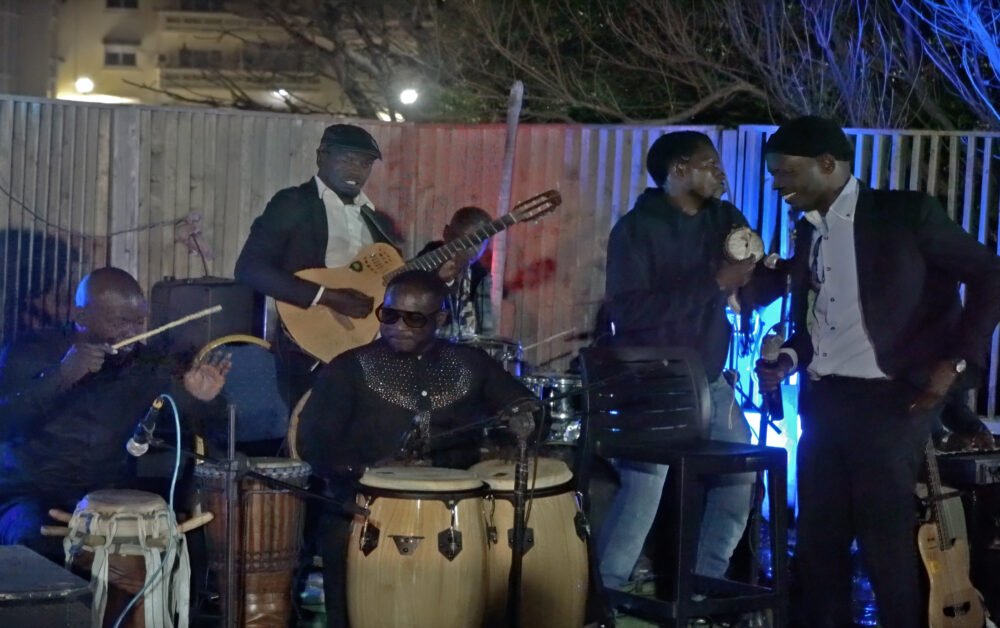
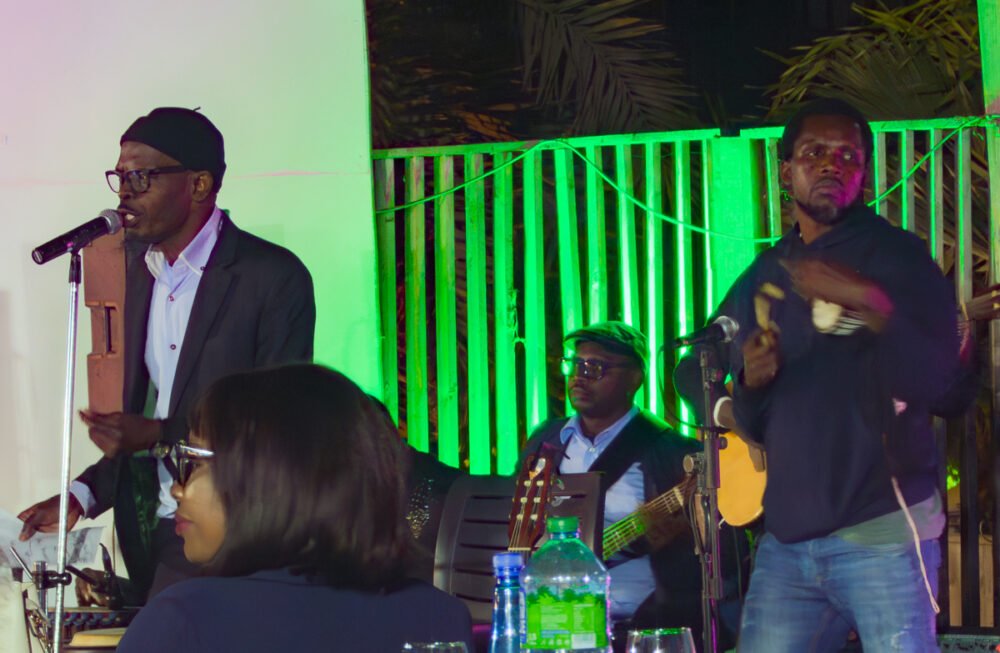
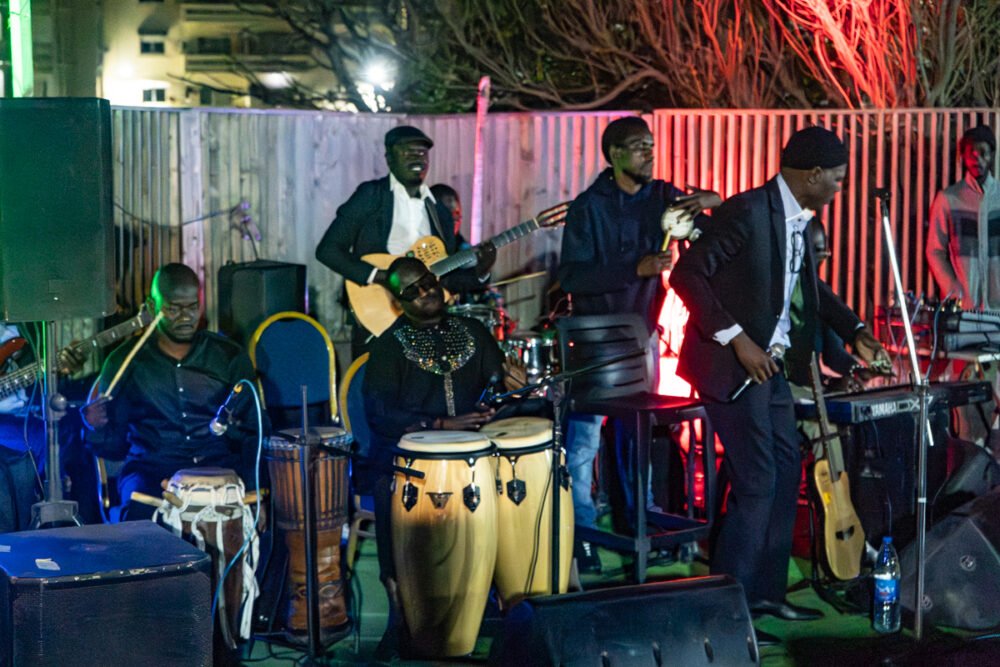
Faye had another gig to rush to, but he was quickly followed by a superb, more straight ahead mbalax act, Pape & Cheikh. Some may remember this duo from an album they recorded for Real World in 2002. Unfortunately, Cheikh has since passed away, but Pape, with his husky voice, keeps the name of the group in his memory. Their set was particularly lively, driven by bubbling percussion from four players: congas, sabar, tama (talking drum) and trap set. No wonder folks were soon dancing at their tables.
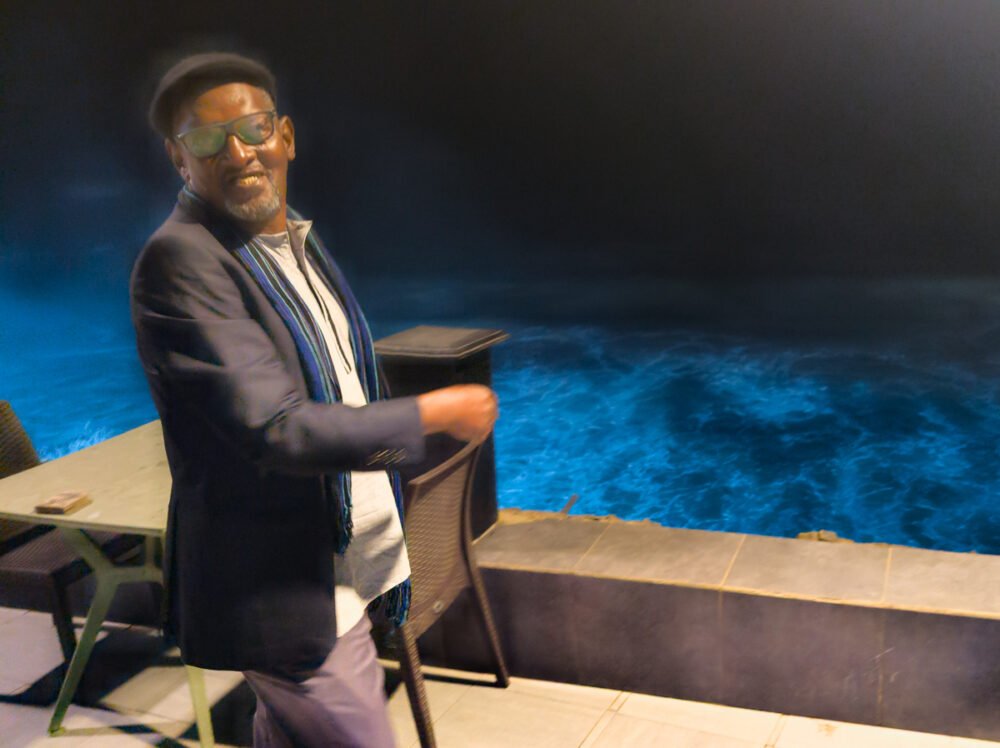
Saturday was Valentine’s Day, as it turns out, a big deal in Dakar. We had hoped to catch the new lineup of Orchestra Baobab at the Institute Française, but the show was sold out. Banning dropped by for the band’s soundcheck and met the musicians. We learned that they would play the next night at Just For You, so it was on to the main events.
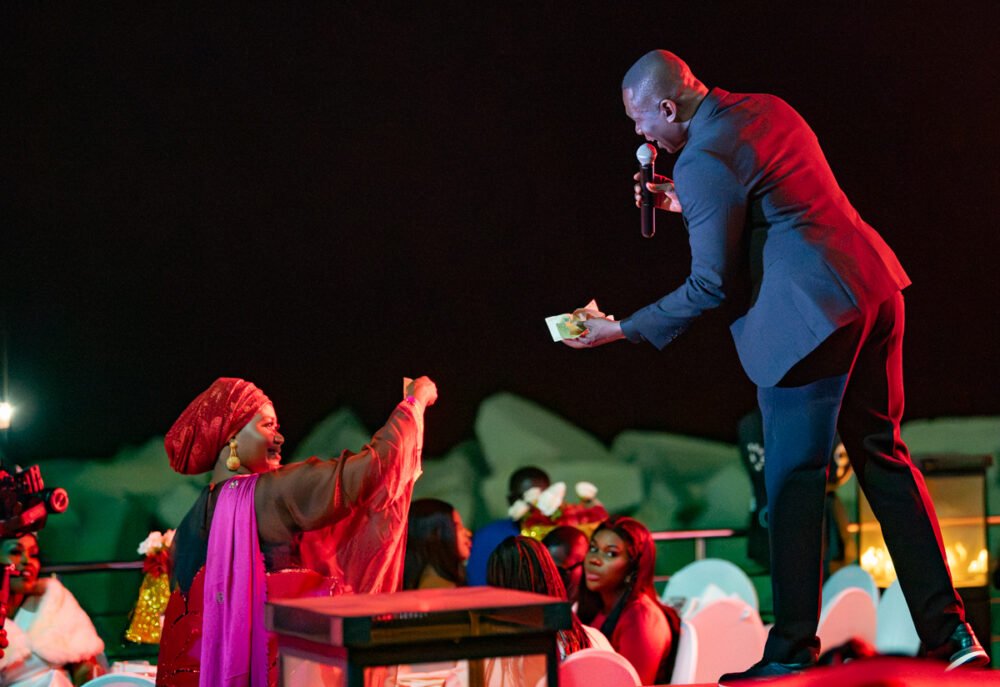
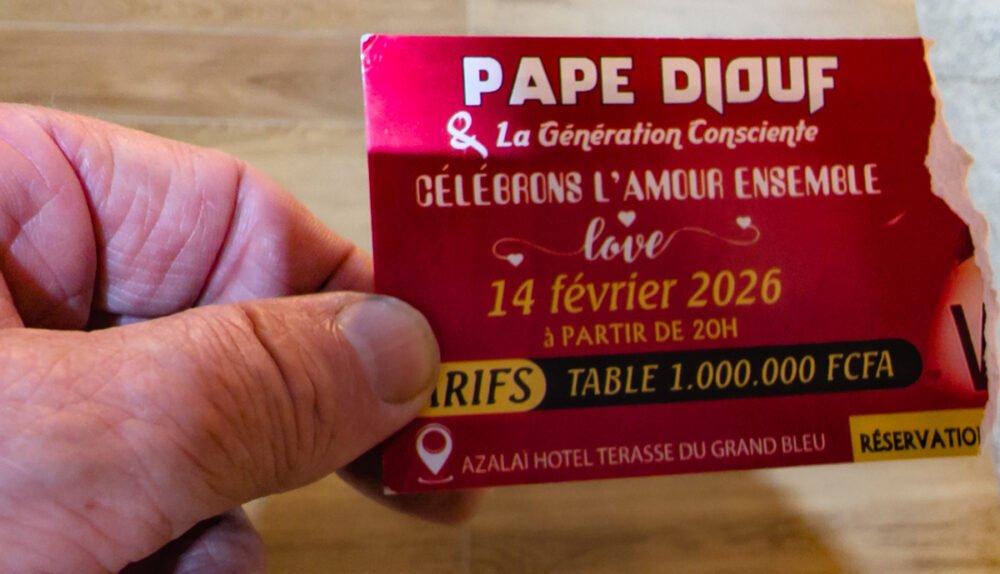
Banning had an invitation to Pape Diouf’s show at the Azalai Hotel on the Corniche. This was an extravagant event, with dinner included, and a ticket price of over $100. The clientele for the show was extremely well-dressed and upscale, with a preponderance of women. Once again, there was quite a long wait for the music to begin, but shortly after 11PM, things got cooking. Diouf is a charismatic stage presence with a high, reedy voice and suave dance moves. The band sounded wonderful in the open air, and the love flowed freely, including a stretch where ladies dressed at Met Gala levels dispensed cash to the singer. A lively pair of male and female dancers animated the long walkway before the stage, acting out dramas and interacting with Diouf and his musicians in high-spirited manner.
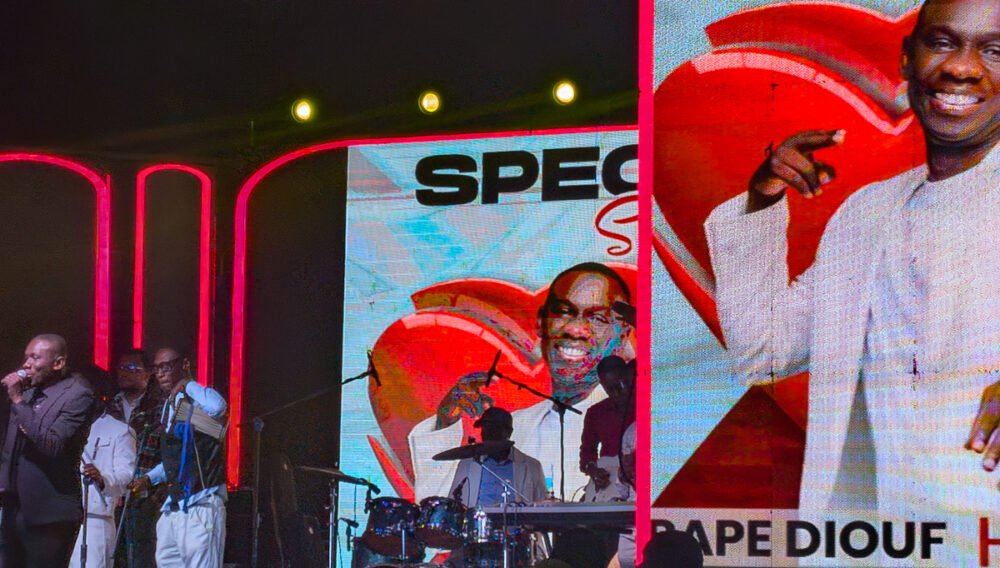
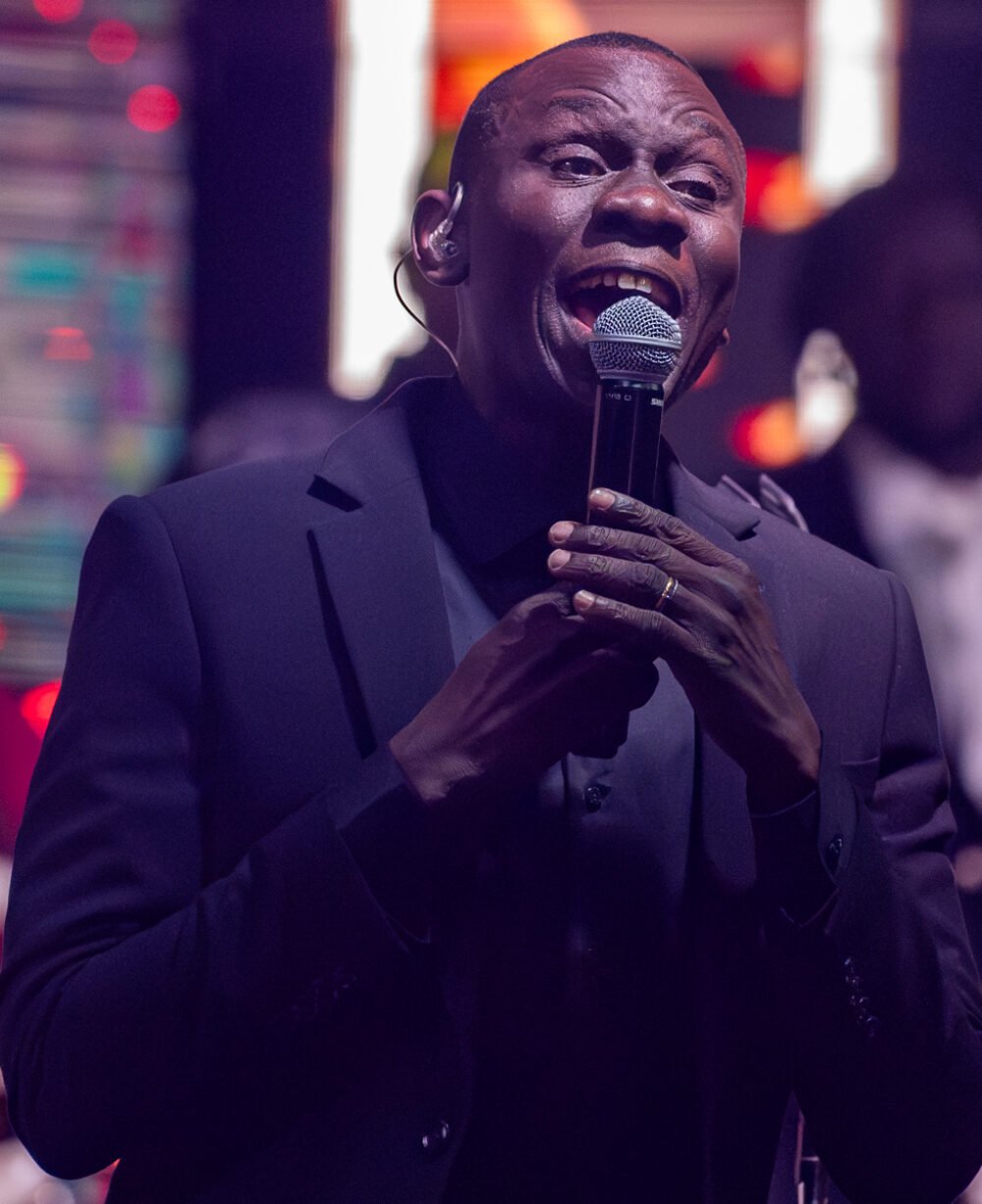
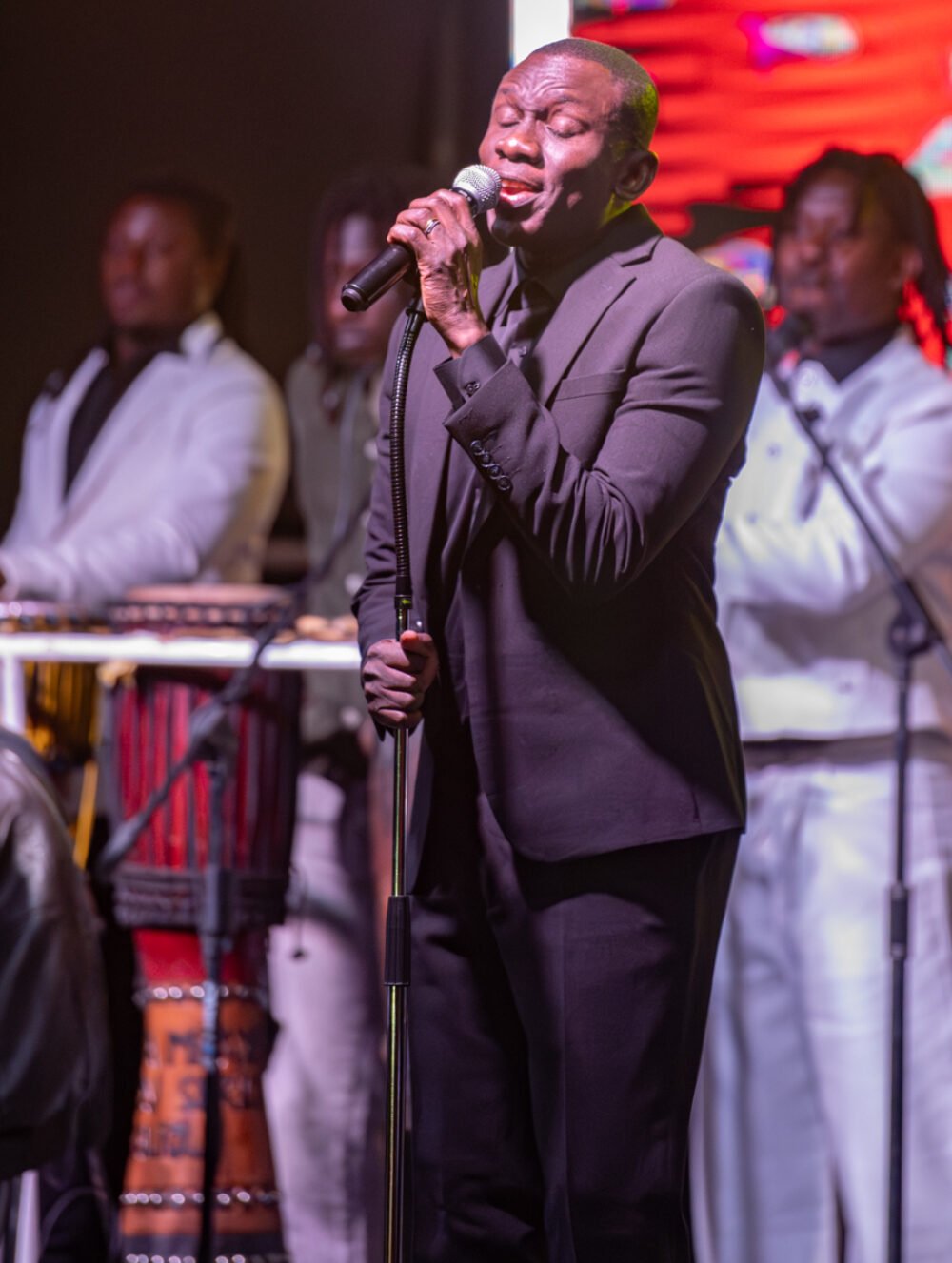
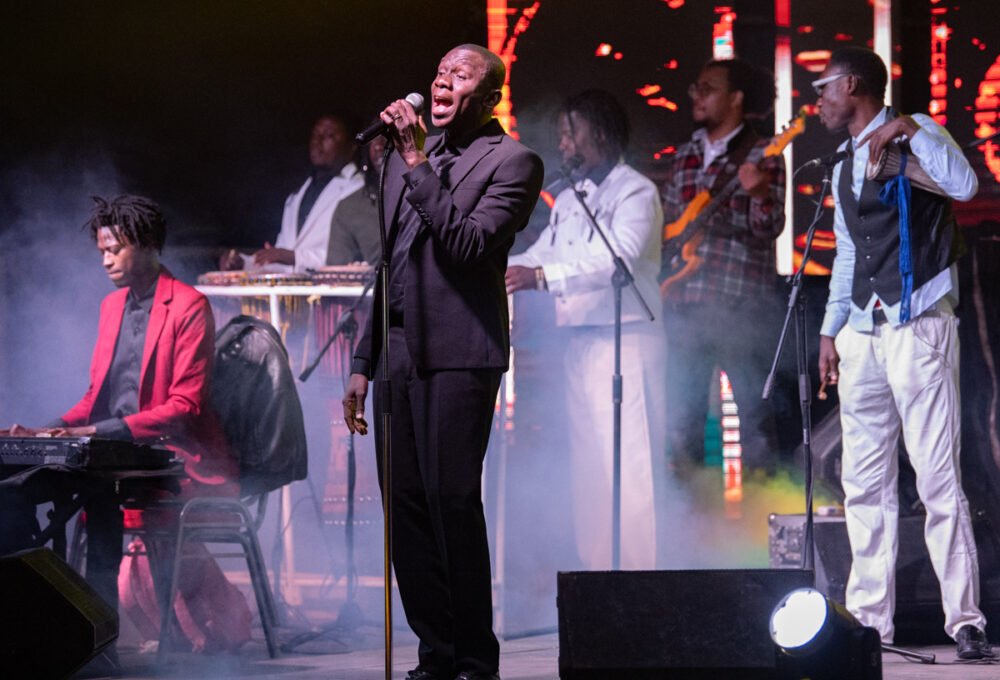
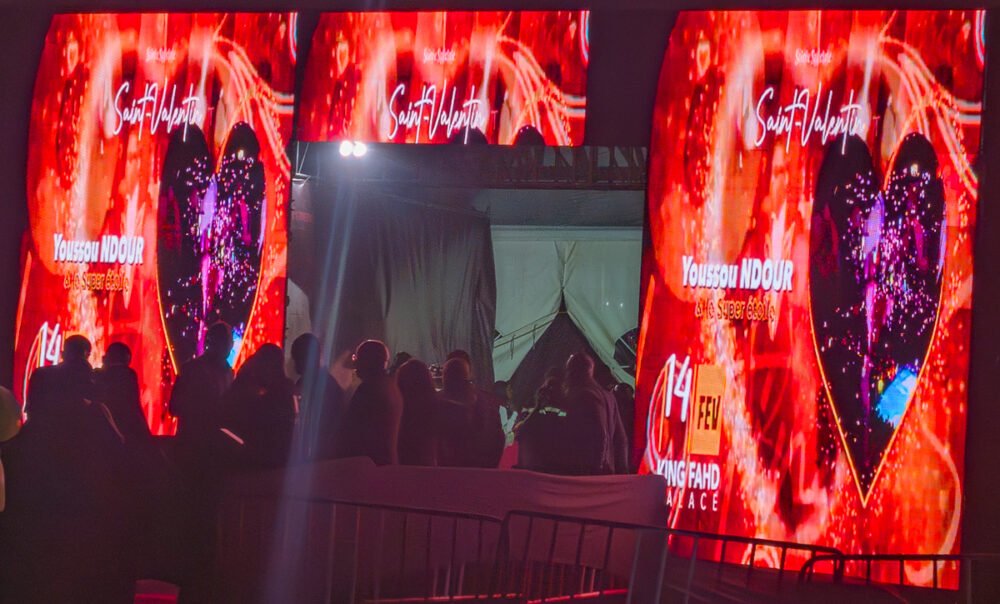
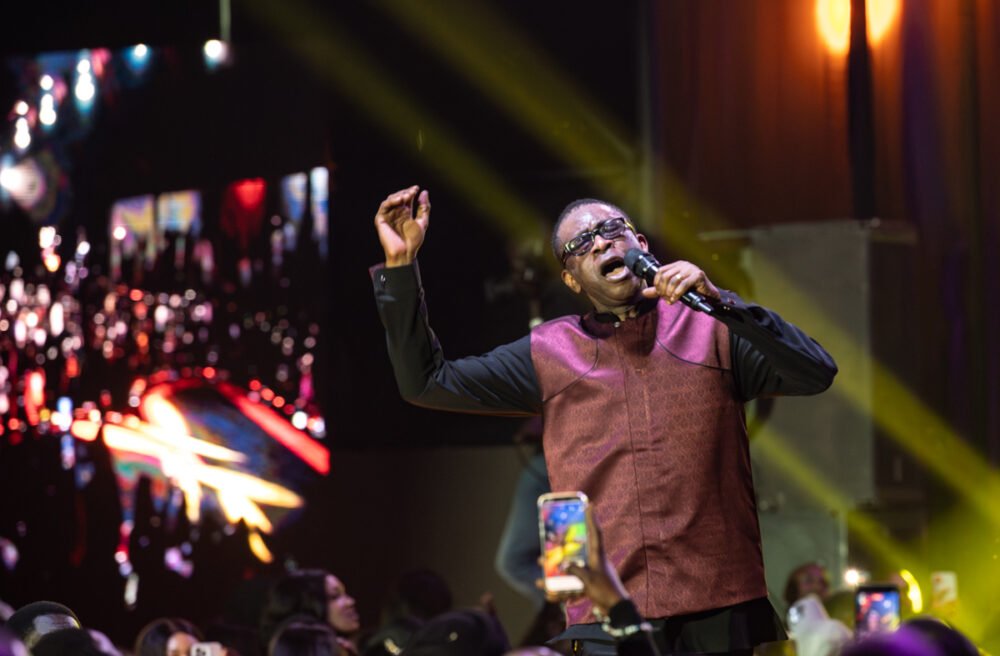
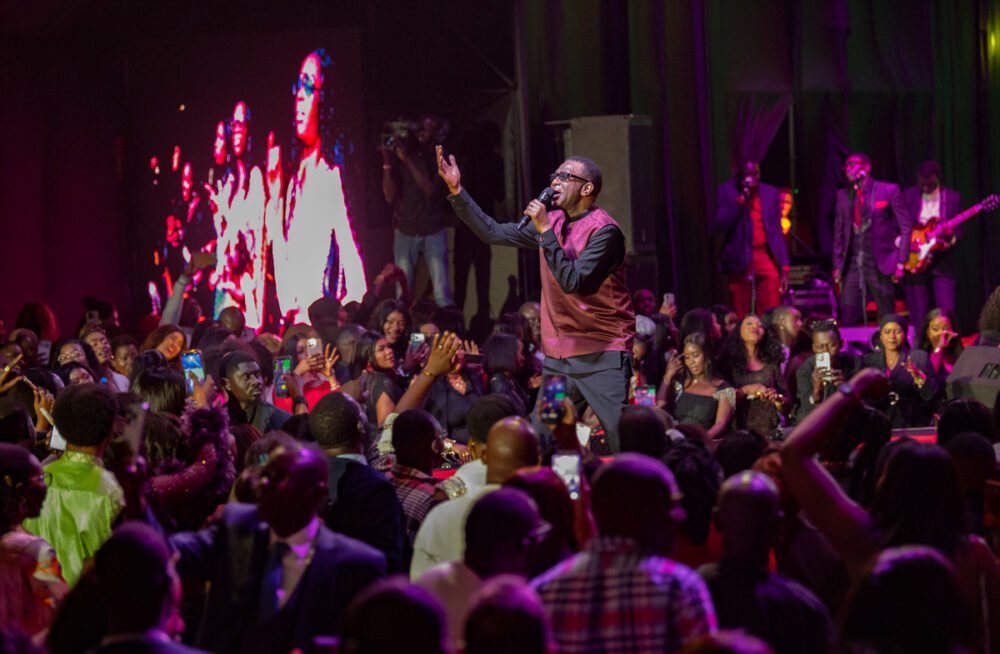
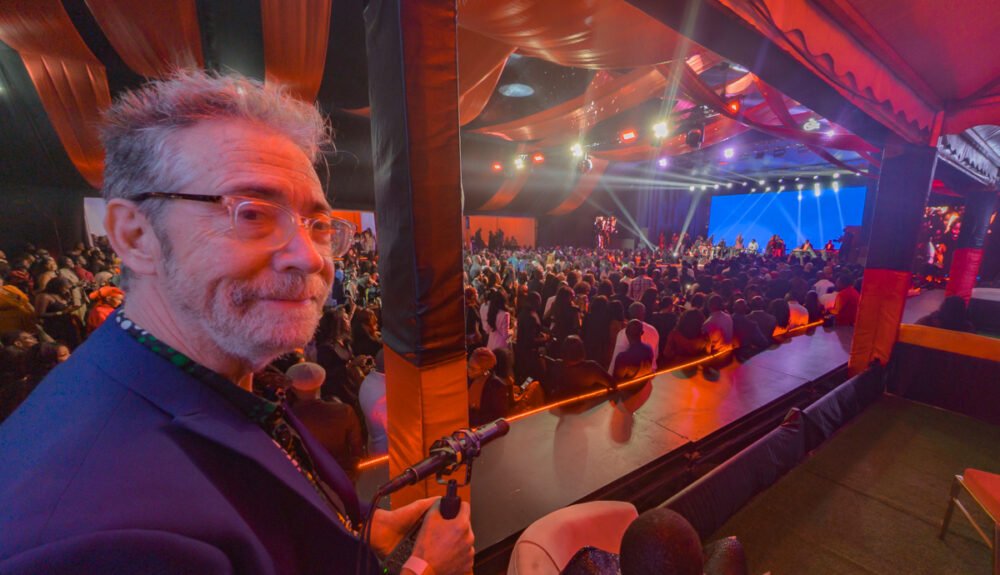
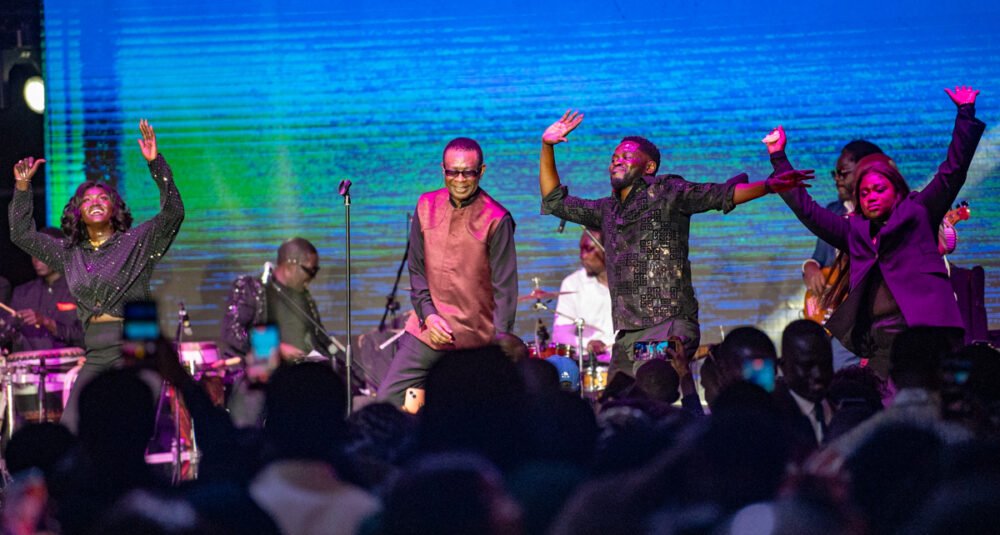
Meanwhile, Sean had taken advantage of the ultimate invitation, to Youssou N’Dour’s Valentine’s show in an enormous tent behind the King Fahd Hotel in Almadies. In the VIP section, no less. This show began half-past-midnight and ran for over three hours, so Banning was able to slip in for the later part. We’ve mentioned the impressive force and tightness of these Dakar bands, but Youssou’s is simply on another level. The transitions between songs were seamless, giving the feeling of non-stop music, hour after hour. And the crowd of thousands gathered there seemed to know all the words and sang along frequently creating communal ambiance like nothing else we had seen or heard.
When you think about it, there really no other musician in Africa who has been on the top of his game, with no downturns, for some 45 years. As Youssou told us when we met a couple of days later, he has some 500 songs in his repertoire and can hit nostalgic notes for listeners young and old.
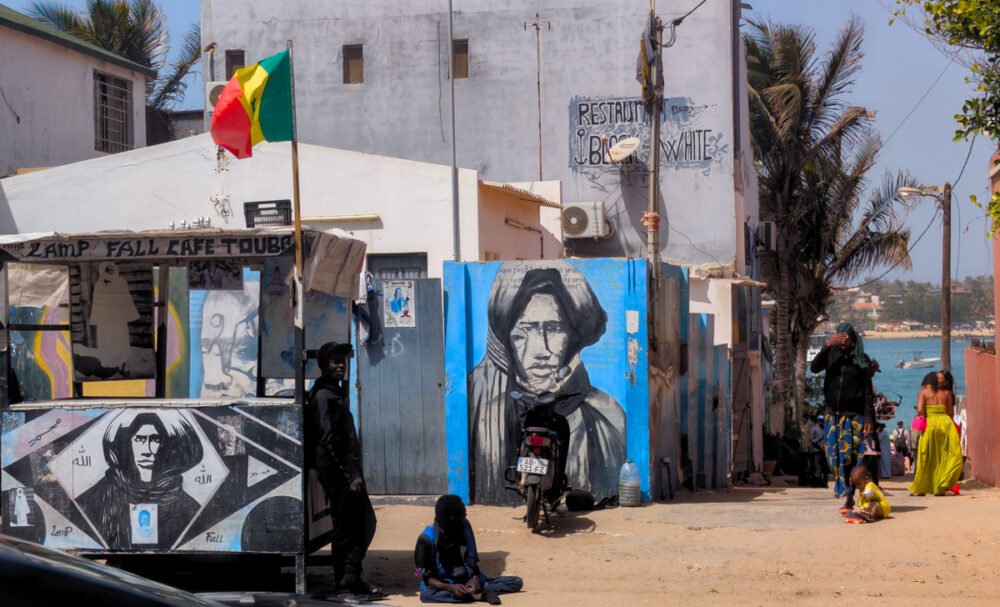
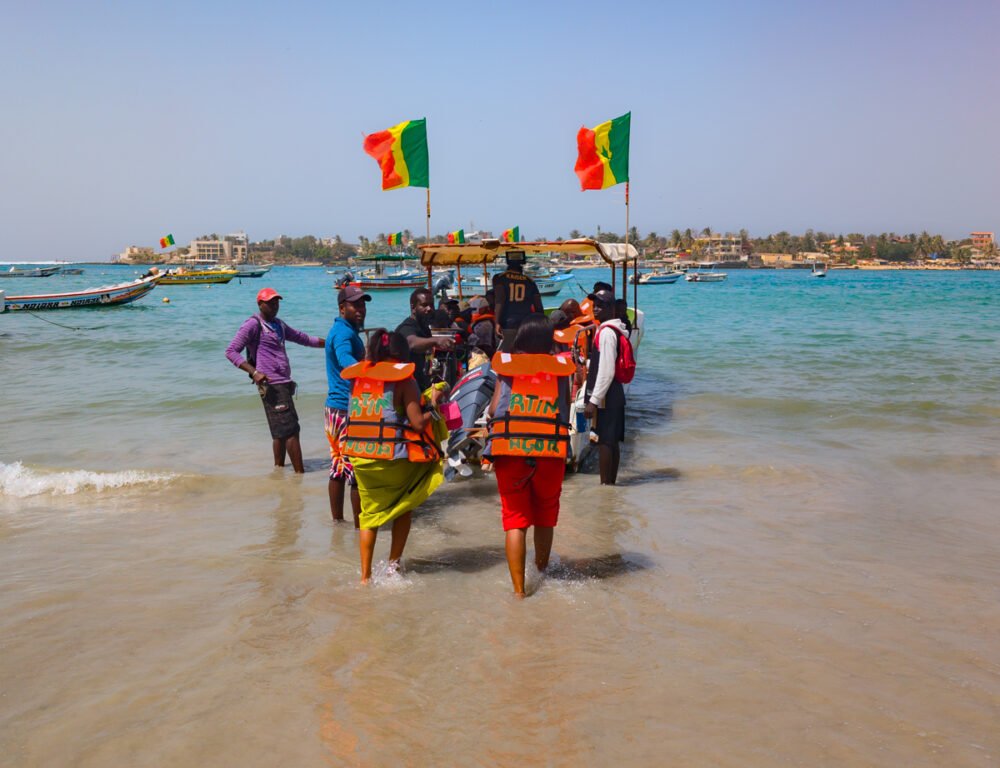
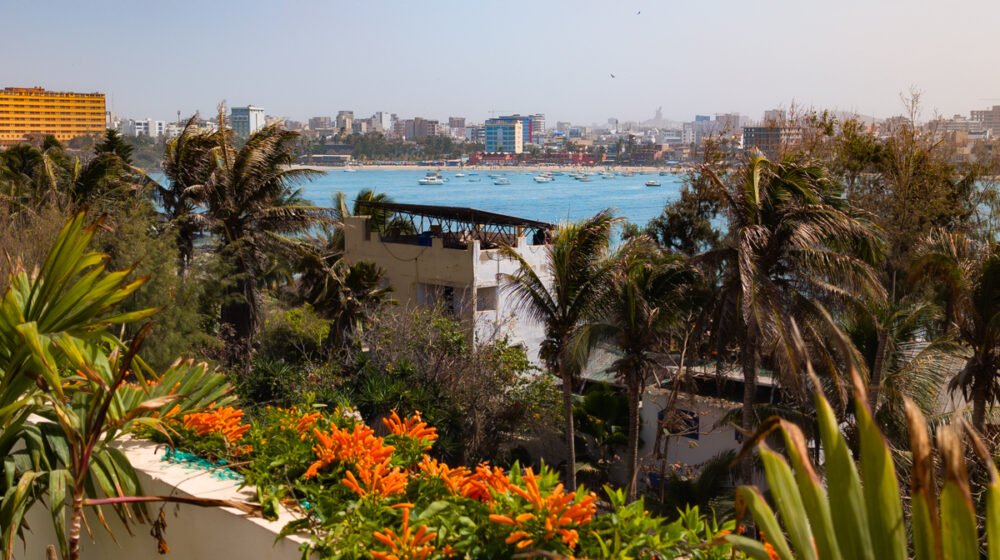
On Sunday afternoon, we took a short boat ride to relax on Ngor Island. Visitors routinely visit the more well-known Gorée Island, with its infamous “door of no return.” But locals are far more likely to be found sunning, swimming and dining by the beach on Ngor.
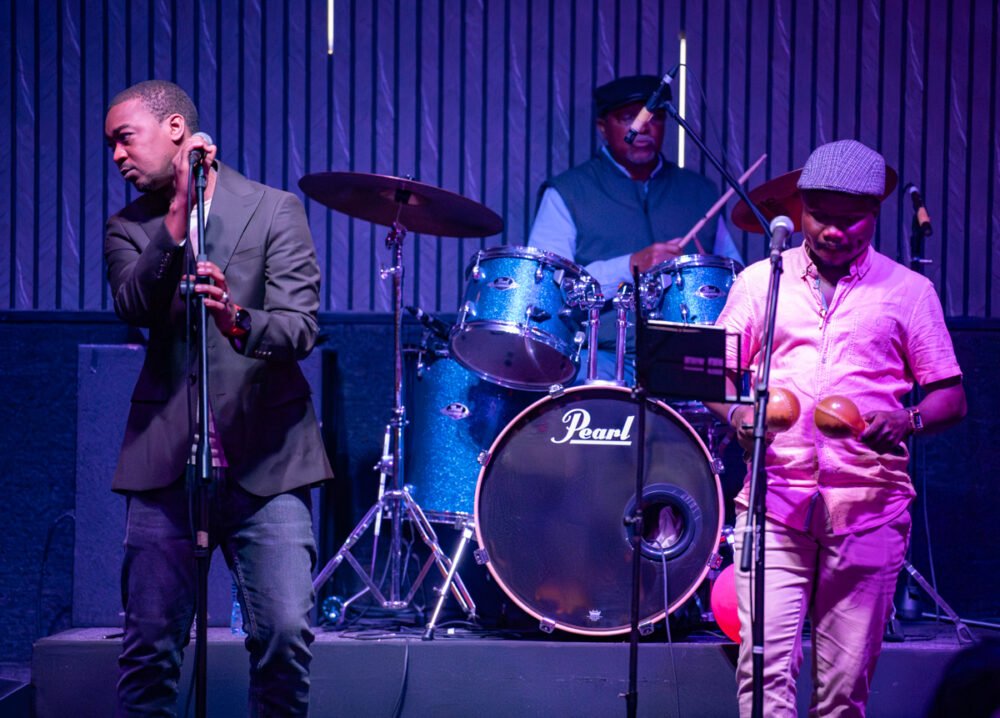
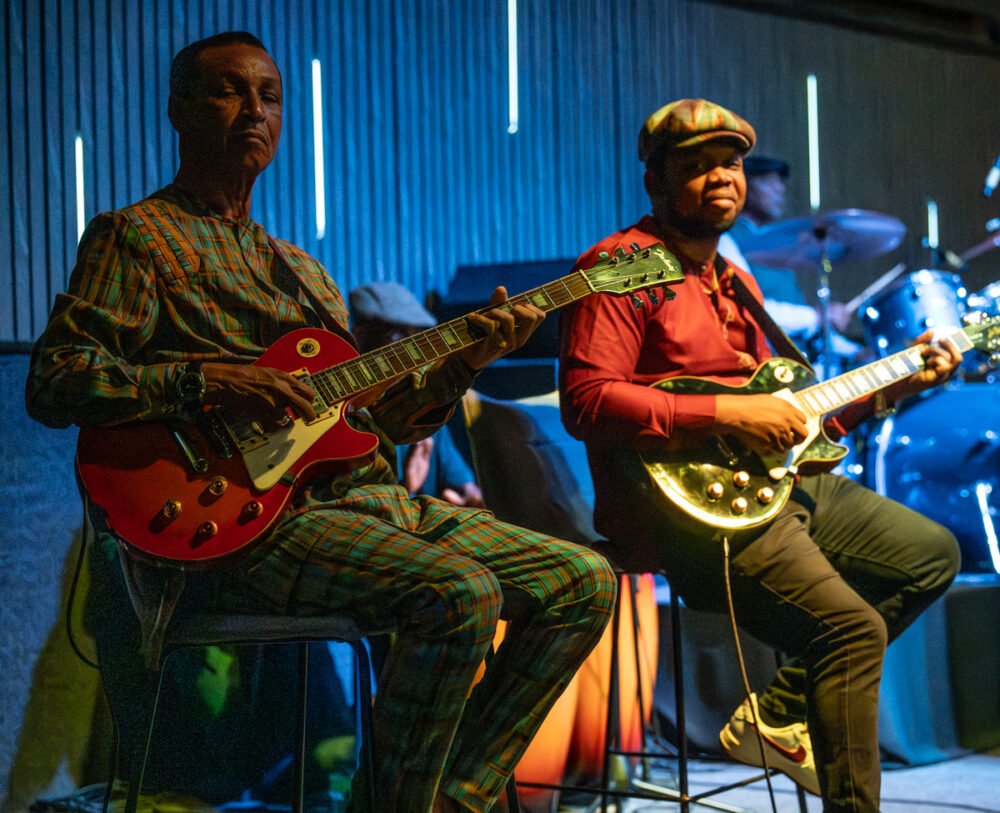
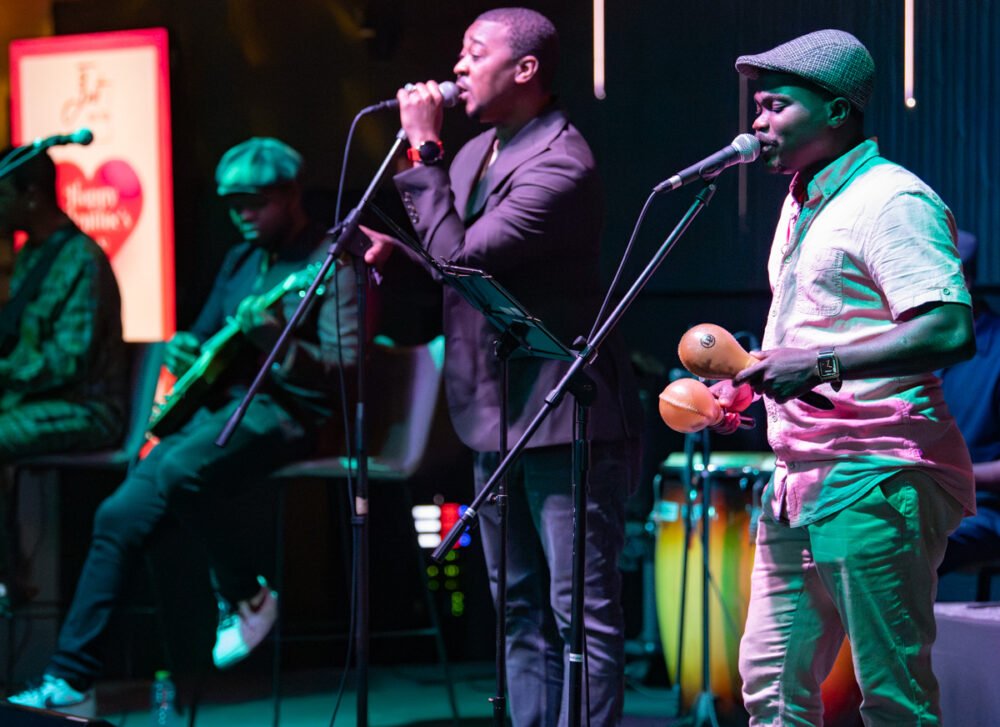
That night, we finally got to see Orchestra Baobab. Afropop fans likely know this band’s remarkable history of creating pan-African music going back to the 1970s when salsa was king in Dakar, and of the band’s revival at the behest of Nick Gold of World Circuit Records in 2001. In recent years, pretty much the entire original front line has passed away, but the good news is that younger musicians have been recruited, and the current band sounds fantastic. Soaring vocals, tasty two-guitar interplay, smart brass arranging, and grooves! Oh my. They will have an album of new songs this spring, and based on this performance, it will be choice!
For all we were able to experience in two weeks in Senegal, we left knowing there is so much more. Watch this space for a new Afropop Worldwide radio program, interviews and videos from this rich experience. The 2027 Afropop Music Tour in Senegal is sold out, with a waiting list. But given the interest, and the great things this country has to offer, there’s likely to be another in 2028. Write to us at info@afropop.org.
Special thanks to the folks who helped us pull this Senegal trip together, Ashley Maher, Dudu Sarr, Lucy Duràn, Pape Amande Boye, Papis Konate, Souleymane Kane and Octavio Fleury. We could not have done it without you!

Related Audio Programs
Mbalax Meets Mande in Dakar
Dakar Muse
Related Articles
Casamance: The Other Senegal