Senegal on the Mind: Striking Gold with AFCON and Lame
Senegal is on the mind as Afropop Worldwide returns to Dakar, with Sean Barlow and Banning Eyre leading a long-awaited journey back to one of the most influential cultural capitals on the African continent. Their last visi—in 2018—captured a Senegal already rich in sound, style, and youthful promise. This return arrives at a different historical moment.
Long a fixture in the top tier of African countries visited and celebrated by Afropop Worldwide, Senegal is unmistakably stepping into its power. Home to roughly 18 million people, the nation is experiencing a cultural turbo-upgrade: music scenes that bend tradition into futurism, street food that has become a global sensation, comedians who wield satire as civic engagement, and football that carries the emotional weight of national destiny.
That destiny was on full display in a recent epic, high-stakes, most-viewed Africa Cup of Nations (AFCON), continental finals match hosted by Morocco, when controversy erupted after a VAR-awarded penalty. With a 6.1 billion global audience watching, Senegalese players briefly walked off the pitch in protest—an act of collective refusal—before returning to secure a 1–0 extra-time victory over host Morocco.
The moment echoed something deeper than sport. It exposed a centuries-old identity wound within Morocco, shaped less by geography and cultural citizenry than by colonial colorism imported and institutionalized as class hierarchy. In private spaces, Moroccan and Senegalese cuisine would be part of a culinary family, and the dress would be cut from the same cloth. Publicly, the bananas thrown, goalkeepers' towels stolen, and racist insults hurled at Senegalese players during the nail-biting finals game in Morocco, the host nation, were not spontaneous acts of fan and officials' patriotic excess; they were subconscious gestures drawn from a long historical social script in which proximity to whiteness—real or imagined—has been rewarded with status, while Blackness has been relegated to the bottom of the social order. The tension was as palpable as the recent Miss Universe results: rife with ongoing corruption. Apologies are surfacing, but the original sport,whispers of rigging, stealing, and cheating are becoming louder.
These irrational behaviors go beyond football. They reveal how colonial racial logics continue to organize social belonging, producing a double consciousness, according to Martinique author Franz Fanon of Black Skin, White Masks, in which African identity is simultaneously claimed and disavowed. The contradiction is stark in a country that has repeatedly sought alignment with Africa, but also Europe—even applying for European Union membership—while reproducing racial contempt toward Black Africans within its own borders and stadiums. Why can’t they be part of both?
I look forward to a unified Africa free of these constructed identities and borders.
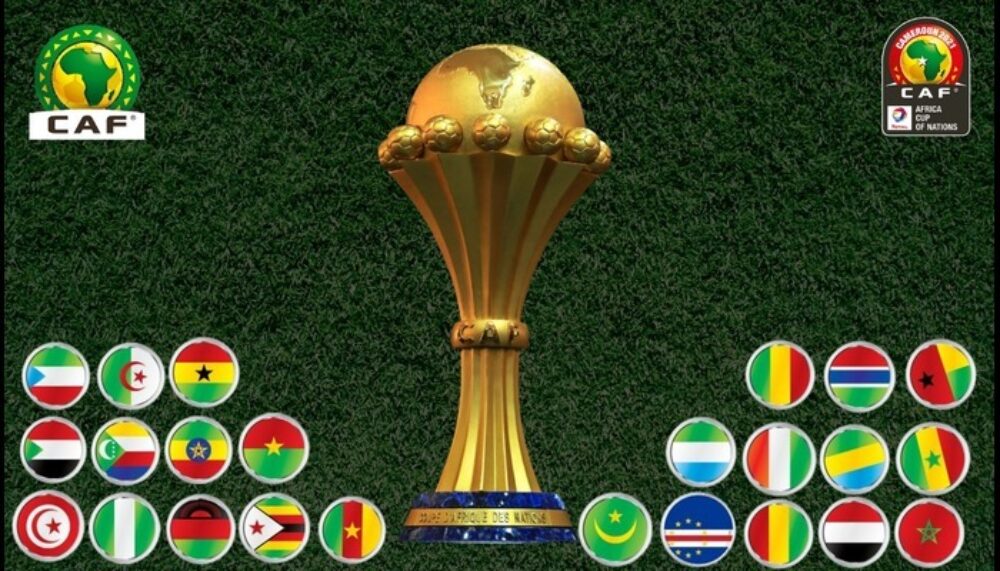
As Senegal and other Black African nations register visible wins—on the pitch, in music, in global digital culture and tech—those inherited hierarchies are being destabilized. Success disrupts the colonial grammar that equated Blackness with inferiority. Money usurps race, class, and gender categorization. What we are witnessing is not rivalry but exposure: the unmasking of a color-coded class system whose authority depends on Black Africa remaining symbolically subordinate.
From the Moorish Crusades through successive waves of extraction, iconoclasm, and colonial partition, Africa has been fragmented by imposed distinctions that masqueraded as natural differences. These separations—North from Sub-Saharan, Arab from Black, civilized from primitive—were colonial technologies designed to govern, not truths to be inherited and passed on. Senegal’s current moment signals a clean, dramatic rupture: not a re-centering myth, but a refusal of the racialized class system itself. Granted, losing the final of AFCON on your home ground might not be about the other team at all, but the ego of an entire nation at stake. This saga is far from over.
Khaby Lame and the Power of Silent African Intelligence
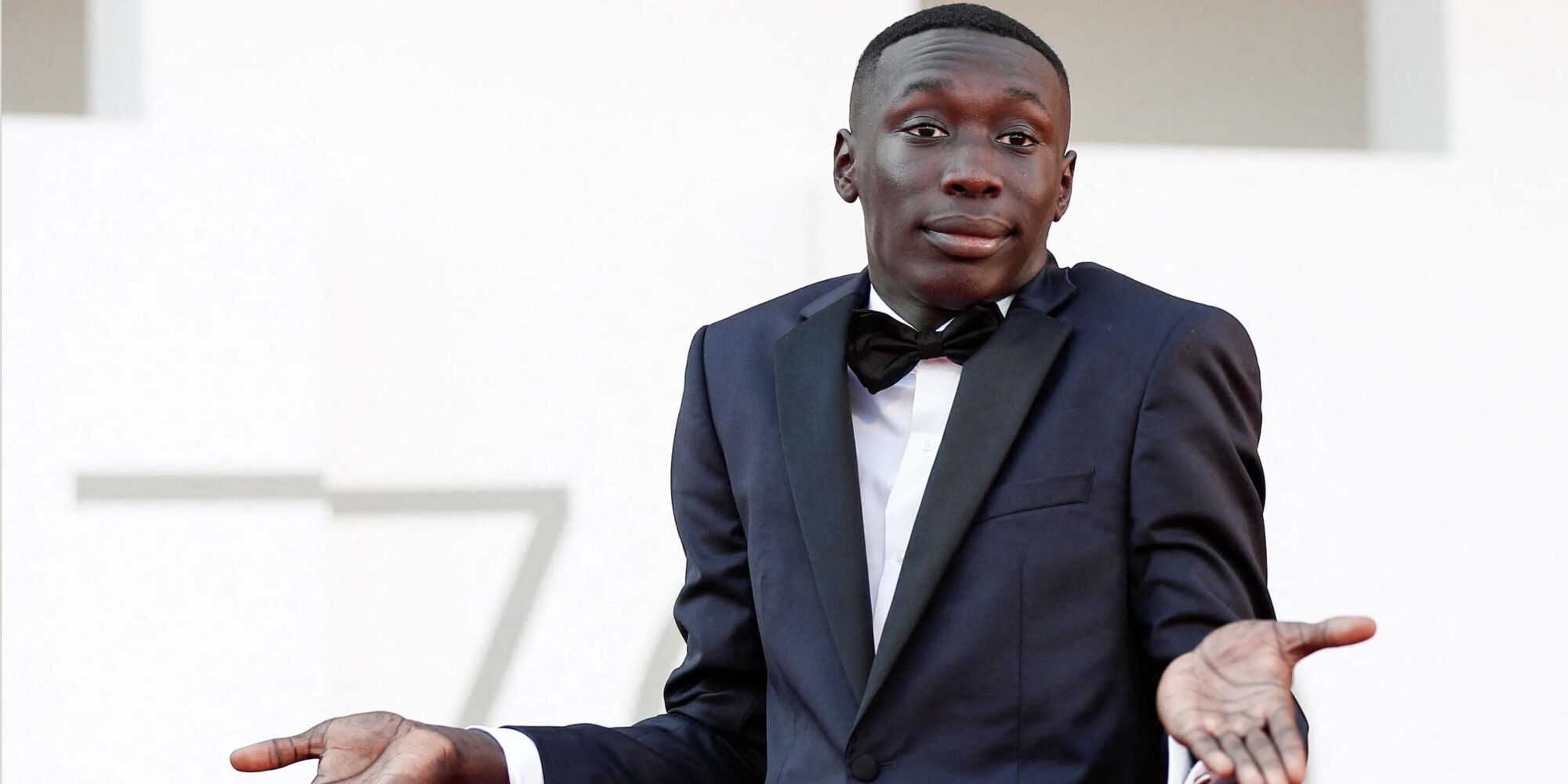
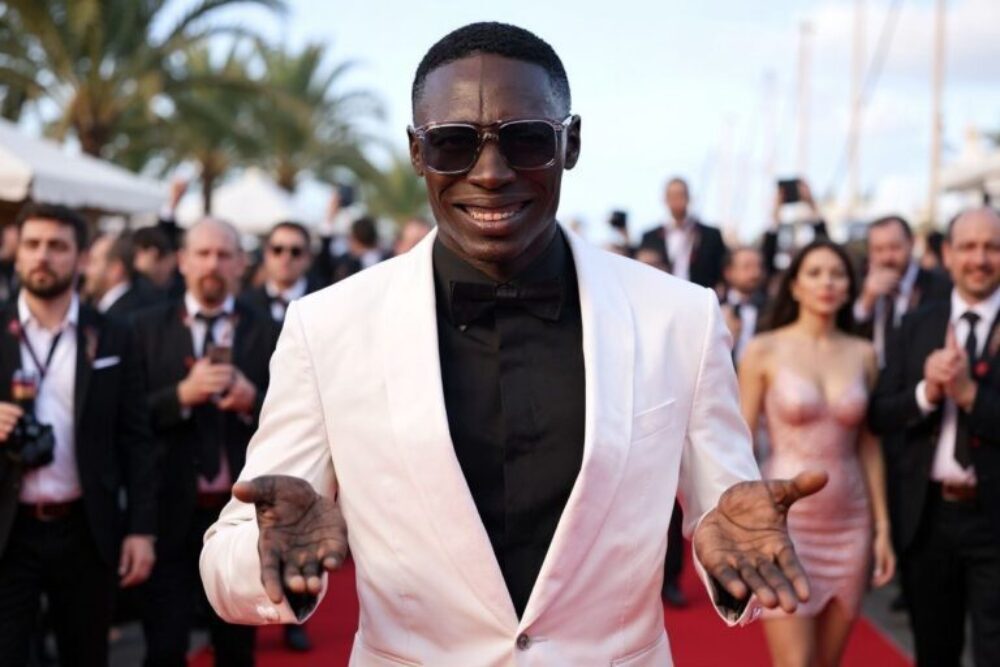
Enter Khaby Lame, whose comedy departs radically from the familiar slapstick registers often associated with contemporary African skit culture or even the African-American stand-up comedy tradition. This is not the broad caricature or verbal excess popularized by much Nigerian social media comedy like Mark Angel and Emmanuella. Lame’s intervention is quieter, more surgical. His humor draws instead from older performance genealogies: commedia dell’arte’s stock fools, the deadpan physicality of early silent cinema, and—uncomfortably but importantly—the visual grammar of blackface and minstrel performance that once framed Black bodies as spectacle.
Yet Lame inverts that history. His “fool” is not the object of ridicule, but its instrument. Wordless, restrained, impeccably timed, he occupies the role of a hyper-rational African subject whose only task is to expose the absurdity of modernity itself—its over-engineered hacks, its needless complexity, its faith in innovation detached from common sense. In refusing speech, Lame sidesteps language, accent and stereotype altogether, allowing gesture to do the critical work.
What emerges is a more sophisticated African comic figure: not the clown for consumption, but the mirror-holder. Lame’s comedy performs a subtle reversal of the minstrel tradition by stripping modern global culture naked—revealing that the joke was never African simplicity, but modern excess. In this sense, his global appeal is not accidental. It arrives precisely at a moment when Africa no longer needs to explain itself, only to point.
Lame rose to global fame through silent, sarcastic TikTok videos that dismantle overcomplicated “life hacks” with a single gesture and an unimpressed stare. As of January 2026, he remains the most-followed person on the platform, with more than 160 million followers worldwide. What began as a minimalist critique of digital excess has now propelled him into a different register altogether: full-spectrum global superstardom.
That ascent, however, comes at a cost. His recent $975 million business deal—finalized in January 2026 and involving the sale of his brand-management company, Step Distinctive Limited—marks a turning point where authorship gives way to replication. Central to the agreement is the creation of an AI “digital twin”: a cloned version of Lame’s face, voice, and gestures, engineered to operate continuously across languages and time zones. His silence, once a form of resistance, is now infinitely reproducible.
What is at stake here is not simply privacy but identity itself. The transformation of Lame into a perpetual, monetized avatar raises difficult questions about ownership, consent and the afterlife of performance in the age of artificial intelligence. For an African figure whose appeal lay in autonomy, restraint and refusal, the prospect of being duplicated ad nauseam—marketed, optimized and scaled beyond human limits—signals a new form of extraction. The body remains still; the brand never sleeps.
Taken together, these developments place Khaby Lame in a media category no African figure has occupied before. Not only because of his reach, but because of how his presence now circulates. His image, gestures and silence are no longer tied to his physical participation; they are being engineered for constant global deployment. What began as a minimalist, almost private, form of humor has tipped into a scale where identity itself becomes a reproducible asset. The cost of that leap is not abstract. Privacy thins, authorship diffuses, and the individual risks becoming a perpetual proxy for himself.
This is the paradox of the current Senegalese moment. As Senegal dominates globally—from football championships to cinema, digital culture, and now, influencer economies—the very systems that reward visibility also threaten to hollow it out. Lame’s journey from public housing to global icon is undeniable. But so too is the price of becoming a template rather than a person, a gesture rather than a body, a presence without presence.
Afropop Worldwide’s return to Dakar lands at this exact threshold—where Senegal’s cultural confidence is unmistakable, and the work ahead is learning how to hold power without being consumed by its replication. Watch this space for our reports!

Related Audio Programs
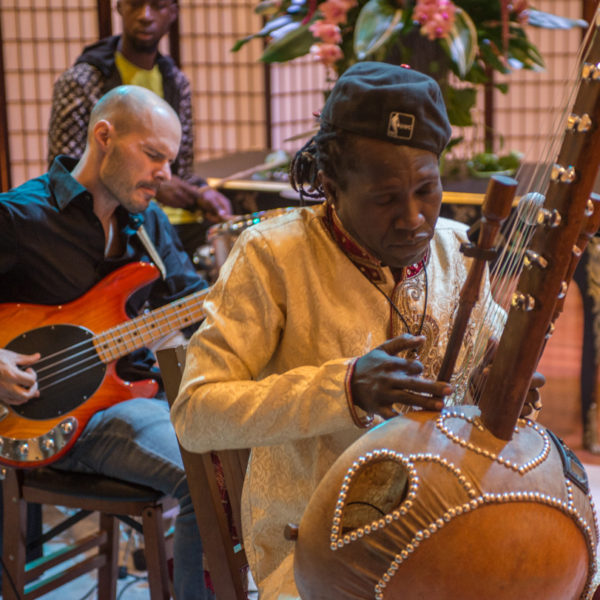
Mbalax Meets Mande in Dakar
Related Articles