Marzos & Mateo: From Salsa Dura to the World
It’s that time again—late winter in Montreal and another round of the Syli D’Or battle of the Afropop bands. The competition is now well underway at Club Ballatou, with a winner expected in April. We’ll also be announcing the Afropop Prize winner for 2026, to be awarded at the July Nuits D’Afrique festival. So we thought it was a good time to share more about last year’s winner, the powerhouse salsa ensemble Marzos y Mateo. Marzos being the band, and Mateo the sensational lead singer.
Since we met last summer, the band has been busy, preparing an album of original songs, and adding to their YouTube channel and Spotify.
Also, if you happen to be anywhere near Montreal on April 3, 2026, the band is hosting a special event: La Rebelión at La Sala Rossa, Montreal. The band says, “La Rebelión is a celebration, a space for expression, release and collective connection — where salsa, son and Afro-Caribbean rhythms are not just musical genres, but a shared language that reminds us who we are, no matter where we come from.”
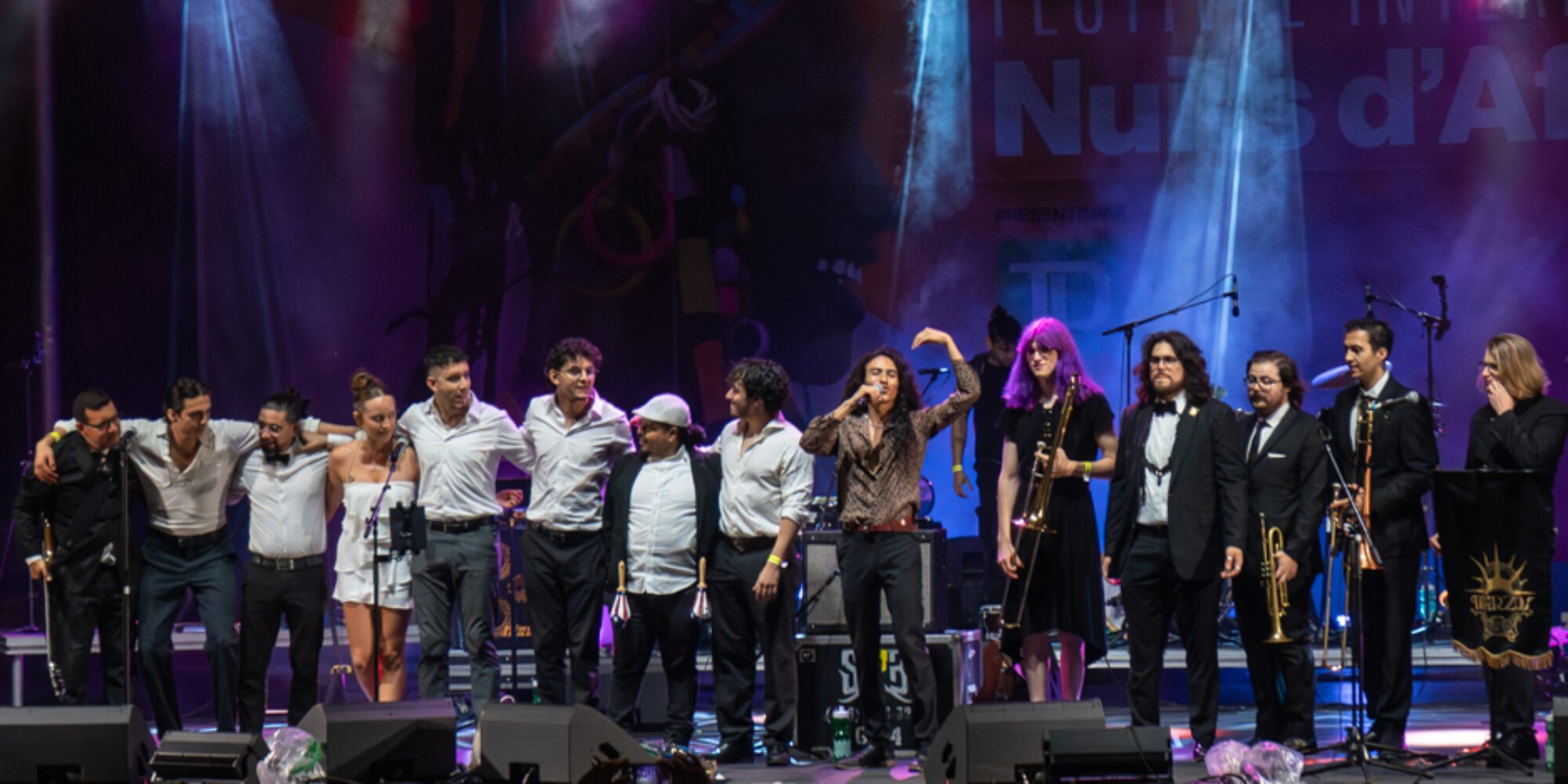
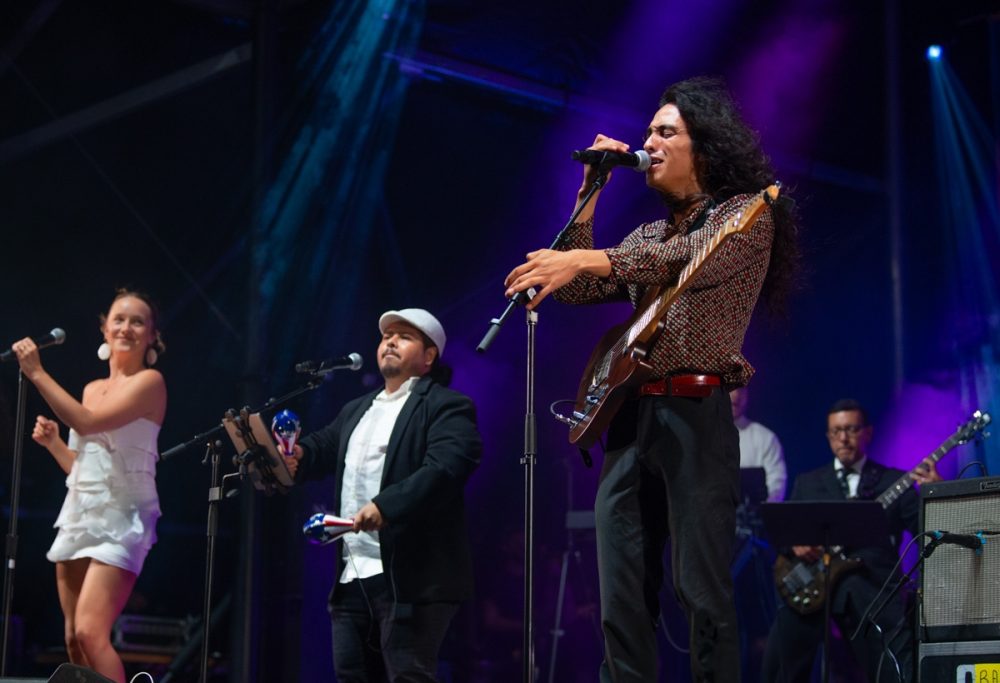
At the festival last year, Banning Eyre and Sean Barlow sat down with the band to learn more about their history and sound. Here’s their conversation. Photos by Banning Eyre.
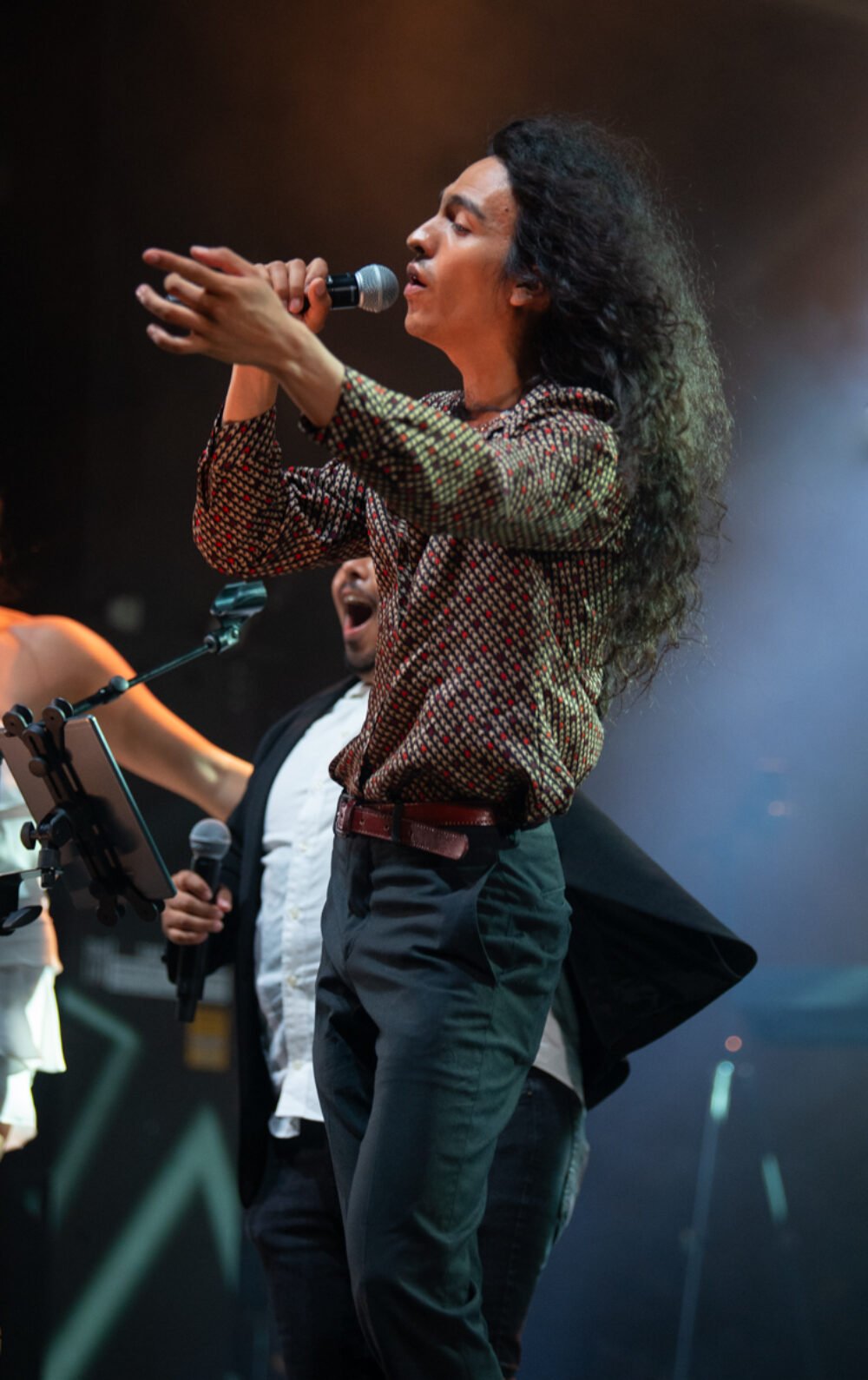
Banning Eyre: Hey, guys. It’s great to meet you. There was tough competition for our nod, but in the end it was clear. You guys were the best.
Tarek Aaron Bouhennache: Thanks, man. Actually, when you guys announced that, the Afropop Award, I thought we were not getting the Syli D’Or.
But then you did, right? You got both.
Yes, we got both. So that was pretty nice. But it was somewhat of a tense moment when they were announcing the prizes.
Oh, really?
Yeah. There was a big ceremony. But it's a very healthy competition in my opinion. What I liked about the finals was that the audience wasn't our typical audience that went here for salsa or Latin music. Some of them were here to support Koze [maloya music from Reunion], others to support Rais Viva [African and indigenous Latin American folklore], and others to support Marzos and Mateo. But every single one of them cheered for us when we won, and I don’t think they expected a particular group to win. They just wanted to hear good music, and that's what they had from the three different groups.
Cool. Syli D’Or is a great institution. To start, I’m goint to let you all introduce yourselves.
Alright, yeah, so my name is Tarek. I'm one of the co-directors of the band Marzos. I'm also a composer and a trombonist.
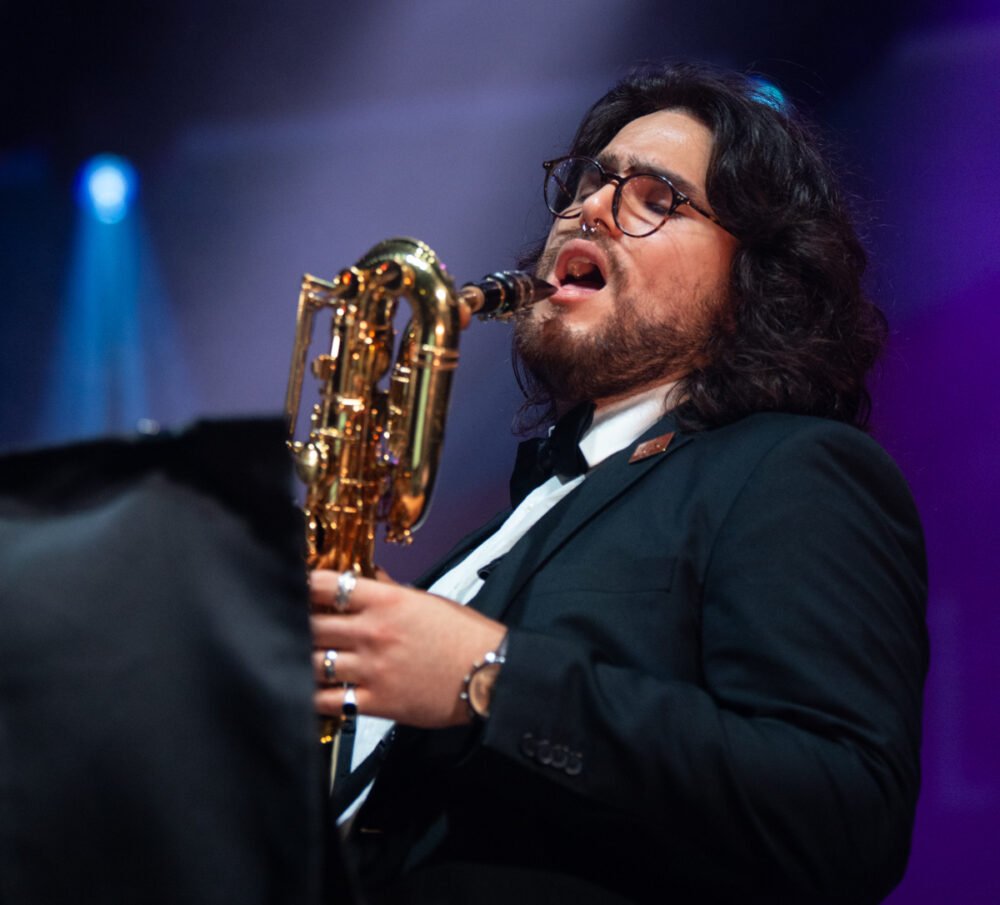
Arturo Marzoratti: I'm Arturo. I'm a co-director and president of Marzos and also the musical director, composer, arranger and founder of the band. And I play sax.
Mateo: And my name is Mateo. I'm a singer, songwriter, guitar player and now I'm collaborating with Marzos in this festival and this summer in this new era of salsa-dura, I would say, in Montreal.
Salsa-dura. We’ll talk more about that. But first, what’s the back story of Marzos?
Arturo: Essentially, it started off in 2019 at a benefit, a fundraiser my brother and I put together for my grandmother. She had cancer and we started the project to raise funds for her pancreatic cancer treatment, which actually was very much a success. Then, due to the pandemic and the complications with my grandmother's illness, we had to take a break. But we started again with a new formation, because back then we had a full big band. We had 15 horns with us, basically an orchestra, but no voices. So it was instrumental, more big band formation Latin jazz music. But we restarted the project with more of a salsa-dura angle in 2024 with our first homage to Héctor Lavoe, with Mateo. And that's how this sort of renaissance happened, practically five years later. And since then, we've been collaborating with Mateo and other artists in this new lineage and new moment for the band.
What about the name Marzos?
So Marzos is essentially a diminutive, an abbreviation of my brother’s and my last name. My brother is also the co-founder of the band. He can't be with us today because he's got complications; he's traveling around. But our last name is Marzoratti, so we reduced it to Marzos.
Okay. What's your background? Where are you or your brother from originally?
So we're from Venezuela, and we emigrated here in 2008 and started playing music in high school and stuff. Our parents were very much inclined to give us a musical background as kids growing up, making us listen to tons of different styles of music. We both started in high school musical programs, and that's how we started doing music together. The Latin music and salsa specifically followed us into our academic journey here in Montreal and in Canada. Despite being in another country where the emphasis was especially on pop music and completely different styles of music, we definitely kept salsa and Latin music with us throughout the journey.
So you've gone through different formations, 15 horns, Latin jazz instrumental, now salsa-dura. How big is the band these days, and how would you describe the sort of the focus, the musical focus at this point?
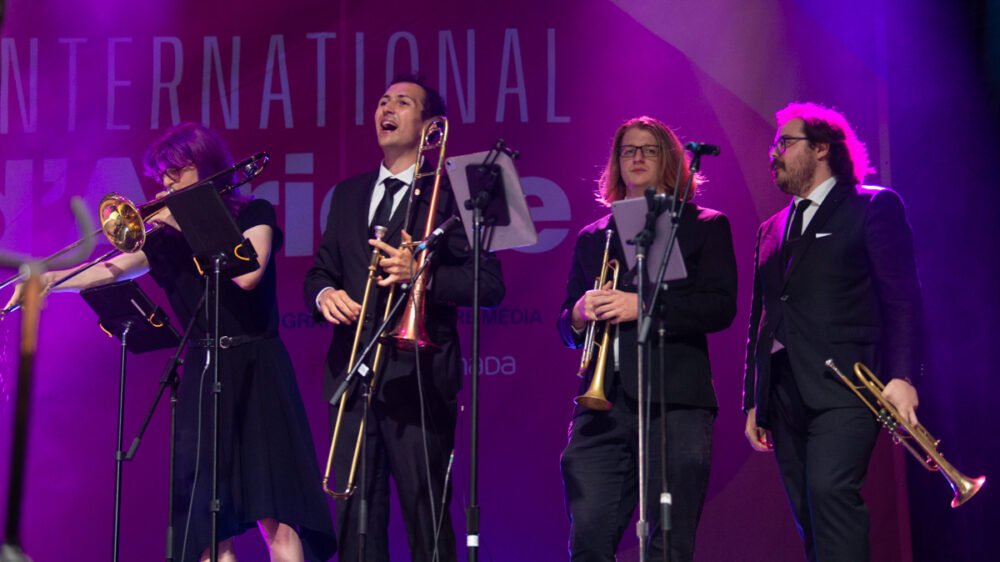
Well the formation now we've got 14 musicians total so we have five brass, three percussionists, a piano, bass and four singers as well as Mateo on voice and guitar. Now the focus, instead of Latin big band jazz, is more into the salsa-duradirection. So it’s a bit more pop music with lots of inspiration from the salsa that was playing in New York in the ‘70s. That's kind of where we started off in this new era. We were playing lots of homages to different big names of that era, to kind of establish our sound and now we're in this new era where we've established our sound. We've established our musicality and now we're going towards new horizons in terms of more experimental stuff. We definitely want to be experimenting with new sounds and whatnot, and that's where it coincided with us to collaborate with Mateo, because Mateo also has this sound of his own with his guitar, this sort of fusion of different styles of music that very much fit with our vision of the band.
Have you made recordings?
During the competition for Syli D’Or, we did record our final set. We recorded that, so we have three originals that are on Spotify right now, as well as videos on YouTube. [They’ve added more since this interview.] And with the prize that we won we have studio hours, so we'll be able to record new materials.
We'll have to stay in touch as that comes about. So what's the mix in general in your set for tonight. Originals? Covers?
Well for the set of tonight we have 16 pieces and from those 16, we have eight originals, five of which are Mateo's pieces and three are our original pieces that I composed, as well as Tarik, who is a composer of two pieces. So it pretty much evens out in terms of covers and original.
What kinds of bands are you covering?
We're covering Salsa Colombiana and Joe Arroyo. We're going back to our roots with Héctor Lavoe and Willy Colón, as well as Ruben Blades. These are the big names of the salsa-dura. So we're kind of doing a mix of what we want to be doing in the future and what we've done recently since we first restarted the band.
Let’s hear from Mateo now. Mateo, tell us a bit about your background and how you got into this great band.
Well, first of all, really nice to be here with you guys. Music got to me when I was five years old. I started classical guitar, percussion and vocals in Colombia. I'm from Colombia. I started with South American folklore and Afro-Latin folklore from like five till 17, 18 years old. Then from there, while in school, I toured in a couple of countries. They did an album with my school about South American folklore. And then I discovered rock ‘n’ roll, blues and electric guitars. So I wanted to do that.
Then I went to another school with other mentors. I played electric guitar for like five years and I playing with blues and rock bands in Colombia and getting away from the folklore for a couple of years. Then I came here to Montreal. I immigrated here 10 years ago when I was 19. I came here to finish my studies in lighting design, set design, stage design and technical director for shows. And I did that here; that was my main focus, actually.
So music? At some point, I was like, “This is a blessing and a curse, right?” It's always going to be there. Even if I become a lawyer, I'm going to end up singing in a blues bar or whatever. So I choose to study all that other stuff. But when I came here, the salsa dura came into my life. I would say it's destiny, but also randomly. I started going to Latin gatherings where they were playing Afro-Latin music and I got really connected with it from an emotional point of view. And then I started singing salsa and I discovered that I could sing that music, and that I love it. I had a range for that music and that I really loved. So the journey in salsa dura started 10 years ago.
I joined in the band called Lengaia Salsabrava. With Lengaia, we had two albums produced by Ricky Campanelli. The second album got nominated for a Juno Award. I toured with that band for five years, but my musical identity wasn't defined enough for me during that time. I was doing a lot of salsa, but only salsa. I had also this rock background, and I was writing my own music. I needed to find my musical identity.
So I called my ex-producer Leon and we started from scratch. I had like four bands here, singing and playing guitar. I quit all those bands and I started focusing on my own sound. And then I discovered this Mateo sound. I came mixing Afro-Latin sounds with Latin alternative music and, production-wise, it was like a rock format. We had no horns, no keyboards, just two electric guitars, bass and drums. I had a Jamaican drummer who changed the whole sound, so we started fusing sounds and then it became Mateo.
I really wanted to get away from salsa dura during those years, but it was hard because people get so attached to this nostalgia of Fania and the ‘70s and the vocals of that style. But I got away from salsa dura for the last four or five years until I met these guys, and they were like, “Please. We are doing this…” I mean I was open to collaborating with new people, with professional people, musicians who are willing to learn how to play this language. Because salsa dura is… hard. I'm still learning, and it's been 10 years I'm doing this. So I'm really proud and happy to be playing with these amazing musicians, so talented and so dedicated and so open to learn and to like keep growing. The songs we're gonna play tonight are part their compositions and part my songs arranged in a salsa dura format. It’s been a pretty interesting journey with Marzos.
I guess they don't call it dura for nothing, right?
Yeah, that's it.
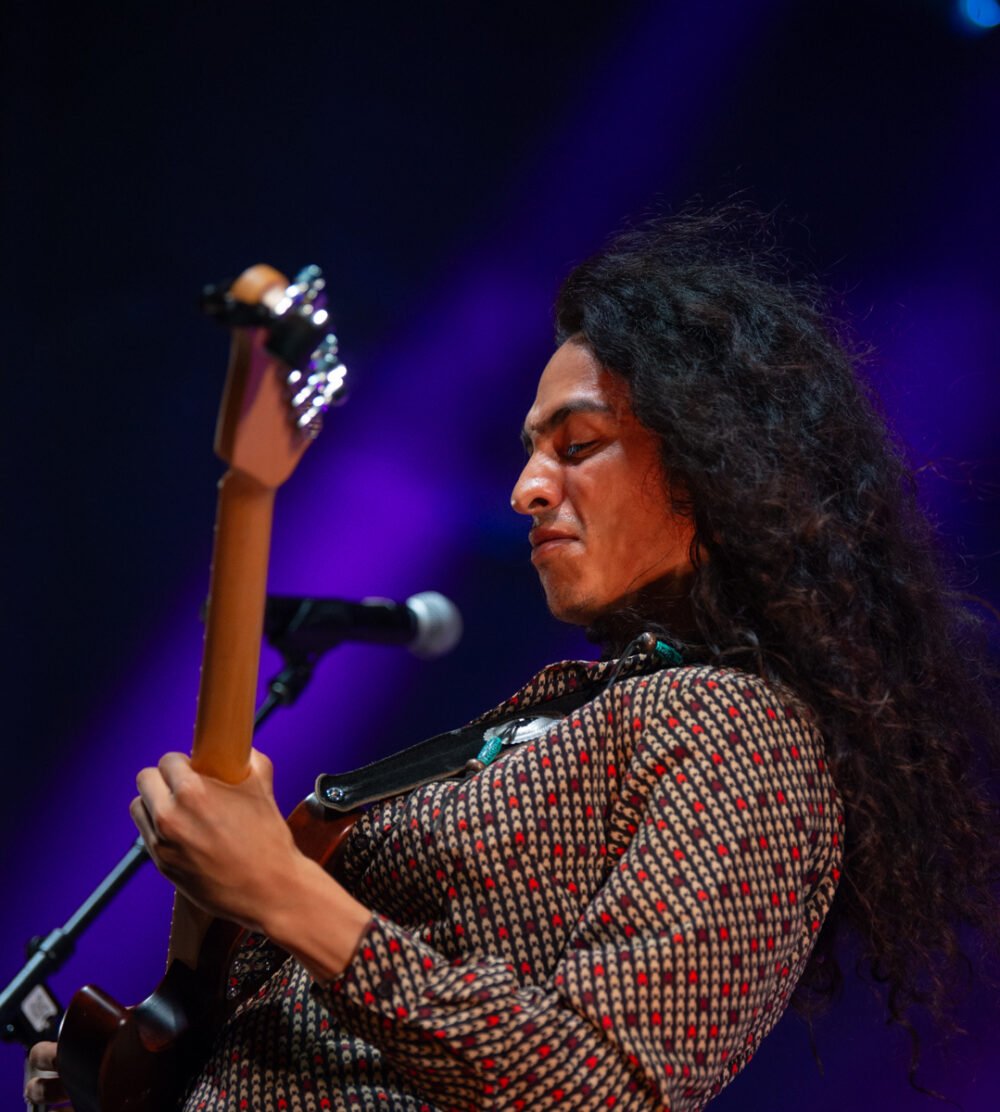
We didn't know anything about you when we watched your set at Ballatou, but I saw you playing guitar at the beginning, I naturally thought of Santana.
Yeah, definitely, definitely. Well, he paved the way in rock and salsa fusion, which has been with us ever since, so that's cool.
You want to tell me about a couple of the songs, your songs, that we're going to hear tonight?
Yeah. So we are playing five songs. I have an album called Vengo de Frente, volumes one and two, and that album gave me a name in the scene, so I wanted to pick five from those 11 songs that could fit the salsa fusion that we're trying to create here. These songs have a spiritual background; they’re a fusion of the Afro-Latin cultures. We have a couple of boleros, son montuno, salsa dura, guaguanco, Afro-Latina for Cuban vibes. This is the first time that I'm listening to my music in the salsa format, played by 14 musicians with the horns and everything. Arturo and myself built these arrangements together, and he did amazing work with them. So yeah, the songs are about a spiritual journey through music, and what I am as a musician, what I live. I want to connect emotionally with the people, basically translate emotions into the music.
I really love Colombian music. I've been only to Cartagena but I know there is so much great music in Colombia. Where did you grow up? Bogota?
Bogota. I grew up in Bogota. But actually, Colombia and South America, it's just a notion of music that is so big. It's just crazy how rich we are in terms of culture, and how African music is also such a big influence in the arts. Especially on the Pacific Coast, with all the rhythms that we have there, it's just beautiful, and it just keeps building the culture there.
So Tarek, you guys are going to perform some Marzos compositions as well. Tell us about those?
Tarek Aaron Bouhennache: Yes, we’re going to do three of our compositions. I’ll tell you about the two that I composed. The first one is called “Marzos Intro.” It's the first thing that people are going to hear when they go to see us, right? I really wanted us to have an introduction, something that we could play every time we do a show, whether it's in a tribute, whether it's just compositions, you know, something that people can hear and say, “Oh, this is Marzos.” I tried to feature all the musicians individually, all the sections. And actually, we played this at the Syli D’Or competition. But this is a bit of a different version because I added a pre-intro of just the five horns playing a brass chorale together. That comes from my classical background as a classical trombonist. You know, I studied all the Bach chorales and counterpoints and harmony. And I tried to write that in a way that fits with the salsa genre. And I think it's going to work out pretty well. It's beautiful. It's going to be great.
That's wonderful.
My second composition is actually a longer one. It's called “Tuque no Savas,” which means “what you don’t know.” It's basically a tribute to all the people who don't know much about salsa, who don't know how to dance, how to play music, how to sing. But nevertheless, they're always here at our shows. They always like our music, even if they don't get up and dance. They sit down and open their ears. They're open to our music, even though they didn't grow up with it. And I think that's really important, because a lot of salsa just has lyrics that invites people to dance, to sing, and that's really cool. But I think that leaves a lot of people saying, “Well, you know, I don't really identify with these lyrics.” But actually, my chorus says, “If you don't know how to play, you don't know how to sing, you don't know how to dance. You're still a salsa hero if you like salsa.”
That's interesting. I seem to recall that Pedrito Martinez has a song like that, “If You Don’t Know How to Dance.” Right?
Yeah, yeah, yeah. That’s interesting. This song is the only one that Mateo won't be singing. It's gonna be Marino, another of our great singers today that's gonna be the lead voice on this song. And I'm really looking forward to playing it for the first time outside in this festival. So the third song is from Arturo.
Arturo, tell us about it.
Arturo: My composition is essentially a story. I was thinking about this cultural thing that happened in Latin America where it was this mix of cultures. It started off with the Spanish slave trade back when they occupied Latin America. The song talks about the things that would actually happen back then where these slave-trade boats would get intercepted either by pirates or other slaves and would get liberated. It calls out to a need to liberate oneself from those sort of oppressive hands that we still feel today in Latin America. So it starts off very much as like a fictional story, and I think the moral of the story here is the chorus, which translates, “He who lives by oppressing people one day will pay for it.” The song calls out a need for freedom from this oppression that we feel in our countries, and in our culture nowadays. I have the luck to have this composition interpreted by Matteo, and also, I wrote in a very specific part for him to have a guitar solo, to implement his sound. I think we're very excited to play all of these compositions, most of which we're going to play for the first time tonight.
Well, this is exciting. I'm feeling very good in the choice we made for the Afropop Prize. So, Mateo, do you want to say anything about the environment in Montreal and what your experience has been? You know, I actually grew up in Montreal when I was very young, like in the ‘70s, but then I moved away and didn't come back until much later. Watching this festival and Syli D’Or grow has been very impressive. There's a tremendous sense of multicultural community. Anything to say about that?
Mateo: That’s a really important thing that you're mentioning, because in Montrea, we find people that really are fromtheir country. You know what I mean? You're gonna find someone from Cuba that is a percussionist and knows the Afro-Cuban culture A to Z. You’re gonna find someone from Venezuela or from like other parts of the world… It's every background and every person here that has an African background, when it comes to building and creating things, it's really nice because we can get a pure point of view and make a fusion with the real cultures of those people. Montreal is a unique city for that, I think. We all learn from each other and we all discover new ways, new forms of art. Let's say in the in the final of Syli D’Or, we had Kozé from Isle de la Reunion.
Yes. We saw them last night. Great group.
And they were playing music that I didn't even know existed. But that music reminded me a lot of what happens in the Pacific coast in Colombia. So I was like, “Oh my god, the patterns, the way he was singing, so many things! We are all connected at the end of the day.” And it's just a privilege for me to make change in such a way that we can still grow up together and keep creating crazy music and find so much talent around.
I like that. At Afropop, we've covered so many stories from the Middle East, the Caribbean, South America, Europe, and of course, all over the continent. But really, we always say that it's all part of one big story of cultural dissemination and mixing. That’s why you always find these surprising connections.
Arturo: And I want to add to that. Nuits d’Afrique is a perfect context to show that, right? We find that the programming is just like what Montreal is, I believe, at the end of the day.
Anyone else?
Tarek: I actually like to add something a bit complimentary to what Mateo said. Mateo, you told us about the fact that all the musicians you encounter in Montreal are so diverse, and they know their cultures well, but I want to say something about the audience. I think the audience in Montreal is one of the most curious that I've ever met, you know?
Really?
I've been to many places, well, maybe not that many, right, but compared to my years. Anyway, I've been to enough places to know that some audiences really just want to stick to what they know, what they feel comfortable with, right? But here in Montreal, we're exposed so much to different kinds of music that when we hear something and we don't know what it is, our first instinct isn't to say, “Well, that's a bit weird.” No, it's to say, “Wow, I've never heard that. Let me sit down and actually listen and try to figure out what's going on.”
Yesterday, I had the pleasure of playing with another band, but what was very awesome about this is that the organizers didn't feel the need to put two salsa bands one after another or maybe a salsa band and then something remotely related to that, like, you know, a merengue or something that's Latin. You know, they had salsa and right after it was North African, which, you know, I mean, they can be similar in their own ways, but it's so different that some people might be afraid to stay. Well, maybe some members of the audience will leave after the first set or just arrive for the second set. But no. They all stayed and they all enjoyed both sets just the same. And I think it's a really great way to learn music and to be exposed to music. As a trombonist myself, I started playing classical music, but I was very early on exposed to jazz, Brazilian music, Arabic music, and never did anyone tell me you have to choose one field and stick to it. No. They all told me, you know, the more stuff you learn, the more it's going to help shape you as a person and as a musician. And I frankly quite agree with that.
What's your background, Tarek? Your ancestry.
I'm not like Mateo and Arturo here. My mother is French and my father is Algerian. So I discovered Latin music, not through my parents or my heritage, but just like that as a Montrealer who went to shows. And when I listened to salsa and Cuban music for the first time, I felt something. Of course I liked it, but I felt like I knew instinctively what was going on. This thing we call the clavé, right? And if you play it the wrong way, the rhythm doesn't work, right? Everything falls apart. You know, I'm not saying I'm a master of the clavé, but I feel like I've always had this relationship with the clavé ever since I started playing music and hearing Latin music that I just can't explain. I just picked up my trombone, played a few notes and it clicked. So I've been doing this ever since. And salsa is definitely the genre that I enjoy composing the most.
So you grew up here in Montreal?
Yeah. I wasn't born here, but most of my life is here, since four years old. Of course, I've traveled, but I've always come back here. It's my home base. There's there's so much you can discover here. I haven't I haven't seen half of it yet.
That’s a good model for the world. If only people with more people were paying attention, right?
Sean Barlow: Big picture. Do you guys have a vision for five years from now, what you want to be doing, musically or as a band?
Tarek: Five years from now, I think this collaboration could very much go to new heights, together and independently, whether this collaboration keeps happening or we end up going our ways. I think that the power that we have right now will definitely feed both of our artistic identities. So five years from now, I would hope we'd have a couple albums out and to really be able to push our sound to new heights. Our sound is obviously rooted somewhere, in this culture that has very much welcomed us in Montreal with Syli D’Or and Festival Nuits D’Afrique. I hope we'll be able to maintain an authenticity as artists and probably get a bigger instrumentation lineup as well.
At this rate, there willl be 30 people on stage!
Absolutely. Yes, yes, yes. I would love to have a little orchestra with a big band formation of horns and maybe some strings involved and probably synths like another set of keyboards, different basses, different guitars, different sounds to go and very much allow ourselves to explore. With Marzos being a non-profit organization, we could go and explore with government funding. We want to do this and we're already starting to do it, to push the ground up and to be able to give back to our community, to show the Latin American presence and to share it with the world as well.
Mateo: I see two things. I see an album and I see us touring internationally. That's a five year goal, to see one album and to get out of Canada and start doing real tours outside.
Tarek: And there's also something I want to add. I want to make salsa and Latin music more popular here. I've talked to a lot of my friends about it. How do you make salsa more popular in a country that's not tied to salsa inherently? I think the big way to do this is to change my compositions to reflect the culture here. So talk about topics and themes that reflect the daily life of someone living in Montreal, in Quebec, in Canada, and not in Colombia or Cuba that some people might not easily identify with. Also add some cultural elements such as instruments, right? There's this very popular instrument from Quebec that's called the spoons, right? So I wanted to add a spoons part to one of my compositions. And lastly, maybe composed in other languages, like French. I've already started experimenting with that. Maybe we have the chance of having singers who are proficient in French, Spanish and English, right?
So who's to say that we can't switch mid-song to another language? I think if you want to make salsa popular here, we can't just copy and paste what worked elsewhere because this is not the same culture; it's not the same people. We have to find a way to bring some elements from this and mix them with elements that we have already here that are part of the Montreal or Quebec or Canadian culture.
That's great. It's interesting what you say about mixing styles. Having watched a lot of these Syli D’Or performances over the years, I feel like it's hard to make fusions of styes that are very far apart and have them work. Often we end up giving the prize to someone who's really just modernizing an established genre, rather than creating a fusion. That goes for you guys, and for Boubé from Niger, whom we awarded last year. Fusions are important because that’s how genres are born. There comes a point where everything gels and it becomes solid, something you can call a genre, like reggae or salsa. I guess when people experiment with fusions, they're always looking for that moment, but it's hard to find.
Tarek: I think that happens with three elements. First is profound understanding of the musical languages. I think when you speak about reggae, salsa and rock, I think those are three big languages that have to be understood. When you understand the language you're speaking, then comes the second element, which is integration. I wouldn't say fusion; I would say integration—how to make those elements not be an overlap of genres, but a thing together. The third element is songs, the songwriting. I think for me the songwriting and the understanding of the language bring you to this integration of elements. When you have your structure, when you know what to say, when you have melody, when you have hooks, when you have your timing, when you know how to communicate that through the music… I think that's when things happen, when the fushions start to make sense. Then you start adjusting things and adding instruments that work. Like the drums, how to integrate a drummer, how to integrate a keyboard, the guitar, how to make that work through songs. I think that's a great frame to start doing that the right way.
Sean: You mentioned inspiration from classic salsa artists like Willy Colón and Héctor Lavoe. But I’m curious, especially coming from Colombia and Venezuela, what are some of the artists and the styles that especially inspire you, whether that's directly in what you guys do now or just in general?
Mateo: I think on my end it was Fania, Fania from the ‘70s is my main inspiration. But I would say the contra-Fania side, bands like Orquesta Narvaez, which was this idea of all these underground orchestras that made it for one album; it's the B-side of New York salsa, salsa that is more gangster, street, salsa dura, barrio. That salsa came to Colombia and to Venezuela and we just replaced rhythms in the fusion, like say in New York it was Puerto Rican bomba and plena. In Colombia we add cumbia and merecumbé to the salsa. So then how the timbale plays in Venezuelan and Colombian salsa changed the whole aesthetic. The way you play the timbale, you start creating these patterns from your own folklore. So I think it started with Fania and with Afro-Cuban rhythms like with guaguanco and rumba and all this stuff translate to Fania. Then that music came to Colombia and Venezuela and the whole South American aesthetic of the salsa evolved. For me its levels of inspiration, and the first and the most important is the rumba and the Afro-Cuban culture. That's gonna help you to then get to Fania, and get to jazz and then go back to South America to understand what happened.
Arturo: Well, in terms of my inspirations, it also very much started with Fania, but very specifically, one specific album that I grew up with, and it's an album called Siembra, which is done with Ruben Blades and Willy Colón. It’s the best-selling salsa album in the world.
Tarek: The final album of the golden era of Fania. That album was the last album. After Siembra, nothing else.
Really? That summed it all up?
Tarek: Absolutely. And we're actually going to be playing one piece from that album, tonight. I started with that album and that sound. And then I went back to the Willy Colón, Héctor Lavoe sound, which was happening before that. That very much inspired me as a horn player and an arranger, to study all these charts and all of this music. That inspired me to write, to want to write in this very in-your-face, clear and mean attitude, especially with the horns and with the energy of transmitting a message that's very pure and emotional.
Ruben Blades was that way as well, but he was also into socio-political commentary that wasn't necessarily the case with Willy Colón and Héctor Lavoe before he came into the picture. That was felt and not as much said. And from then I started listening to all of these other bands, like Roberto Roena, Justo Betancourt. I recently hanging out with Mateo and discovering bands like Sonora Ponceña. All of these sounds are definitely still inspiring me today and I want to study and to push our sound further.
Arturo: So Mateo. you've mentioned Puerto Rican/New York salsa versus Colombian salsa, and I think my first inspirations were actually one artist from each of these spheres. The first salsa artist that I discovered and I fell in love with was Ray Barreto. You can't not love this; it's just perfect. I think in terms of composition and the people that he's around, the rhythm of his mambos. Like he allows the rhythm section to go away from the rhythms and do something else that that fits super well with the rhythm.
And for Colombian, it's obviously Joe Arroyo right not only the songs that everyone knows but also songs like ”La Noche” and “Sabré Olvidar,” some stuff that people don't know as much like “La Guerra De Los Callados.” Those were my old-school, first inspirations.
But I think now what I like to do is listen to newer salsa made by younger artists because as we mentioned salsa is an ever-evolving genre and I like to see how people are taking something that's awesome and just making it evolve even further. One of my favorite bands is actually Spanish Harlem Orchestra. They have insane arrangements, and what I love about them is that, just like us, they have five horns: two trumpets, two trombones one baritone saxophone. Their lines are so intricate, so interesting and so groovy.
Also, Mateo you mentioned Orquesta Narvaez. They actually released a new album called 65th Infanteria, like two years ago. And that song “65th Infanteria” is really something that I've never heard before. I mean, you could call it fusion because there are elements of bomba and elements of military marches in there, but the songwriting trumps everything because it's written about a regiment of Puerto Rican soldiers that went to fight in North Korea. So military march--of course it works because the song talks about military history. And then, of course, bomba works because it talks about Puerto Rican history, right? And then it all goes back to salsa and we start dancing. I mean it's a song that I've listened at least 25 times already and just getting started there's so much there.
Great stuff, guys. Thanks so much for talking. And have a fantastic show tonight.
Thank you. Thank you.
And now, enjoy Marzos and Mateo's 2025 Nuits D'Afrique set, performed just hours after this interview was taped.

Related Audio Programs
Fania Records At 50
Planet Afropop: Syli D’Or Winners And Artists For Aid
Related Articles