Blessing Jolie Comes Out the Gate Running
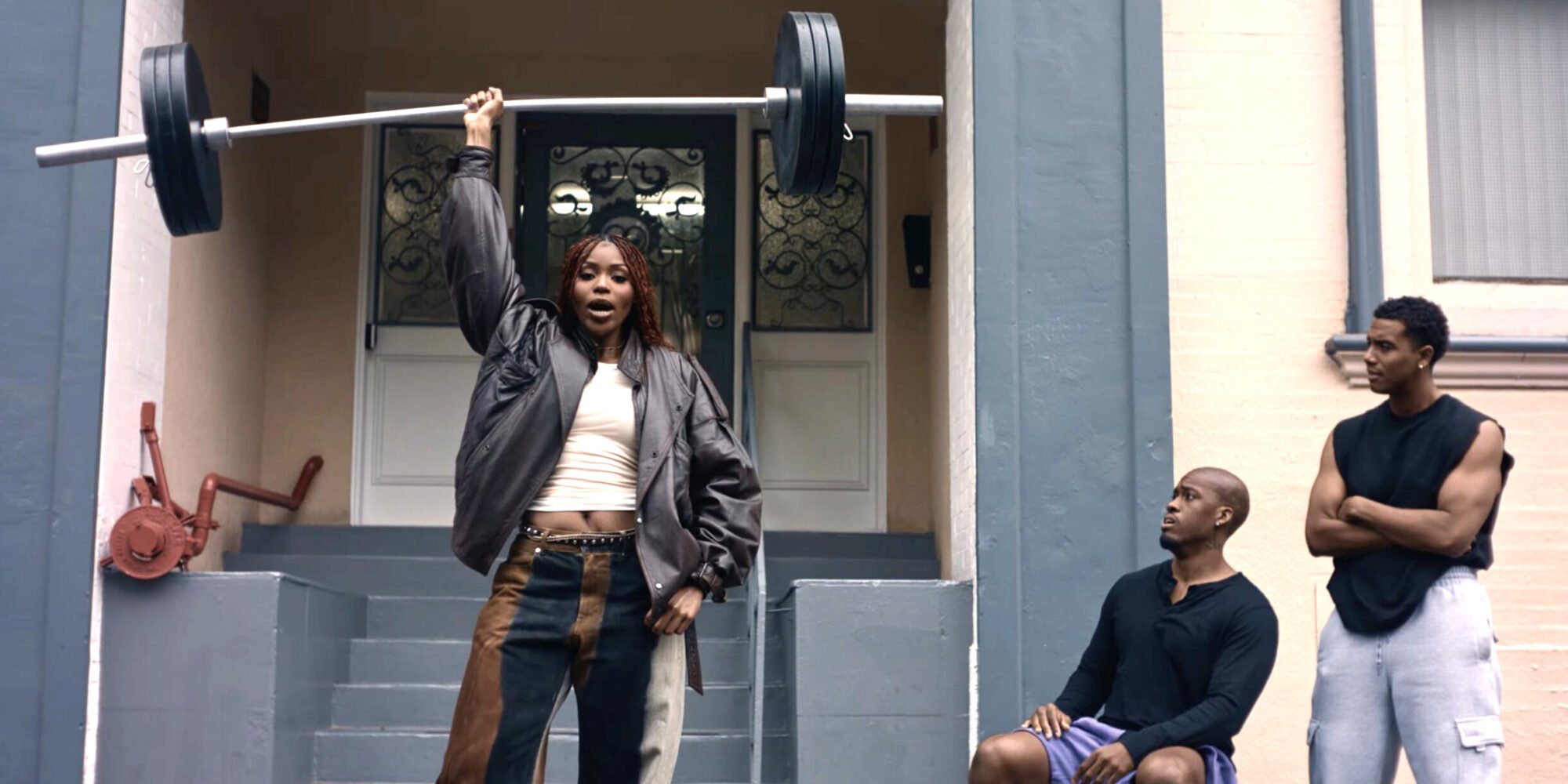
Singer, songwriter, and guitarist Blessing Jolie comes out of the gate running, from the threshold of her bedroom to the global music scene, releasing her new single “Software Developer” (out March 13) from her first full-length album, 20nothing. The video for her breakout track “20teens” dropped in February. Thirty Tigers signed her following the release of her debut EP.
This is the girl next door whose vocal grain recalls Tems, and whose storytelling clarity aligns with the tradition of Tracy Chapman, a female guitarist singing the woes of her generation. She appears to have arrived effortlessly, yet the trials along the road surface plainly in “20teens,” where illusions of fame and fortune forced on youth meet the realities of urban life in the 2020s.
Today, young rising musicians of African origin who are women are beginning with narratives rooted more firmly in self-determination and preservation. They are making different strategic choices, some even holding full-time careers as medical doctors, like Dr. La-Toya Mwoombola, known as Lioness, the most prominent Namibian singer. It is a strategic move to self-finance and remain independent and in control of their narratives — a refusal to collapse identity into industry validation.
Young women in particular often go overlooked if they do not enter the industry as a spectacle or market their sexuality as a commodity. More are choosing the path of authenticity instead, using social media platforms to curate brands that work for them, viable entirely through self-motivation and creativity. By taking creative and production control of their musical gifts, enabled by the technological leaps of the last twenty years and the possibilities of self-production, they build careers on their own terms.
Gen Z moves with a mindset unfettered by historical baggage as a constraint, yet self-awareness remains rare in the age of the selfie. Female artists and instrumentalists are carving out destinies from bedrooms to the virtual boardrooms of labels. Blessing Jolie emerges at the convergence of a global African feminine lineage, Gen Z autonomy, and technological shifts that now include AI as a tool rather than a threat. Her independence may be attributed to ancestral naming within her Nigerian American upbringing, to being the youngest of five, to a sensibility shaped by textures from Lagos to Memphis that feel less like influence and more like DNA. She is young, yet the dichotomy of twenty-somethinghood is already distilled in her songwriting. The surprise is that she is a female guitarist whose melodic voice is decidedly memorable.
This generation was raised on the collective platform of the Internet. Millennials and Gen Z, tablets in hand instead of pacifiers, have reshaped their worldview through algorithmic curiosity and technical fluency. They learned to hack attention before they learned to drive and are building empires in their bedrooms until the industry moves in to capitalize. This trajectory is no longer a phenomenon, but a norm.
It fulfills ambition technically without submitting to the real-life sleazy executives that do exist, charting independent creative paths by every means necessary. Yet structural reality remains stubborn. Although the global population sits near parity between men and women, representation inside the music industry tells another story. Women make up roughly a third of artists on major charts, but behind the scenes the disparity widens sharply: fewer than one in five songwriters are women, and they make up barely five percent of producers. Leadership positions remain overwhelmingly white and male, and festival stages continue to reflect the same imbalance. Growth is measurable, but the architecture of power remains intact.
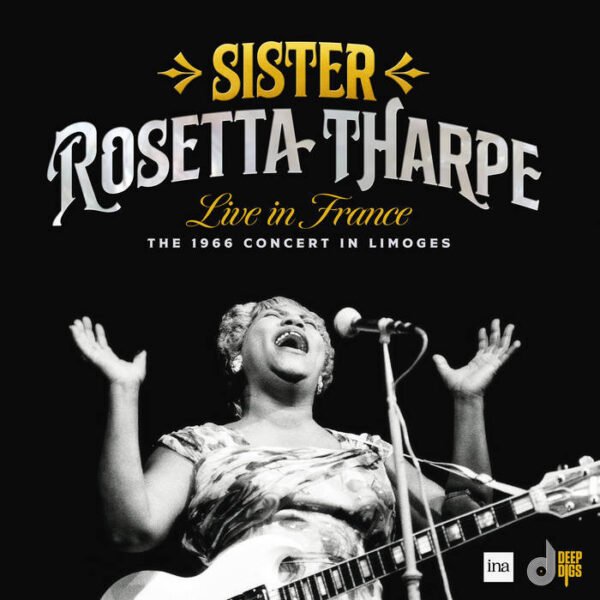
Since the industry worships numbers, it is worth remembering that women have shaped the U.S. music industry from its earliest days — from Sister Rosetta Tharpe, the mother of rock and roll, whose guitar reverberates beneath the mythology of Elvis Presley — to this present recalibration of power. The scales are balancing, and the narratives of more than half the world — women responsible for life itself, from lullaby to mourning — demand credit, resources and reward in an industry long dominated by an archaic system in visible decline.
To mark Women’s History Month, I sought singer-songwriters who happen to be women carving alternative routes toward music careers where the future suggests liberation without forfeiting the soul. Women are emerging from the margins smarter, younger, navigating the global entertainment system grounded in message and self-determined in career choices at a moment when gains in equality are slipping.
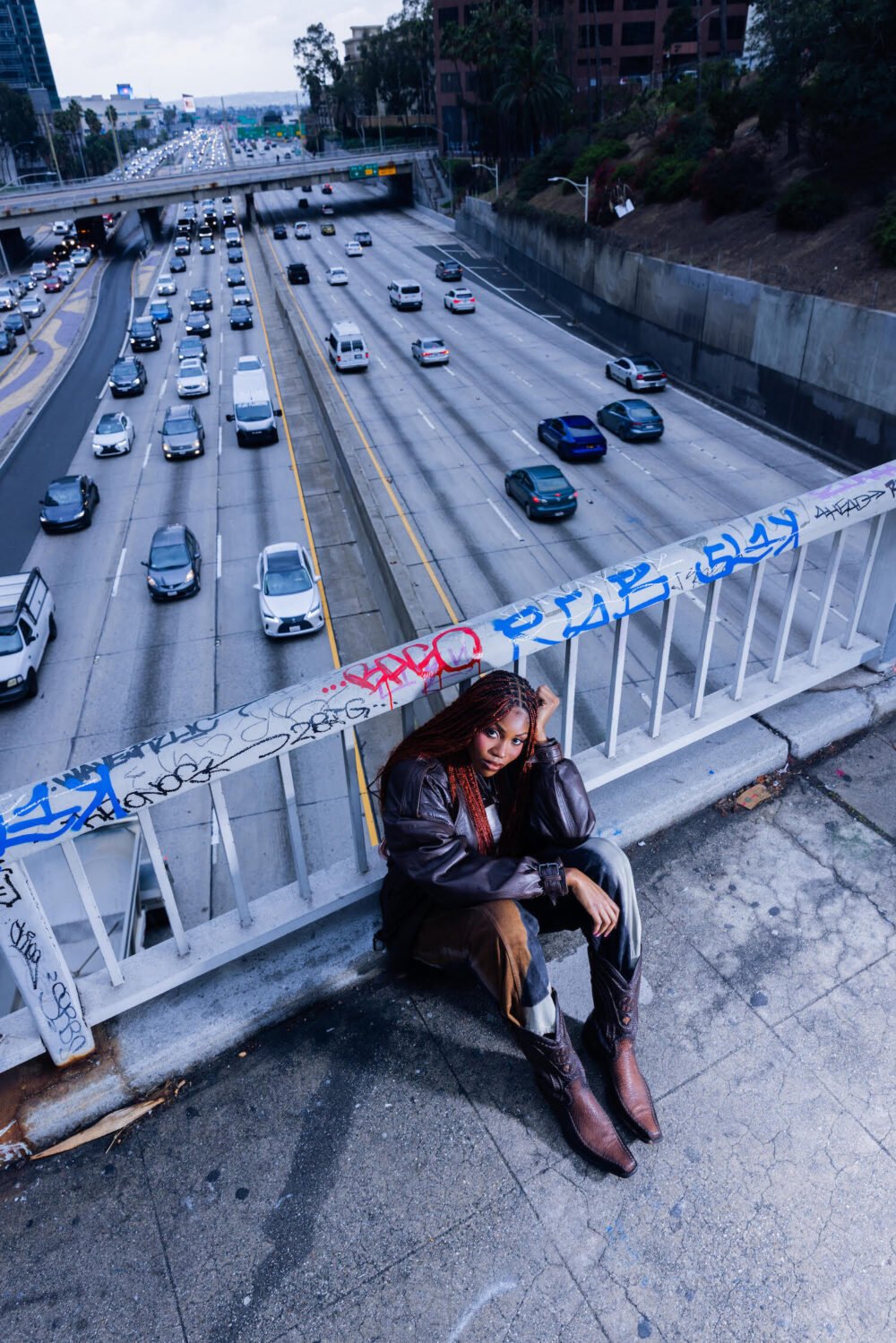
I had a chance to catch up with Blessing Jolie at this precise moment of acceleration, as she steps into the release of 20nothing and claims authorship over her own becoming.
Mukwae Wabei Siyolwe: At what point did you realize you wanted to be a singer?
Blessing Jolie: I started music when I was 15. Once I started, there was never any doubt. I just assumed I would become a singer. I figured I’d graduate, probably go to college, but music was always the intention.
I did go to school for computer science. But even then, it felt like something I was doing while working on music in the background. It was always the plan.
How did you enter the business so young?
I was 19 when I got discovered. My manager found me on Instagram doing a cover. He asked where I saw it going, and I told him this wasn’t just a hobby.
At one point, it technically was a hobby because I wasn’t making money. But I always intended for it to be more. A lot of it has been discovery — discovering myself. Every delay has turned into speed in some way.
Tell me about “Software Developer.”
I went to the University of North Texas for computer science. After I was discovered online, I left school to focus fully on music. Years went by, and I saw people younger than me graduating. I felt behind. Nothing was moving at the speed I imagined. I started questioning if I should have stayed in school.
It wasn’t weakness. It was clarity. Seeing what my life could have looked like. My life looked like being at home in Katy, Texas, posting videos and waiting for a spark. There will always be someone in every generation asking, “What am I doing with my life?” That’s why I think “Software Developer” will last.
You were born into the internet. How has that shaped you?
I was born in the sweet spot between Millennials and Gen Z. I had a phone early, but I also grew up playing outside. I got both worlds. Social media made this career possible. Without it, we wouldn’t be talking. But I don’t let it dictate who I am.
Who shaped your musical influences?
My mom played disco — Donna Summer and Shalamar. My siblings played hip hop and R&B — Eminem, Jay-Z, Destiny’s Child, Limp Bizkit. Video games introduced me to alternative music like Paramore and My Chemical Romance. At 15, Shawn Mendes’ Handwritten made me pick up the guitar. That was the moment.
How do you describe your identity right now?
I’m Nigerian American. Both of my parents grew up in Nigeria. We’re suburban Nigerian American kids. That’s probably the best label for now.
What does success look like for you?
Right now, I feel like I made it to the starting point. This is just the starting line. I’ll have a lot of “I made it” moments. This is the first one.

Related Audio Programs