A Lifetime Without Permission: Fela Kuti Meets the Grammys
After years of lobbying by his many supporters, Fela Anikulapo Kuti has finally received a Lifetime Achievement award at the Grammys this year. Mukwae Wabei Siyolwe has this remembrance.
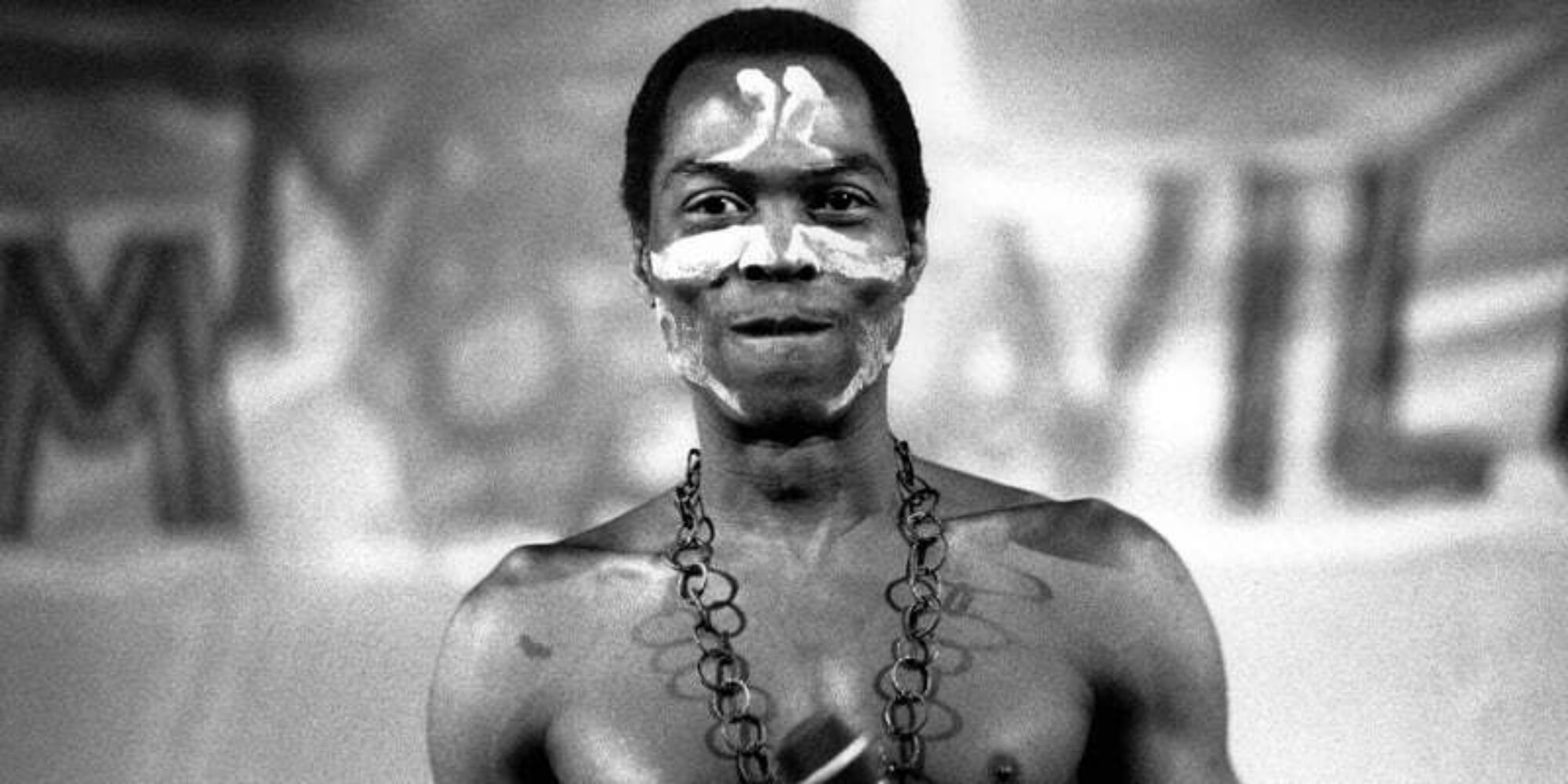
Before Afrobeats, there was Afrobeat—and the two cannot be confused. They are as different as chalk and cheese. One emerged fully formed as a movement for social justice, political education, and peace; the other offers the present generation moments of pleasure and distraction. Only one man—excluding his own children—has been so completely defined by Afrobeat that the genre itself became inseparable from a life, a philosophy and a sustained practice of resistance: Fela Kuti.
Fela Kuti - Music Is the Weapon
Fela’s journey in music was a lifetime alignment of forces: personal and ancestral sovereignty, disciplined musicianship, and an inheritance of leadership that demanded public responsibility. Afrobeat did not simply carry protest lyrics; it trained the listener. Extended repetition built endurance. Polyrhythms modeled collective labor. Call-and-response rehearsed civic participation. The music refused instant gratification. Afrobeat required attention—and by design, it resisted consumption.
“Music is the weapon of the future,” Fela declared. It was not a slogan but an instruction, and a prediction. In his hands, sound had become a delivery system for political education; rhythm became a technology of memory; performance became a form of governance.
Discipline as Innovation
Fela also represents something increasingly rare: discipline in craft. A rigorously trained musician—before and after completing a three-year degree at the Trinity School of Music in London—he did not stumble into innovation; he engineered it. Drawing from the life he lived and the sounds he mastered—highlife, jazz, Yoruba chant, big-band horn writing and modal improvisation—Fela created an unmistakable musical language because he understood how music works, not merely how it feels. That structural intelligence is why Afrobeat could stretch to fifteen, twenty or even thirty minutes without collapse.
Working primarily within a 4/4 time signature, Fela approached composition like a symphonist, hearing multiple voices simultaneously and layering them into a dense but breathable architecture. Polyrhythms—contrasting rhythmic cycles unfolding at once—generated momentum through syncopation and off-beat accents, creating grooves that were deliberately open-ended. In the early years, the 1970s, his complexity was anchored by his legendary collaborator Tony Allen, whose shuffling, triplet-based hi-hat patterns and emphatic double kick-drum hits on the “one” redefined rhythmic leadership in popular music. Afrobeat compositions rested on long four-bar patterns repeated with minimal deviation, producing a hypnotic, trancelike foundation that demanded collective precision. This was old-school musicianship—pre-digital, pre-automation—where revolution depended on bodies, breath, stamina, and absolute command of the instrument.
Biography as Composition
Afrobeat did not emerge from a studio; it emerged from conditions. Fela was raised in an educated household where social responsibility was expected and personal sovereignty respected. His mother Funmilayo—an uncompromising political force—modeled fearless dissent and would later become both guide and pillar as his music threatened power. Nigeria itself was recovering from the trauma of the Biafra War, grappling with the compromises of post-independence governance and the persistence of corruption under puppet regimes.
Fela’s pilgrimage to the United States in the late 1960s did not so much radicalize him—though that’s the way the story is generally told—as clarify him. He arrived at a moment when anti-war movements, civil rights struggles and Cold War geopolitics converged—and when global revolution was being transmitted through music. He returned knowing that sound could carry ideology faster than speeches. This was not inspiration; it was strategy.
The Shrine and Kalakuta: Sovereignty in Practice
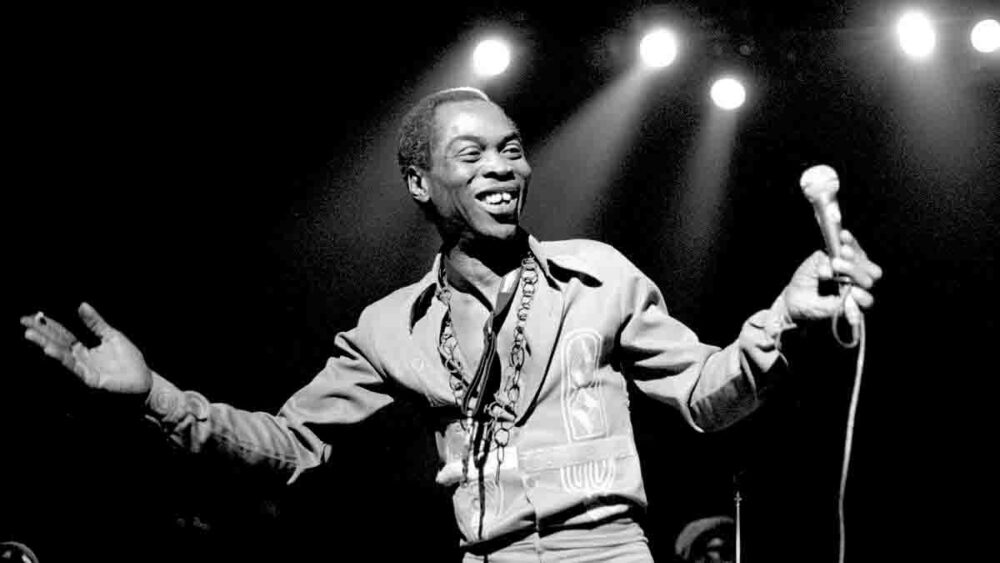
A personal memory of the Shrine comes through my closest friend Sho, who slept outside Kalakuta Republic for two nights just to gain entry. This was not queuing for a show—it was holding court. The waiting itself functioned as initiation, a recalibration into African time. Inside, the Shrine revealed itself not as a venue but as political theatre: bodies packed tight, incense, ganja smoke and sweat thick in the air, rhythms stretching past comfort into trance. What unfolded was closer to traditional governance than entertainment—ritual, repetition, testimony, refusal. You were not an audience member; you were a witness to sovereignty in motion.
Kalakuta Republic was not eccentric indulgence; it was institution-building in the absence of an industry. A studio. A nightclub-parliament. Living quarters for musicians, dancers, singers, wives, and children. Independence there was not symbolic—it was logistical. And the state responded with violence precisely because Fela removed himself from its control mechanisms.
The Myth and the Man
Lazy caricatures—women, weed, chaos—have long dominated the narrative, and controversies do remain. This was no simple man. (Don’t miss Jad Appenrod’s podcast Fela: Fear No Man for a particularly thoughtful deep dive on all that. Details below) Fela’s authenticity lies not in the number of albums he released, or wives he married (27), but in the unbroken alignment between life, sound and consequence. No retractions. No apologies. No late-career softening. His artistry matured because there was no industry to contain it and no government willing to tolerate it.
The Grammy, Reframed
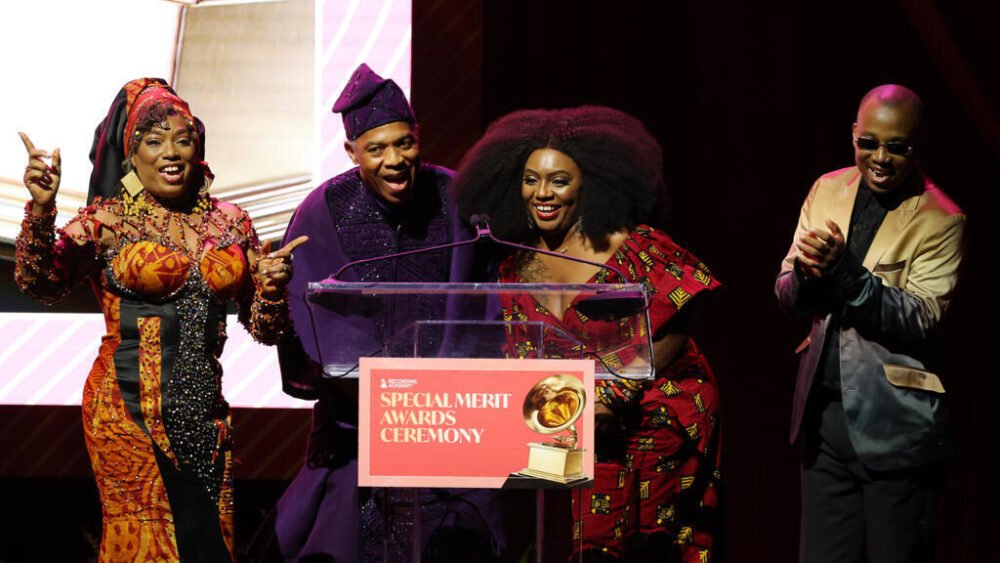
At this historical moment, it bears stating plainly: Fela did not need a Grammy. The Grammy needs Fela—now—at a time when music has largely been stripped of consequence, and the idea of sound as a weapon must be remembered, not sanitized. There was not a single artist in that room unaware of the power of their platform; it took Fela to force music out of complacency and back into an embodied, lived experience of responsibility.
This recognition should be understood as a beginning rather than an endpoint—an opportunity to honor the wider African canon that shaped modern global sound. Beyond Fela stand architects whose influence has long exceeded institutional acknowledgment: Miriam Makeba, Hugh Masekela, Manu Dibango, Thomas Mapfumo and others whose work fused mastery, resistance, and cultural sovereignty into enduring legacies. If the Grammy is to mean anything beyond symbolism, it must become a sustained reckoning with Africa’s cultural innovators—not an isolated gesture.
Unforgettable Fela Kuti Tracks
We leave you, as we often do at Afropop Worldwide, with a few recordings that continue to speak with unnerving clarity:
Zombie (1976) – A relentless, militaristic groove that skewers the Nigerian army’s culture of blind obedience.
Lady (1972) – A high-energy Afrobeat classic confronting gender politics and the collision between African tradition and Western modernity.
Teacher Don’t Teach Me Nonsense (1986) – A searing critique of postcolonial education systems and state hypocrisy—and a personal favorite.
Over more than three decades, Afropop Worldwide has chronicled Fela’s life, music, and political imagination through dedicated programs and deep reporting, including African Legends: Remembering Fela, explorations of FELA! On Broadway, historic coverage from Lagos documenting the first performance of FELA! on African soil, and exclusive interviews with his family, collaborators, and chroniclers of his work. And again, for listeners seeking a comprehensive immersion, the podcast series Fela Kuti: Fear No Man—produced by Higher Ground and hosted by Jad Appenrod—traces his evolution from colonial subject to Pan-African revolutionary across twelve, rigorously-crafted episodes.
Fela’s music does not ask to be remembered politely. It demands to be used. And in that demand lies both the discomfort—and the necessity—of his enduring relevance.

Related Audio Programs
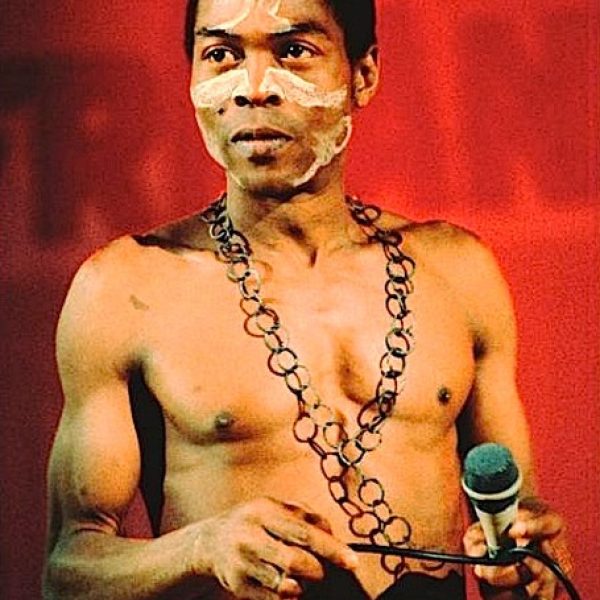
African Legends: Remembering Fela
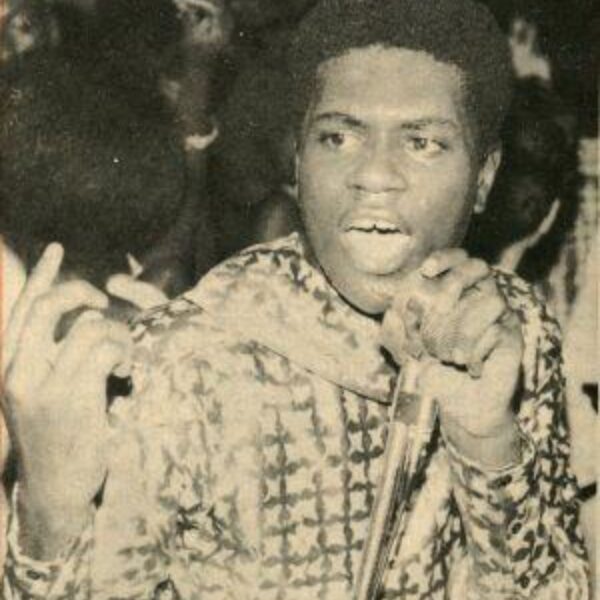
Geraldo Pino and Fela Kuti in Ghana
Related Articles