





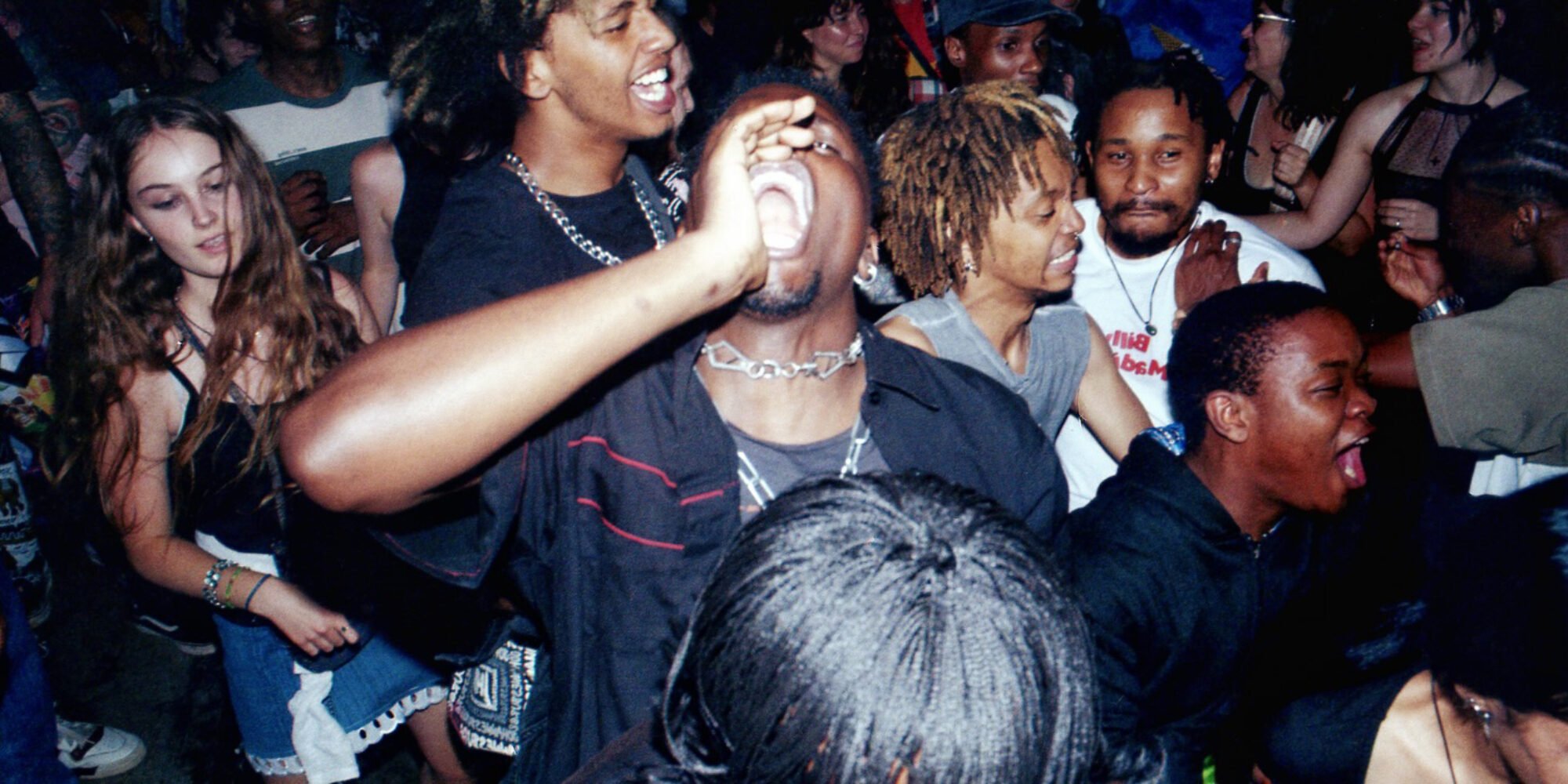
Banner photo by Troye Alexander Shannon.
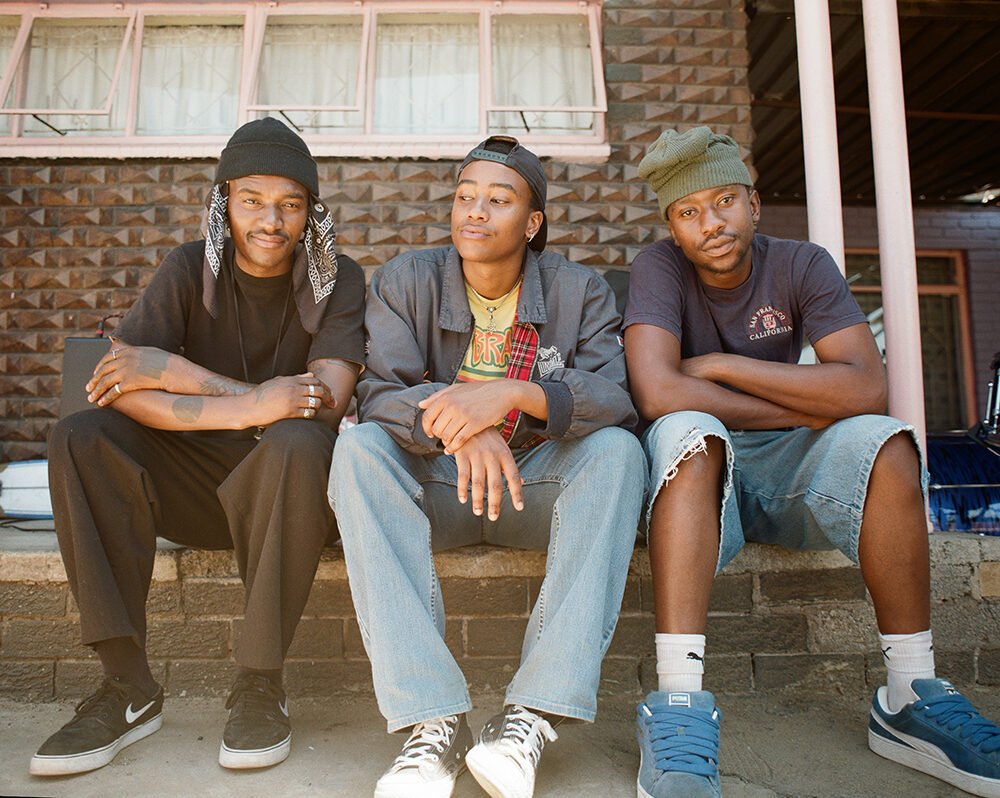
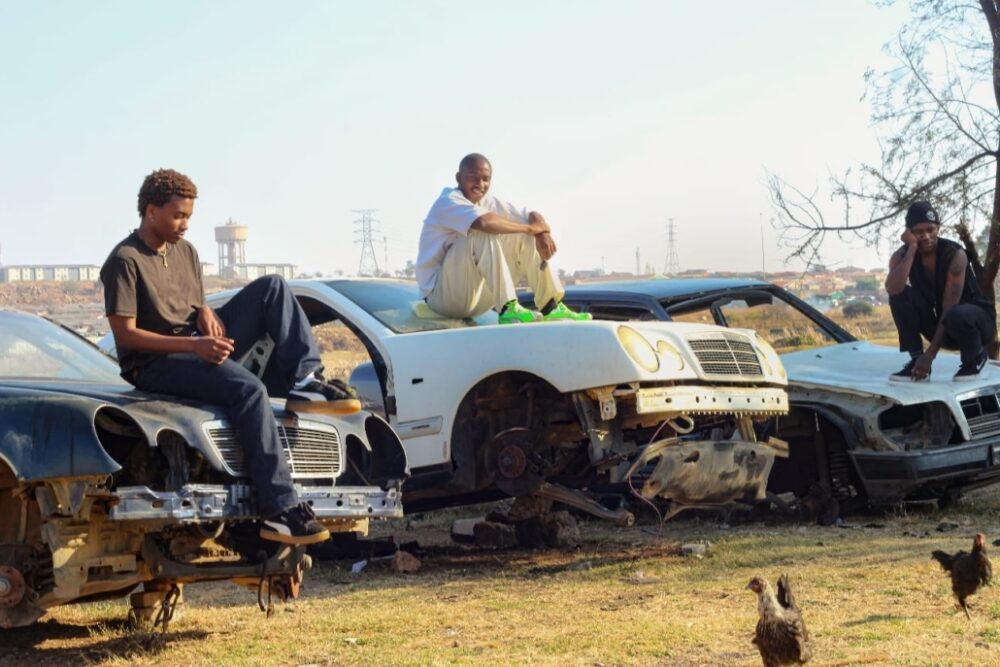
Twenty Once Children is a Soweto-based trio formed by Abdula Skink (vocalist), former TCIYF member Thulasizwe Nkosi (guitarist) and Biko (drummer) from the Lerato Orchestral Collective - L.O.C. “With an edge of trash and a taste of chaos,”[1] their fast-paced skate punk pulses with Soweto’s heartbeat and its multifaceted stories. Since the early 2020s, the band has been driving a new movement within their community, hosting punk shows accessible to all, building skate parks, and supporting young bands and the Soweto youth in starting out in the scene.[2]
Following two EPs, a tour in the UK and in Kenya, they released their debut mini album, After the Storm last December 2025. We sat together for a long online conversation and talked about DIY culture in Soweto, its challenges, griefs and joys and punk as a healing “ointment” for the soul.
Twenty One Children can be found on instagram, tiktok, and facebook.
Giselle Musabimana: I saw your “ICE CUBE” video for the first time last December and I was immediately enthralled by it. There’s something in your sound that sort of reverberates an “old-school”, trash punk, but it doesn’t feel nostalgic or stuck in the past. But beyond labels or easy definitions, how would you describe your music and what Twenty One Children represents?
Thula: Our punk style of music is, if you could just imagine yourself skating really fast through Soweto or skating through the city, and watch everything as it happens. From uptown to downtown, to Bramfontein, Newtown, through Soweto and the rest of the hood; the grimy parts, the nice parts, the crazy parts. Just getting through Johannesburg really, really fast. Yeah, that’s how we sound.
That’s such a beautiful, vivid description, I wish I’d been to Johannesburg to even know what that looks like. Insh’Allah, one day!
Abdula: We also have a big focus on mental health and acknowledging that. And for us [making punk music] it’s a big way of how we deal with living in Johannesburg. For one, because it’s not the best place, you know. It’s not Europe. I’d say that’s also a nice way of describing ourselves. We talk about being from the hood, being from the city. “ICE CUBE” is an ode to just being with your friends in the hood.
Thula: Some of the stories we tell are really personal. Abdula used to work in an autistic school. Then with me being sober now and back from the mental hospital, which was a crazy thing for me, but there’s also stories about people in the hood. People live differently here; everybody knows everybody’s story in a way. Because of the living conditions, the small houses are occupied by a lot of people. So whenever you want some time or a space where you can offload, you just go outside and join the rest of society. It’s not like growing up in the suburbs where you can just be in your room and feel free the whole day and then only choose to go out when you want to go out. Going out is pretty confrontational. You gotta understand how to navigate the social dynamics, because as soon as you wake up, the people are in your face. So that’s a negative and a positive if you look at it from a storytelling perspective, because you can get to learn a lot of things and you can learn about your history from your elders and such. And we’ll tell their stories through the music that we make.
Biko: If I can add on to that, I feel like, especially in the recent creative span that we’ve been in, there’s a level of consciousness in our lyricism in just how we approach music in general.
I mean, that’s definitely felt. But even in the songs that just sound repetitive, with just a single sound or word, you can sense your ownership, and it feels freeing.
Thula: The repetitive stuff that we do, it’s on purpose. Obviously, we’re drilling in the message, but it’s also percussive, which is how our African music is for the most part. Sometimes you can use your language, your vocals percussively. When you look at the history of South Africa, after the uprising of the youth in Soweto, the rest of the world noticed the oppression that was in place under the apartheid regime. So a lot of people [globally] started to ban South Africa. They stopped doing business; they stopped playing sports with South Africa. The Black youth [in South Africa], they fought this stuff. And pretty soon, in the 90s, Black people were allowed to vote.
And just during that time, a new genre came through, it was called Kwaito music. And that was as punk as it gets because it was just Black youth from Soweto expressing however they felt through whatever means that they had and they would say whatever they felt like saying. And for the most part, the music that they used to do there was very repetitive as well. You know, you could just have one line and then one line could cross through the entire song until the end. When we sing the same choruses it’s relatable and easy, you know, because everybody wants to sing. If the song is simple and to the point, like you know, “I was so high, I almost forgot where I live! It was a good day!” (Lyrics from “ICE CUBE”). Anybody can sing that.
I’ve read that growing up, you have mostly been surrounded by hip-hop, jazz and gospel music. I’m curious to know what was the first entry to punk rock for each of you?
Thula: I discovered punk rock when I was playing with my dial on the radio. I was trying to find hardcore hip-hop. It was during the Wu-Tang days, you know, when hip-hop was hip-hop. So I stumbled upon some rock and roll. I heard some guitars and drums and all that. I never changed the channel station. I just logged on, stayed up the whole night and I knew I had found something. Wow.
Abdula: I grew up mostly listening to hip-hop. My father is a journalist. He’s a Mawlanaa[3] as well. He’s an Islamic priest and he was one of the cooler Mawlanas, you know, so he would always play music and he was always encouraging of the arts and encouraged me to get into skateboarding and to find my own way in the world. We played a lot of Kanye West, I remember we did a road trip in 2013, I think, when Yeezus came out. And that was like my kind of introduction into an alternative kind of music. It was still hip-hop, but it wasn’t hip-hop as well. It was fast, abrasive. And it kind of put me into the rabbit hole of trying to find different types of music.
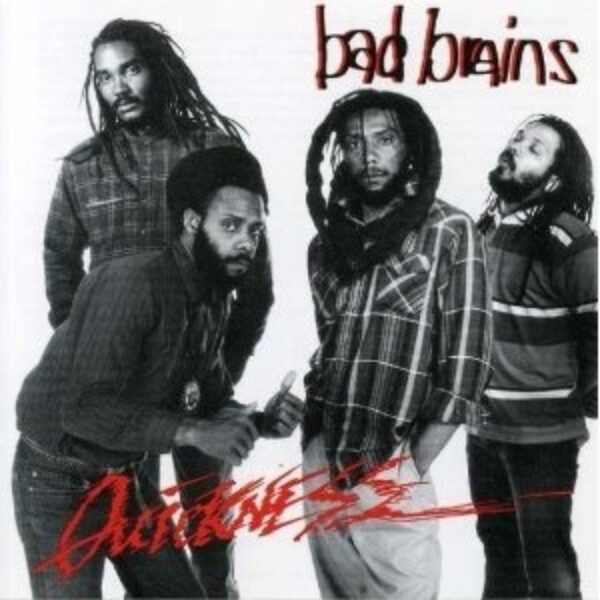
Then I moved to Soweto with my mom in my last year of high school, and over there there were a lot of skaters. And I heard a lot about punk because of TCIYF. At that time they had disbanded but everyone in the hood was like, “Yo, man, you got to listen to these guys. It’s a shame they’re not around anymore.” A mutual friend of mine and Thula introduced me to him and we became friends. I was 19 at the time. There weren’t any shows happening. It was around 2020 or 2021, so it was after COVID. I made the decision to host a show, and I’d go to Thula to ask for insights since he’s been in the scene for a while. I’d go to Thula’s with a notebook and some beers, he gave me a bunch of bands to listen to, the Bad Brains, the Minor Threats, the Gallows, all the old school punk bands. This punk rock bar called ‘Smoking Kills’ was the only venue who gave me a chance to do a show and it was a success.
I just kept doing that for about two years, but no bands were really playing the music I wanted to hear. It was mainly like rock and like psych rock and that kind of thing. And then I was just like, you know what? I’m going to start. Let’s play some real punk in Jozi.[4] And then [Thula] went to the mental hospital. When he came back, we started singing at the skate park in Soweto, and we just practiced. He had his guitar and a little small amp from China Mall or a cutlery shop or something. I didn’t have a mic. And we just started making songs.
Biko: I play for a band called the Lerato Orchestra Collective (L.O.C). It was a Twenty One Children birthday show and they invited us to come play. It was my first introduction to the scene, to that type of music. And it was a love at first sight thing. It’s when I also first met Abdula, we were in this mosh pit and I got injured. And I was like, I want to do this again. Eventually two years ago there was an open space in Twenty One Children for a drummer. And I offered my services and it became more than that because I actually started listening not only to punk, but overall just rock music: bands like Bad Brains, obviously, Rage Against the Machine, Slipknot. That’s where I really started sonically falling in love with the genre. And when it came to playing it and constantly practicing it, it just became entrenched in me and it couldn’t really leave my system anymore.
Congratulations on your first album by the way! Rain Dance has been stuck in my head for the past few weeks. What do you think holds the album together and how does it constitute a departure from your previous EPs?
Thula: We’ve had a lot of terrible years, you know. So we have a lot to speak about. On our first EP, that’s when I was fresh from the mental institution and when Abdula was so depressed, but still trying to work with the autistic kids, right? So we had all of that to talk about. And then the second EP didn’t have much problems going on, it was just a chilled one, that’s why it sounds really happy. But then the one we just released now, the last mini album—it’s bound by grief, and pain, and betrayal, and hell! Just think of all the bad things, put them inside a ball and just roll them down the alley! But the album title it’s After the Storm, right? So it’s about us reflecting back and being happy that everything is better now. We are in a much more positive space, and much happier than when we were writing the album.
Abdula: Yeah, and I think even the first track of that record is like a representation of that, you know, life thing. It doesn’t hit the same way it used to. You can either take that positively or take that negatively and we’re choosing the positive aspect of things changing and moving on you know. The cover of the record is these pigeons flying away, it's like a representation of what’s to come. I think we’ve really grown up sonically in this record, we even have an acoustic song. And it was Biko’s first time producing. Do you want to tell us about that, Biko?
Biko: I had to get an app on my phone so I could record and play drums at the same time and engineer discussions. So it was a big challenge, but I feel like I’ve also grown skill-wise because of that. It made me a better musician and an overall engineer. And it’s just the flex I like to have.
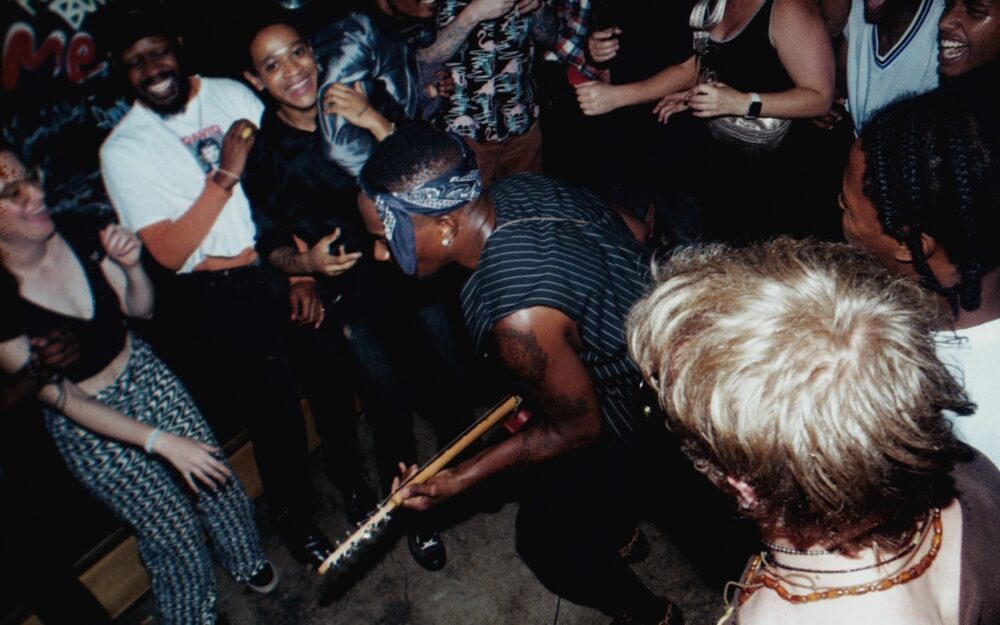
When we speak about your DIY culture, how do you feel that these structural constraints push you creatively? I’m also interested in knowing more about the mutual aid between you, the rest of the scene and the community.
Abdulla: The whole scene is DIY. We don’t really have the most infrastructure to do things, we don’t really have many festivals or any kind of things that make it easy for bands to play. You just kind of have to go to the shows, meet the people, say you’re in a band and they put you on. And even when it comes to getting things, you beg and you borrow and sometimes you steal. I remember like when I first started hosting, I didn’t know where to get things like a drum kit, you know? And there’s also, different parts of it too. So there’s the kids in the suburbs and then there’s the kids in the hood.
With the suburbs, they mainly do shows at bars, you know. That’s the whole scene, essentially. There’s no big stage or big places where you can make this thing happen. The kids in the hood like us and how we host our shows is very different. We do it in the backyard, we do it in a car park, we do it on the street. I’d say that’s the difference and the edge that Soweto has in terms of the DIY scene. And when you come to Soweto, it’s also really integrated as well: you get kids from suburbs, you get kids from the hood and it’s also the only all-age show in Johannesburg. Because a 12-year-old who’s interested in punk can’t go to a show at a bar. But Soweto gives that platform and accessibility as well.
Thula: The festivals that are really huge in this country, and are backed up by finances and sponsors and all that…they’re so lame, bruh. Like, you might be getting maybe a punk band coming from overseas to play and they’ll just get the most washed out bands to come and support them and open for them. And you know those guys never disappoint… They are always boring! It doesn’t matter whether it’s metal or punk or alternative or they’re just gonna keep calling the same five names. And it’s such a bad representation of our country. They make us look so bad! You would swear that our country is just made up of these five bands. But then when you get to look into the country you realize, oh, there’s Black people, there’s Indian people, there’s Coloreds and they all play rock and roll! So DIY is all we have, and the good thing is that it works because we get a lot of international acts from all over the world, much smaller bands, but we make it happen.
Abdula: Yeah, we’ve hosted a couple of international bands at Thula’s house, which is somewhat of a “mecca” for Soweto punk, he’s been doing shows there for years, and that’s where I met Biko.
In the mosh pit in which he injured himself and then fell in love?
Biko: Exactly that.
Abdula: Also, before the punk scene was a very much like a “fuck you” kind of thing, like in the 2010s. But now, especially when I started hosting and becoming more active in the scene, it became a lot more loving and inclusive and Black. There’ve been so many new bands of these young kids that are just picking up guitars, picking up drums, learning how to sing because we gave them that window into what could be and it was through these shows that we would put together.
Who are some of these upcoming bands in Johannesburg?
Abdula: Shameless. Those guys are fucking rad. There’s also a younger band called Aura Electric. They don’t have any music out, but they’re pretty cool. One Second Longer too, I like them.
Biko: And then there’s another upcoming band called Sons of Solomon, young guys, doing their thing as well.
South Africa is sort of the main passage for international alternative rock bands in Sub-Saharan Africa, and I do not know of any other African country like that. I read a bit about South-African Punk from the ‘70s, ‘80s. Do you feel any connection to that lineage?
Thula, Abdulla: [Extremely loud negation] Hell to the nooo to the no no noo! Hell no!
Biko: Thank God you guys said that, because I was gonna say that too!
Then, tell me more about it.
Biko: I think the industry as a whole in South Africa is extremely gatekept. Like that’s why we’re very big on the DIY culture here. Like my band, the L.O.C. started on a DIY thing as well. We have to create our own scene really. And I feel like we’ve found success in creating our own scene because it’s a common thread throughout the country where… people try to find a chance and because there’s a community, now we can easily access each other and that’s who we really want to reach. And yes, everyone wants to be famous, everyone wants to be rich. But at the end of it, it’s like, if you know that the industry is like this and it’s gatekept, let’s do it ourselves.
Abdula: Yeah, if you think of, like, the stuff from the ‘70s and the ‘80s, there’s a big disconnect between us and them, you know? People don’t talk about that time. Even when I was researching punk rock, when I was still organizing shows, I did a lot of research into, like, Black punk rockers and I didn’t really even know about National Wake until I started a band, you know. So, yeah, there’s a big disconnect between this generation and that generation.
Thula: Even the guys from the ‘90s, and 2000s. We are nothing like those people. Yeah, we’re all punk. And if they play shows, we will come. We will dance, you know. But message-wise, those guys don’t have the same message. We’re from the hood! These people are from the suburbs! Yeah, those are people from a different time. And the people that we’re with now, it’s all colors, you know, everybody’s from different backgrounds, mixed cultures. But then we gel and we work together and it all makes sense. The problem I have with the bands from then is that they’re talking all this punk rock stuff but the oppressive government was on their side, man, it made things very easy for them. They wanted to ban National Wake because it was mixed, there were Black people in it, but the rest of those bands were all mostly white. Things were favorable for them and they didn’t stand against what was happening to the Black people; they just kept on writing songs and moving on. When you are just cruising through things and pretending things are not happening when they are right in your backyard, then I don’t know if I can call it punk.
How was the experience of touring in Kenya and what glimpse did you get of the scene over there?
Abdula: Kenya is amazing. I love Kenya. Kenya was so nice. I’m going to say it twice. Kenya is so nice. Like the people there are amazing. And even getting to play, we just love playing in new places. And doing it in a place like Kenya was really beautiful because you don’t really think that would be where that kind of stuff would happen. Getting so many international bands, getting so many new people, Europeans, Americans, Canadians. We played at a traveling festival that happens in a different country every year. It’s called We’re Loud. It was done by our label manager Pete Slovenly from Slovenly Records. And we got to play with Death as well and travel the whole country with them. It was like a punk rock summer camp, you know. When I was researching punk and Black punks at 19, Death was also one of the bands who came up and then it’s crazy to think that years later, I would get to play and go on tour with them. I'm still somewhat of a kid and getting to have these experiences through music is just the biggest blessing ever, especially being like a punk rocker from Soweto. God bless punk rock, Giselle. It changed my life.
[Instagram post on Twenty One Children in Kenya here.]
Biko: Like Abdula says, God bless punk rock because it was literally everything I dreamt of and why I went into this music thing to begin with was to share moments all over the world. The highlight of mine was after we played, the morning after at the breakfast table, the Death guys came to my breakfast table and they were just telling me of how much they were in awe of our performance. The drummer Bobby Hackney Jr was nerding about my drumming. Experiencing that with the people of Kenya who loved us, the global punk rock community and just the overall experience, it felt super exclusive, but accessible at the same time.
Thula: The best thing is going to a foreign country and realizing that people know your music. And they sing the songs and they help them carry on with their everyday struggles, have fun when they wanna, that's pretty touching, you know. People tell us their family stories, about their kids, about their brothers, why they listen to our music and what it’s done for their families. And that means a lot to us. So we like to talk to the people once we’ve performed, after we’ve sold the merchandise by the table. We talk to some people and connect with them and we hear their stories. And yeah, it seems like what we’re doing is really important to a lot of people.
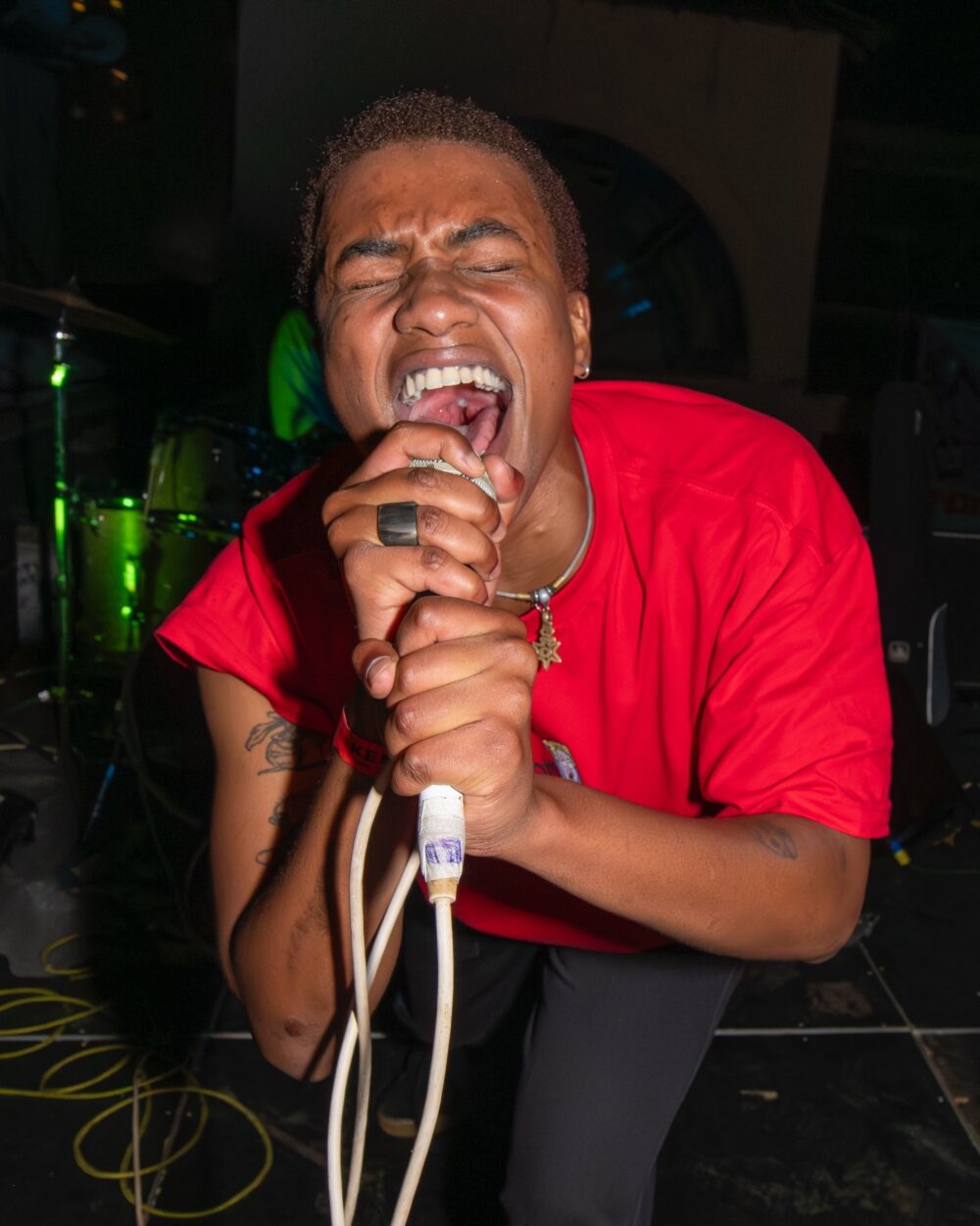
I read that the three of you span three different decades, and this plays also in the fact you had different historical entries to punk subgenres. Does this intergenerational angle manifest in some ways in the way that you work together?
Thula: You know, being the oldest man on earth is not a joke! The good thing is that I come from a time where life was pretty brutal, like on social standards. There are things that you can't say now that you could say back then. So being able to work with my homies, the youngins is pretty good because they put me in check. And it’s a gauge of what’s really happening now, so it's an honor for me because I get to also not be outdated, and stay relevant.
Abdula: It’s also been really nice working with Thula as an older homie because you get to see things differently, because young people tend to think they have it all figured out in some sense. Especially with me when we started, I wanted to do everything, take all the opportunities, work with everyone. I kind of learned working with Thula, to take my time and be more precise and do things with intention. Having that kind of guidance really has helped me grow as an artist and a musician. I was never a singer, I just had to learn how to sing. I always knew I was going to sing, I didn’t know I’d be singing punk, though. So it just kind of all worked. It helped me grow and learn as a musician and as an artist. So that's the nice thing about having an older homie with you.
Thula: I appreciate Biko as well because he has got this whole other mentality when it comes to music. It's pretty rare to find someone that can influence me personally and it’s pretty hard for me to find someone to influence me musically. So to have someone that I can exchange ideas with is pretty awesome, and with Abdula there in the middle is just fluent, he’s like a sponge and a liquid at the same time: he can just swim in between the drums and the vocal, so it's pretty flowy man. It's like, we've got all the elements in a nice triangular balance between the three of us.
Looking ahead to your immediate future, this year and the upcoming years, what projects do you have and what feels urgent for you ?
Thula: Yeah, so we have a lot of things in store; we never stop working. Most of the time we like to keep our next move private, because we have got as many haters as we do people that really like our music - so we don’t want to keep our haters updated! But just know that a year won’t pass without us doing something major when it comes to releasing some music. We’ll give you something every year. It’s guaranteed. So there’s plenty of stuff in store for you guys because this is a living for us, it’s an everyday thing. We have to jam. We have to make music. We have to play shows.
Biko: We are on a mission - World domination!
[1] Twenty One Children - Bandcamp (2026)
[2] Twenty One Children - Slovenly Records (2026)
[3] The word Mawlana, also spelled as Molana or Maulana, is commonly used in South Africa and South Asia and other contexts to indicate respected Muslim religious leaders and scholars.
[4] Jozi is one of the nicknames of Johannesburg.
Related Audio Programs