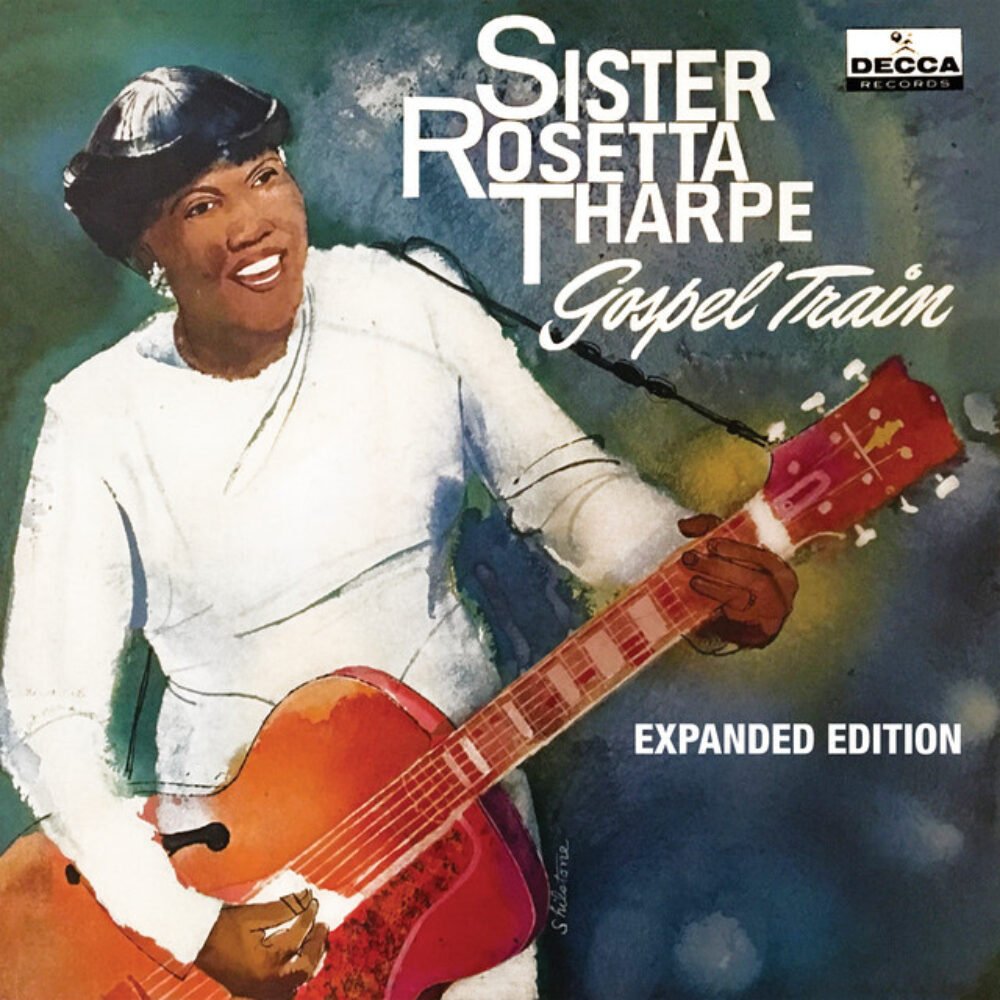






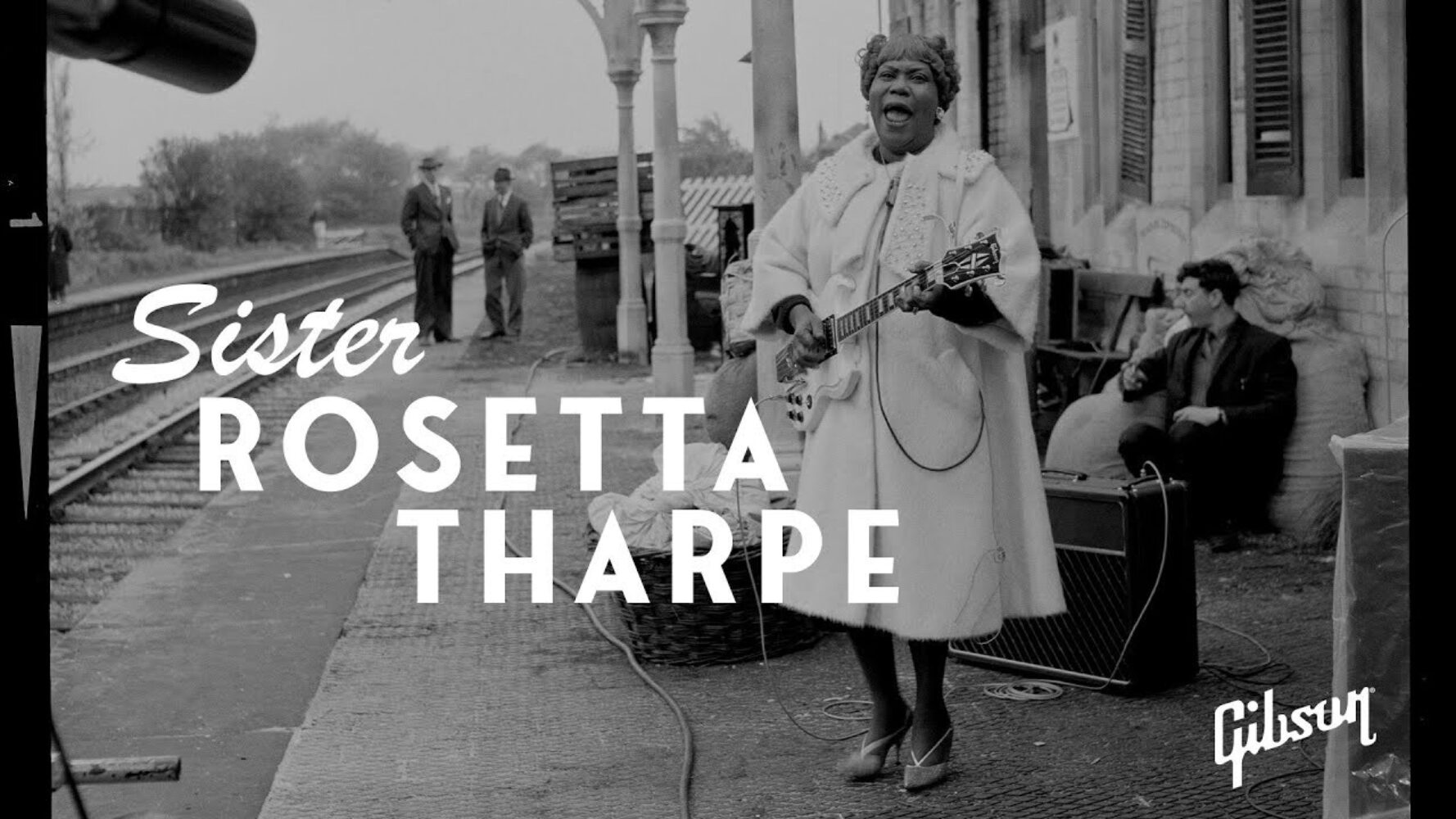
As we begin Women’s History Month at Afropop Worldwide, we do so as part of an ongoing recalibration of historical authorship. Women have always been central to the development of culture, even when institutional structures obscured their authority. As we cross back and forth between progress and barbarism, Sister Rosetta Tharpe is one woman who needs constant remembrance and praise, not as an act of nostalgia but to correct global perceptions and inaccuracies about the role of Black women in contemporary music.
Born Rosetta Nubin on March 20, 1915, in Cotton Plant, Arkansas, one generation removed from slavery, she was raised in the Church of God in Christ within a Pentecostal preaching family for whom music functioned as doctrine embodied. Transportation through music has long operated as a liberatory narrative in Black sacred tradition, where metaphors of river, chariot, train and troubled waters encoded instructions to physical, mental and spiritual freedom from bondage under conditions that constrained physical mobility. These were sonic frameworks shaped by forced migration, the Middle Passage, and ring shouts and praise circles in which rhythm in repetition soothed the collective Black soul and organized communal endurance.
When Sister Rosetta Tharpe electrified “This Train,” she did not originate the metaphor of movement toward freedom. What she did was extend its reach into amplification and recording, allowing liberation to circulate beyond the soul and geography, and into permanence.
In late 1944, Tharpe recorded “Strange Things Happening Every Day,” and by April 1945, it had reached number two on Billboard’s “race records” chart, the designation then used for Blacks, which would later become the R&B chart. It was the first gospel recording to “crossover” into the white mainstream commercial space.
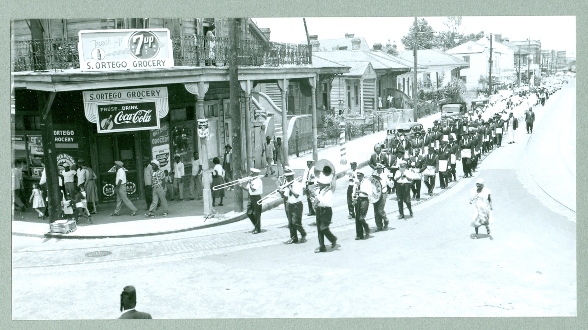
At this time, the music industry operated within the infrastructure of Jim Crow segregation, meaning that chart categories, radio programming, touring circuits and contract negotiations were shaped by legalized racial hierarchy. When Sister Rosetta Tharpe’s record crossed over in 1945, it did so within—and against—that architecture, pressing at boundaries designed to contain Black innovation.
Scholars have noted that the essential architecture of what would later be branded “rock and roll” is present in that early recording: electric lead guitar, driving rhythmic backbeat, ecstatic vocal intensity and a structure built for collective response. Long before the genre was consolidated under a commercially convenient name, the sound existed within blues, rhythm and gospel traditions circulating in Black communities. Renaming did not constitute origin; it just began a trend of using the Black lexicon to describe contemporary music.
Tharpe’s career unfolded in the context of Jim Crow segregation, the cultural afterglow of the Harlem Renaissance and World War II. By the time the Civil Rights Movement reached widespread public visibility, the sonic vocabulary of collective spiritual expression—call-and-response patterns, rhythmic escalation, and communal participation—was already deeply embedded in American sound culture. Tharpe’s recordings formed part of that continuum. She was not positioned as a protest singer, yet the musical structures she amplified belonged to the same lineage of Black sacred expression that sustained organized resistance and communal resolve.
Tharpe’s artistic and public accomplishments were substantial. She secured major recording contracts at a time when long-term industry investment in Black women was rare. She toured internationally across Europe. In 1951, she staged her wedding to Russell Morrison as a ticketed concert at Griffith Stadium in Washington, D.C., drawing more than twenty thousand attendees and transforming a private ceremony into a public performance event.
Tharpe’s partnership with Marie Knight was musically innovative and artistically significant, complicating expectations of gender and authority in mid-century gospel performance.
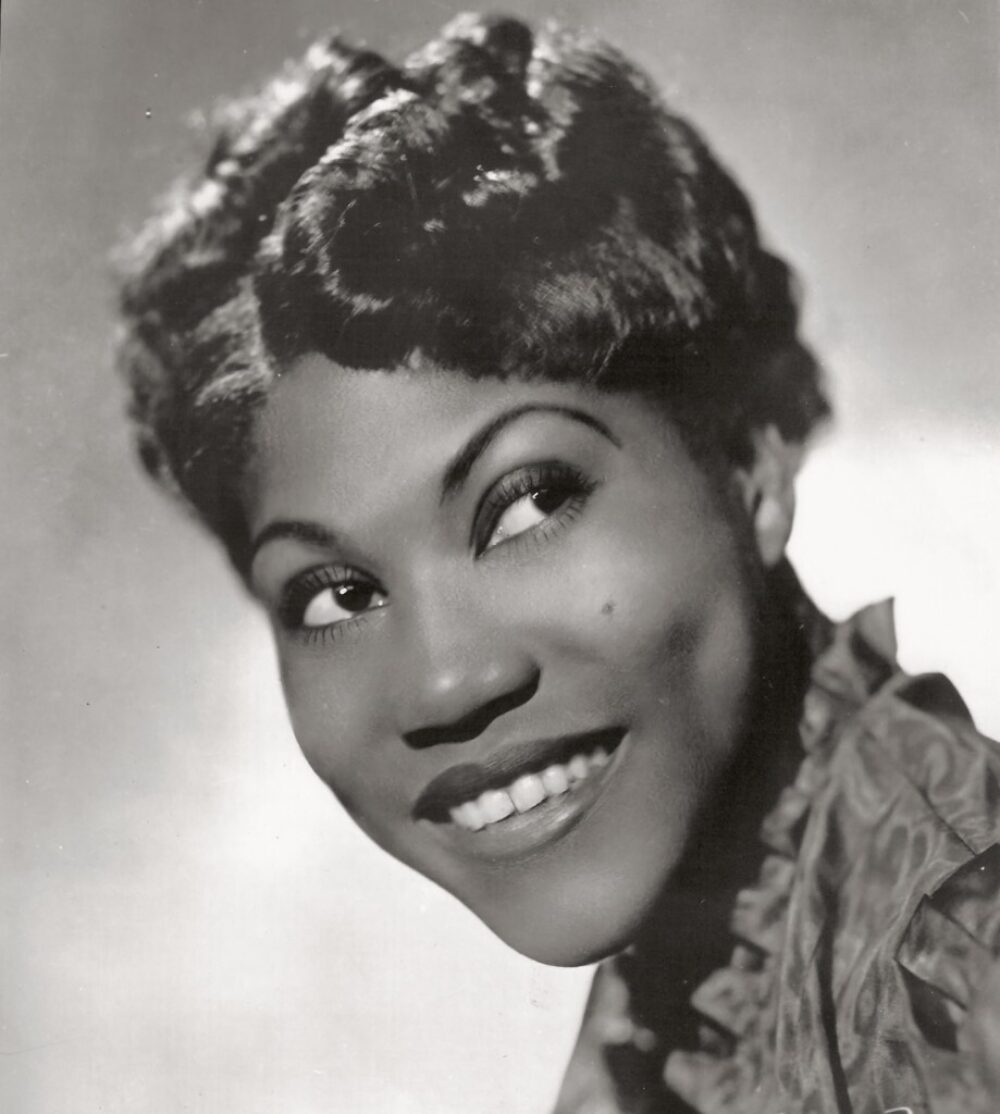
Significantly, Sister Rosetta Tharpe (1915–1973) and Henrietta Lacks (1920–1951) were contemporaries. One reshaped the architecture of modern music; the other transformed modern medicine. In 1951, cancer cells were taken from Lacks without her knowledge or consent, creating the HeLa cell line that revolutionized biomedical research. Recognition of her contribution came posthumously. The parallel is structural rather than symbolic. Both women were foundational to systems that define modern life—one cultural, one biological. Both operated within institutions shaped by segregation. Both were fully acknowledged only in retrospect.
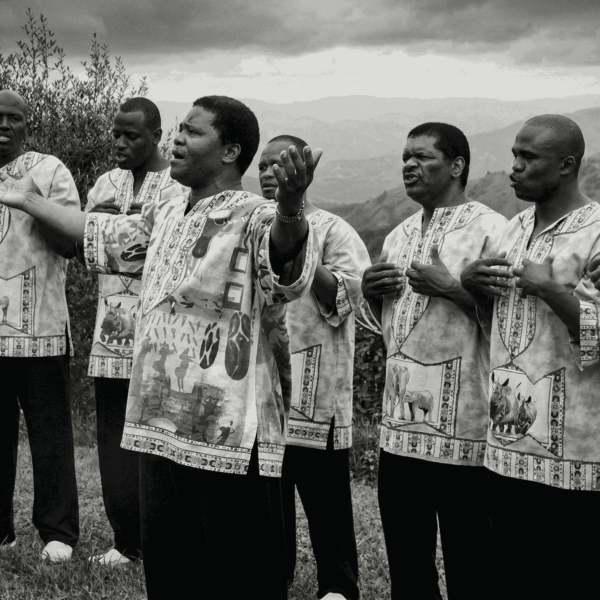
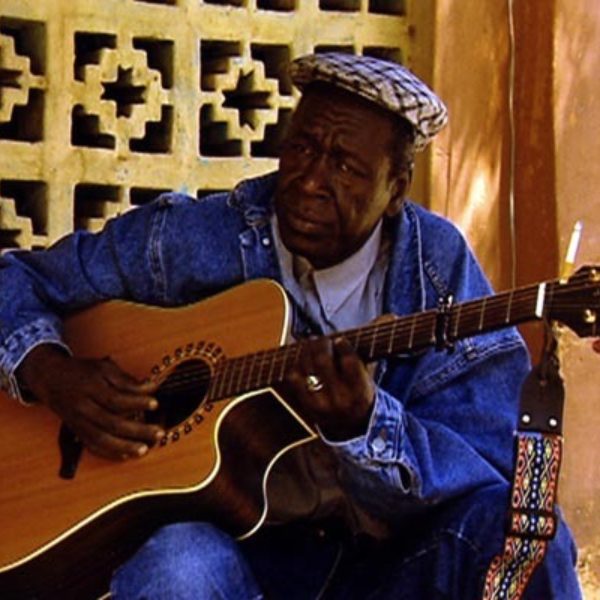
The musicians who followed Tharpe form a lineage rather than coincidence. Chuck Berry, Little Richard, Elvis Presley and Johnny Cash each absorbed elements of the sound she had already pioneered. Her influence extends across continents and generations into the vocal authority of Oumou Sangaré, the Afro-rock fire of Natu Camara, the guitar-rooted urgency of Fatoumata Diawara, and the soul-inflected testimony of India Arie and Lauryn Hill.
In May 2018, Tharpe was posthumously inducted into the Rock and Roll Hall of Fame as an Early Influence. Recognition arrived decades late; influence did not.
The foundations of contemporary popular music did not suddenly materialize in the mid-twentieth century. They evolved from centuries of African diasporic rhythm, spiritual cosmology, and lived experience under constraint. Sister Rosetta Tharpe stands at that intersection. Her contribution is structural, not symbolic. Her legacy endures because it was foundational.