





Banner image: Sangazuza.
A joyous, sun-scorched journey through Puxa rhythms, performance traditions, and the Atlantic currents of resistance that continue to move São Tomé & Príncipe’s dance floors.
A balance of disarming revolutionary zeal with the most welcoming and enticing of rhythms, the story of São Tomé and Príncipe continues across a second volume of irresistible dance floor fillers from the Bongo Joe label. São Tomé & Príncipe’s 70s–80s music sits at the crossroads of African, Brazilian and Lusophone influences shaped by pre-colonialghosts, centuries of colonial rule, the transatlantic slave trade, and the islands’ long road to independence in 1975.
This new compilation, reflecting those layers of history, is a joyous, sun-scorched survey of the sounds and movements of African island life—and of a scene as diverse as the landscape itself. LÉVE LÉVE Vol. 1 introduced listeners to some of the most popular and successful bands and artists in this isolated Lusophone, or Portuguese-speaking, African region.
While maintaining a clear line of connection to those voices, French DJ Tom B, with his eclectic, sophisticated musical apreciacion, returns with another comprehensive selection of divine all-day, foot-stomping, waist-grinding involuntary moves you'll make, rich in the spirit of African independence, tradition and prayer.
Just imagine yourself in the middle of the equator, where water is more expensive than beer. Seldom in the spotlight, in the depths of the oldest lore, São Tomé and Príncipe—and its most infectious musical export—Puxa—remains relatively obscure. Yet this buoyant sound tells a much larger story. A refined, suave, distinctly African sensibility with a different flavor found in the cross-Atlantic fusion of Congolese soukous, Angolan semba and merengue, Cape Verdean coladeira, Trinidadian calypso, Haitian kompa, and Brazilian samba rhythms, and infinite other Black genres with folk roots globally. Puxa is defined by a scuttling cheese-grater syncopated percussion, leading a bass line, delicate melodies, core from a harmonica or organ, adding sweet backing harmonies, and finger-picking guitar lines that add the bold pizazz to any song. Pipe flutes and even kora are sometimes played in Puxa. The flute is perhaps a vestige of the ancestral past inhomage to the great empire of São in West Africa, where the islands take part in their identification. There are some African stories still buried under the sea, and this is one of them. Above all, Puxa music carries goodwill—music designed not to dominate, but to gather and enjoy.
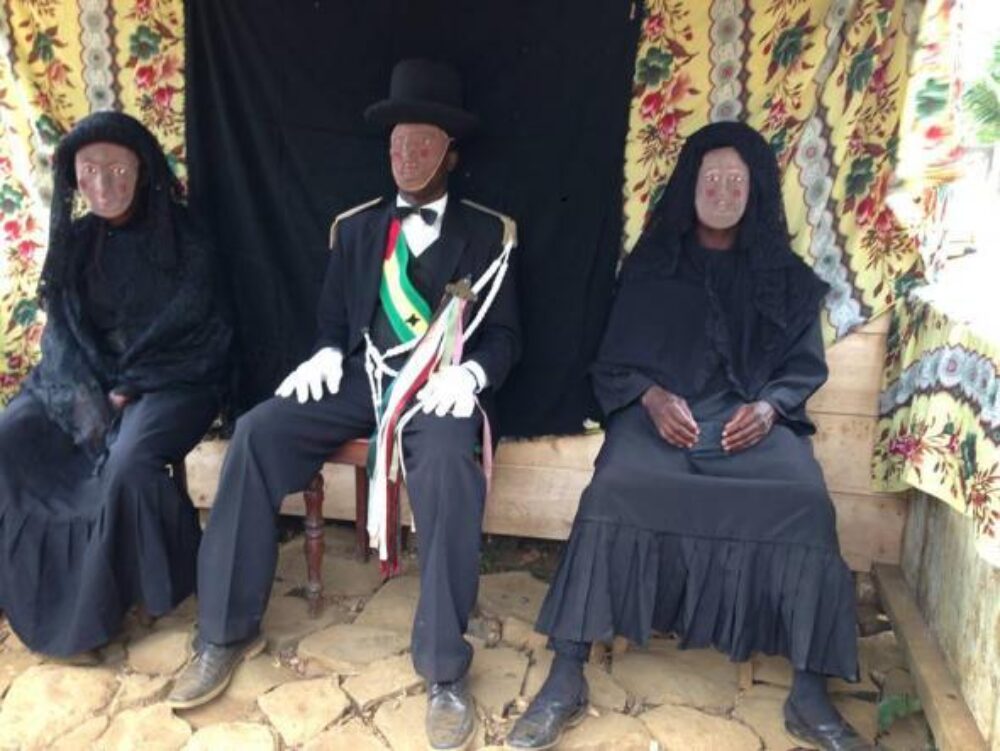
Performance genres on the islands form the deep roots of this music. Older traditions with pre-colonial roots inflected asked dancers akin to Nyau or Makishi, with the narratives of Portuguese enslavement, such as the "Blauwe masked performance" Tchiloli, which accompanies the masquerade, anchor meaning to rhythm, movement, costume… And they all tell of a communal presence in the past.
Music here, as in the entire Black world, is never abstract—it is embodied, social, participatory, and meaningful. From these performative lineages emerge time and space frozen in these isolated islands, across generations through the frequency of the grind in voices, drum rhythms, finger-picking guitar styles, vocal call-and-response structures, and cyclical grooves that later surface. Puxa is a largely overlooked musical scene of the 1970s and 1980s born in the wake of independence, but we won’t have to wait too long; an incoming generation is already remixing the originals. São Toméansboast ússua and socopé rhythms, while Principe claims the dêxa beat and danço-congo, well, that is just in all Afro music. Congo is our soul.
A call-and-response dynamic between Brazil and São Tomé and Príncipe proceeded with Capoeira from Angola, carrying motifs of slavery resistance back to Portugal and an enduring identification with Africa. It’s a continuous, three-way dialogue. This mirrors the connection maintained with the mainland through music itself: an unbroken Atlantic exchange in which rhythm, movement and memory continue to speak back across water.
São Tomé and Príncipe remains in the crosshairs of history—never fully occupied, never fully free. In 1595, the enslaved man Amador led a mass revolt, organizing thousands to attack plantations and sugar mills across the island. Though defeated and executed, he endures as a national hero, a reminder that resistance is foundational here, not exceptional. Centuries later, the Batepá Massacre of 1953 exposed the brutal realities of colonial rule and accelerated the push toward liberation from Portugal. Independence finally arrived in 1975, yet sovereignty has remained a process rather than a destination. This is a sobering reality the whole world over today.
That tension runs through the music. A former Portuguese colony shaped by the forced removal of those Africans who were there first, movement of enslaved Africans from the continent’s interior and coastlines, these fertile islands—dense with tropical canopy and punctuated by volcanic rock—became known for cocoa, sugar, and coffee. One of the brightest singles on this collection, “Cacau,” celebrates that legacy. Released in 1982 by star singer and composer Sum Alvarinho, the song honors the island he loved, even as it acknowledges disillusionment with power. A founder of the group Maracujá in the 1960s, Alvarinho later forged a solo path in the 1980s, writing and performing socially conscious songs that balanced critique with affection.
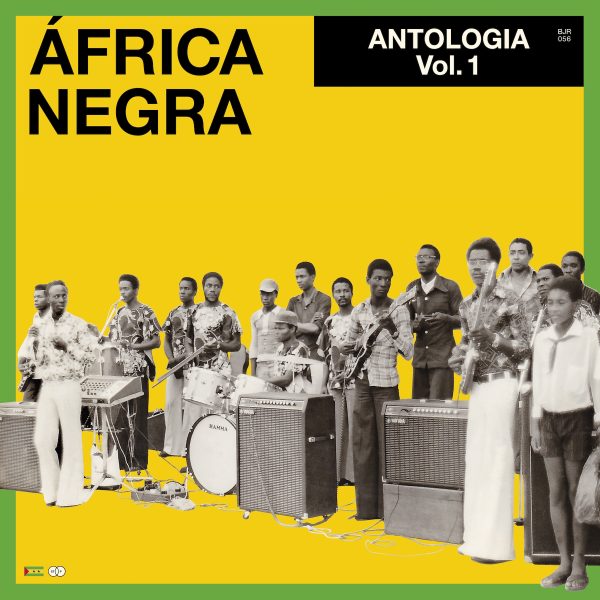
That balance defines much of this compilation. Bands such as “África Negra” embody it most clearly. Their Puxa-powered anthem Apoiámos a luta dos nossos irmãos (from Léve Léve, Vol 1) aligns São Tomé and Príncipe with liberation struggles across the African world, naming Angola, Mozambique, Guinea-Bissau and Cabo Verde in solidarity. Originally censored from using their African-rooted name until after independence, the group became one of the islands’ most successful musical exports, recording albums and cassettes under improvised conditions and touring widely across Angola, Mozambique, Lisbon and Cape Verde.
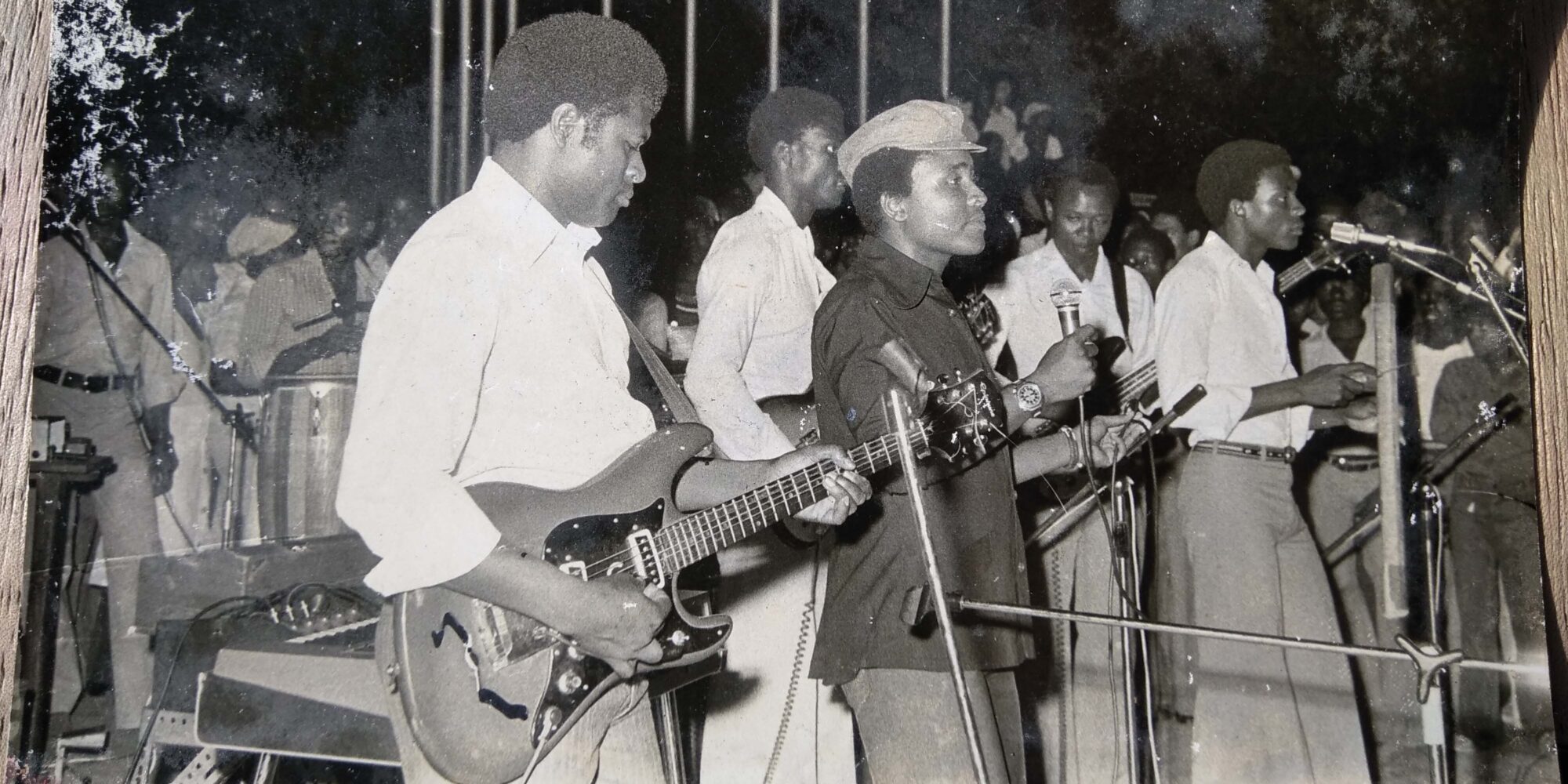
Elsewhere, the collection pays tribute to anti-colonial thought directly, while never abandoning the dancefloor. There’s a strong showing from Sangazuza, whose long career spans decades of stylistic evolution without losing rhythmic grounding—local fusions brushing against soul, R&B, and later studio experimentation, always anchored in movement and community.
The roots are often material as well as musical. Instruments that carry memory in São Toméan music include utilitarian objects—aluminum pipes, empty bottles, plastic cans—everyday items transformed into sound. Rhythm is made from what is at hand. Memory lives not only in melody, but in material itself.
Returning to the laidback sound of this hideaway, other island voices contribute sweet, concertinaed Puxa grooves awash with Creole harmonies and outward-looking warmth. Throughout, joy is never naïve. It is deliberate. In a place where history presses close, celebration becomes strategy.
LÉVE LÉVE Volume 2 dives deeper into the hidden story of São Tomé and Príncipe’s music scene—where resistance moves with grace, where memory dances, and where rhythm has always known how to survive. It leads the listener, inevitably, toward the dancefloor—where history doesn’t stand still, and joy refuses to sit down.
Related Audio Programs

Related Articles